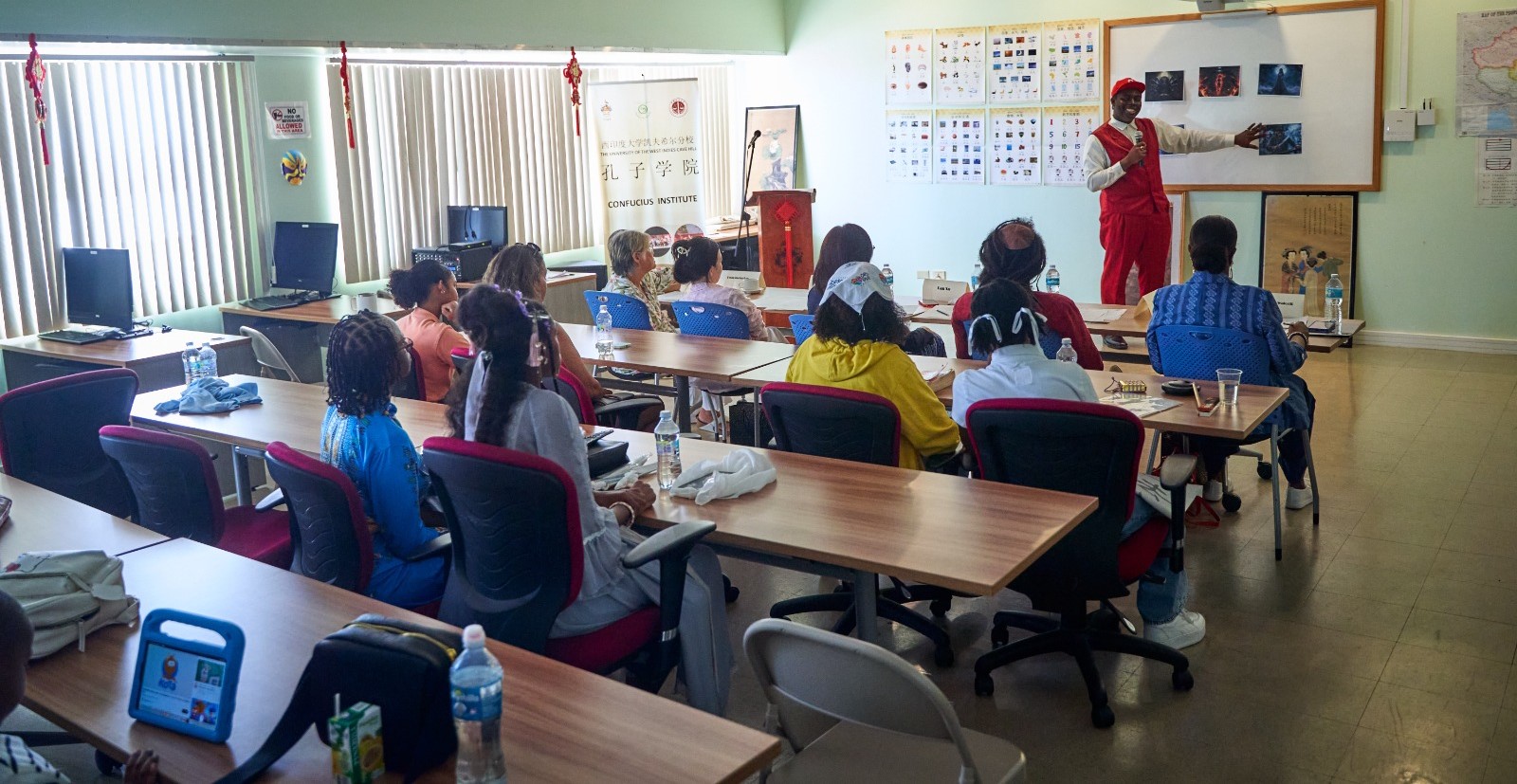
Barbadian students are being encouraged to seize opportunities to further their education in China through language learning and cultural exchange programmes offered by the Confucius Institute at The University of the West Indies, Cave Hill Campus.
The call came from Dr Ché Corbin, Director of the Confucius Institute (Barbados), who spoke to Barbados TODAY on the sidelines of the China Bridge Chinese Proficiency Competition 2026 on Saturday.
The annual competition provides a platform for students to demonstrate their Chinese language skills, deepen their understanding of Chinese culture and connect with peers through friendly competition.
Dr Corbin explained that students from the primary, secondary and tertiary levels competed in separate divisions, with top performers earning the opportunity to travel to China.
“We have primary school students, secondary school students, and UWI students competing in three separate divisions,” he said, noting that winners from each category would advance to a larger international competition in Beijing.
He added that primary school winners would also have a parent accompany them on the trip at no cost.
You Might Be Interested In
“The primary school students even get their parents’ tickets paid for to go with them to China to participate in the international competition,” Dr Corbin said.
Competitors were required to deliver self-introductions and speeches on topics of their choice, showcasing both language proficiency and confidence in public speaking.
“We’re excited to have so many students really put their all into their presentations,” Corbin said, adding that interest in the competition has grown so much that organisers have had to limit participation numbers.
The Confucius Institute currently teaches students at several primary and secondary schools across Barbados, including Charles F. Broome Memorial Primary, St George Primary, St Stephen’s Primary, The Alleyne School and Ellerslie School.
Dr Corbin revealed plans to expand access to classes through additional Saturday sessions aimed at accommodating more students, including adults and parents interested in learning the language.
Reflecting on his own experience studying in China, Dr Corbin said learning Chinese opened doors for him academically and professionally.
“I started learning Chinese about 20 years ago,” he said, explaining that he later studied Chinese medicine in China on scholarship.
He encouraged students to consider similar opportunities.
“Perhaps get yourself a scholarship to study at a Chinese university in the future as I did,” Corbin said. “It’s one of the best places to be a student.”