ENGLISH
MBABANE – With approximately 50 public enterprises and parastatals already under its wing, the Government of Eswatini faces a fresh economic debate over the proposed establishment of another State-owned entity.
This is the national mining company.
The proposal comes at a time when the financial performance of some existing public enterprises remains a concern, with several institutions depending on government subventions to sustain operations, while the dividends generated by the sector have not necessarily translated into substantial revenue capable of financing government’s wider development obligations.
Government has also recently established the Eswatini National Petroleum Company (ENPC), adding to the country’s portfolio of State-owned entities.
The Times SUNDAY’s investigation has revealed that the proposed mining company has consequently brought to the fore a fundamental question about the economic viability of expanding the public enterprise sector, particularly into an industry requiring enormous capital investment, highly specialised technical skills and an understanding of unpredictable international commodity markets.
At the centre of the debate is whether another government-owned company would generate sufficient revenue to justify its establishment and operational costs or whether it could become an additional financial responsibility for taxpayers.
However, supporters of State participation in mining argue that a national mining company could significantly improve Eswatini’s economic fortunes by ensuring that the country and its citizens receive a greater share of the wealth generated from mineral resources.
They contend that mineral wealth should not only benefit multinational corporations, but should also contribute directly to national development, employment creation, skills transfer and the economic empowerment of emaSwati. The debate has attracted differing opinions from economists, researchers and civil society, with the Coordinating Assembly of Non-Governmental Organisations (CANGO) supporting the establishment of the proposed company.
Its Executive Director, Thembinkosi Dlamini, argues that State participation in mining is long overdue and could strengthen the country’s ability to protect its economic interests in the exploitation of mineral resources.
On the other hand, international research raises questions about the financial and operational challenges confronting State-owned mining enterprises, particularly where governments lack the capital, expertise and commercial independence required to operate successfully.
Disagreements
Commissioner of Mines Dr Noah Nhleko has acknowledged the existence of differing professional opinions on State ownership in the mining industry, describing such disagreements as normal and important in informing public debate. He said government would make an official announcement concerning the proposed mining company once the necessary strategies had been developed. It must be said that the debate is particularly relevant because Eswatini already has a substantial public enterprise sector whose financial performance has frequently come under scrutiny.
Government provides financial assistance to various public enterprises through subventions intended to support their operations and public service responsibilities.
Although certain entities generate revenue and contribute to the national economy, others face operational challenges, financial constraints and varying levels of profitability.
The dividends paid to government by public enterprises must also be considered against the financial resources required to establish, operate and sustain these institutions.
While it would be misleading to judge every public enterprise by the same commercial standards, particularly those mandated to provide essential public services, experts say a mining company would face additional pressures because it would be operating in a highly competitive international industry. It has been learnt that mining requires more than establishing an institution, appointing a Board of directors and employing administrative personnel.
Research has shown that a national mining company would need a chief executive officer capable of managing complex commercial operations, supported by highly qualified mining engineers, geologists, metallurgists, financial specialists, environmental experts and professionals experienced in international commodity trading. It is understood that such personnel command competitive remuneration because their expertise is sought by mining corporations operating across the world.
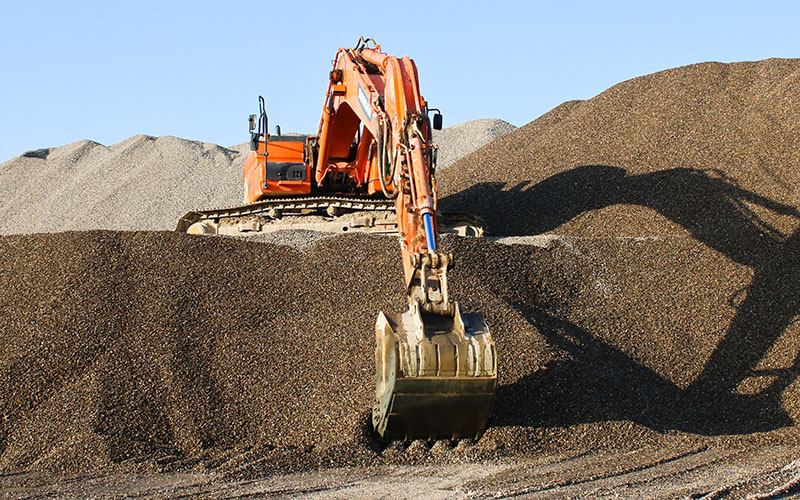
Research has also shown that the company would also require substantial resources for mineral exploration, feasibility studies, mine construction, machinery, electricity, transportation, mineral processing and compliance with environmental and occupational safety requirements. Furthermore, it has been established that mining companies do not determine the prices of the minerals they sell.
The Mining Forum says international commodity prices are influenced by global demand, supply conditions, geopolitical developments, industrial production and economic performance in major markets.
It is said that a decline in global mineral prices could consequently reduce revenue even where production remains relatively stable. This presents an additional financial risk for any State-owned mining company involved directly in mineral extraction and commercial operations.
If the company failed to generate sufficient revenue to cover operational expenditure, government could face pressure to provide financial support, particularly where jobs and substantial investments were at stake. It is said that such support would compete with other national priorities, including education, healthcare, infrastructure development and employment creation.
Risks
However, these risks would depend considerably on the company’s eventual business model, including whether it operated mines directly, held equity investments or entered into partnerships with established mining companies.
The National Development Plan for 2023/24 to 2027/28 acknowledges challenges affecting Eswatini’s ability to attract foreign direct investment (FDI).
The plan also identifies concerns about the expansion and performance of State-owned enterprises, including their implications for private investment and public finances.
These observations raise questions about the financial and institutional arrangements that would be necessary to ensure that the proposed mining company contributes positively to economic development.
Experts say foreign direct investment is particularly important in mining because exploration, machinery, construction and production require substantial financial commitments before a company can begin generating revenue. Foreign mining companies also frequently bring specialised technology, international marketing networks, technical experience and financial resources.
Economic analysts, therefore, argue that the challenge for developing countries is to maximise national benefits from mineral resources while maintaining conditions that attract investment and encourage efficient production. For Eswatini, the debate is consequently not simply about whether government should participate in mining, but how such participation could be structured to deliver sustainable economic returns.