Artificial intelligence holds the potential to expand Namibia’s economy by US$219 million over the next decade, according to new research.
However, persistent challenges including high youth unemployment and limited electricity access threaten to lock young people out of these technological gains.
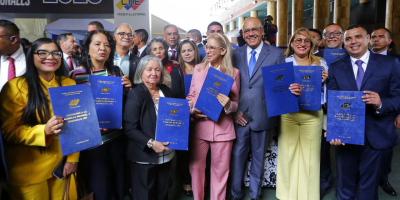
The findings come from the newly launched Ayre Index, unveiled at the Commonwealth Heads of Government Meeting in Antigua and Barbuda. The index evaluates youth artificial intelligence readiness across 56 Commonwealth nations, placing Namibia 36th overall.
It scores 42.7 out of 100, below the study’s benchmark of 53. Only 15 Commonwealth countries meet that level.
Research by the Ayre Think Tank, founded by Antiguan-Canadian philanthropist Calvin Ayre, found that young Namibians face significant barriers to benefiting from AI.
While mobile-phone ownership and internet use are relatively widespread, electricity reaches just 59.3% of the population, fixed broadband speeds are slow and businesses frequently report disrupted internet connections.
Employment is also a challenge. The study records unemployment among 47% of young Namibians in the labour force, the second-highest rate among the 56 Commonwealth countries examined. Many of those unemployed have been searching for work for a prolonged period.
Although teacher-training figures are encouraging, the study did not record computing as implemented under its curriculum measure. Researchers also lacked enough comparable evidence to give Namibia a score for young people’s digital and AI capabilities. This does not mean those skills are absent but highlights the need for better information and practical training.
Namibia has approximately 800,000 young people aged 15 to 29. Applying economic scenarios developed by the International Monetary Fund, researchers calculate that AI could make Namibia’s economy US$219 million larger after ten years under their moderate scenario. The figure ranges from US$106 million in the conservative case to US$332 million in the optimistic scenario.
Calvin Ayre, founder of the Ayre Think Tank, said: “I’ve spent my life in businesses where new technology changes everything, and I know you can’t stand still. AI is going to change how we work, how we do business and how wealth is created. But this is not a race that only the biggest or richest countries can win. What matters is giving young people the skills and the chance to get ahead – whether to start businesses, find jobs or build something for themselves. Some Commonwealth countries are ahead, others have catching up to do. Nobody can afford to be complacent. That’s why we created this Index. It shows countries where they stand, what they’re getting right and where they need to do better. Governments now have to decide what they’re going to do about it.”
Namibia is already taking steps to turn AI into practical opportunities for young people. In September 2026, the government launched the National Artificial Intelligence Institute to strengthen research, develop local technology and help young Namibians gain practical experience. Earlier in the year, more than 1,100 students, lecturers and staff at the Namibia University of Science and Technology participated in an AI training programme from MIT Open Learning.
These initiatives are encouraging, but the Index scores Namibia just 3.1 out of 10 for decent work, enterprise and transitions. More reliable electricity and internet access, stronger practical digital skills and better links between training and employment will help young Namibians turn technological progress into successful businesses, better jobs and rising incomes.
The White Paper identifies five priorities: affordable and reliable access to technology; education that develops practical skills; stronger routes from training into employment and enterprise; AI tools suited to local languages and needs; and safeguards that enable young people to question automated decisions.
It calls on governments, educators and development partners to better understand the particular barriers young people face in each country before deciding where investment can make the greatest impact.
Professor C. Justin Robinson, Pro Vice-Chancellor and Campus Principal of the University of the West Indies, Five Islands Campus, said, “We need to make sure that the next generation will be able to do more than just consume AI products made elsewhere. Access must come with agency and a real, equitable stake in how these systems are governed. Young people need to be equipped to question these new tools, improve them, and be supported in building alternatives suited to their needs. Whether that happens will depend on choices made now. This index gives us a clearer view of where those choices are most urgent. We should use it.”