The international climate-finance system is at a crossroads. Despite decades of negotiations, declarations and financial pledges, developing countries remain woefully short of the resources needed to confront the mounting consequences of climate change.
For climate-vulnerable Least Developed Countries (LDCs), Small Island Developing States (SIDS) and vulnerable coastal and mountain nations, the gap between promises and actual support has become increasingly untenable.
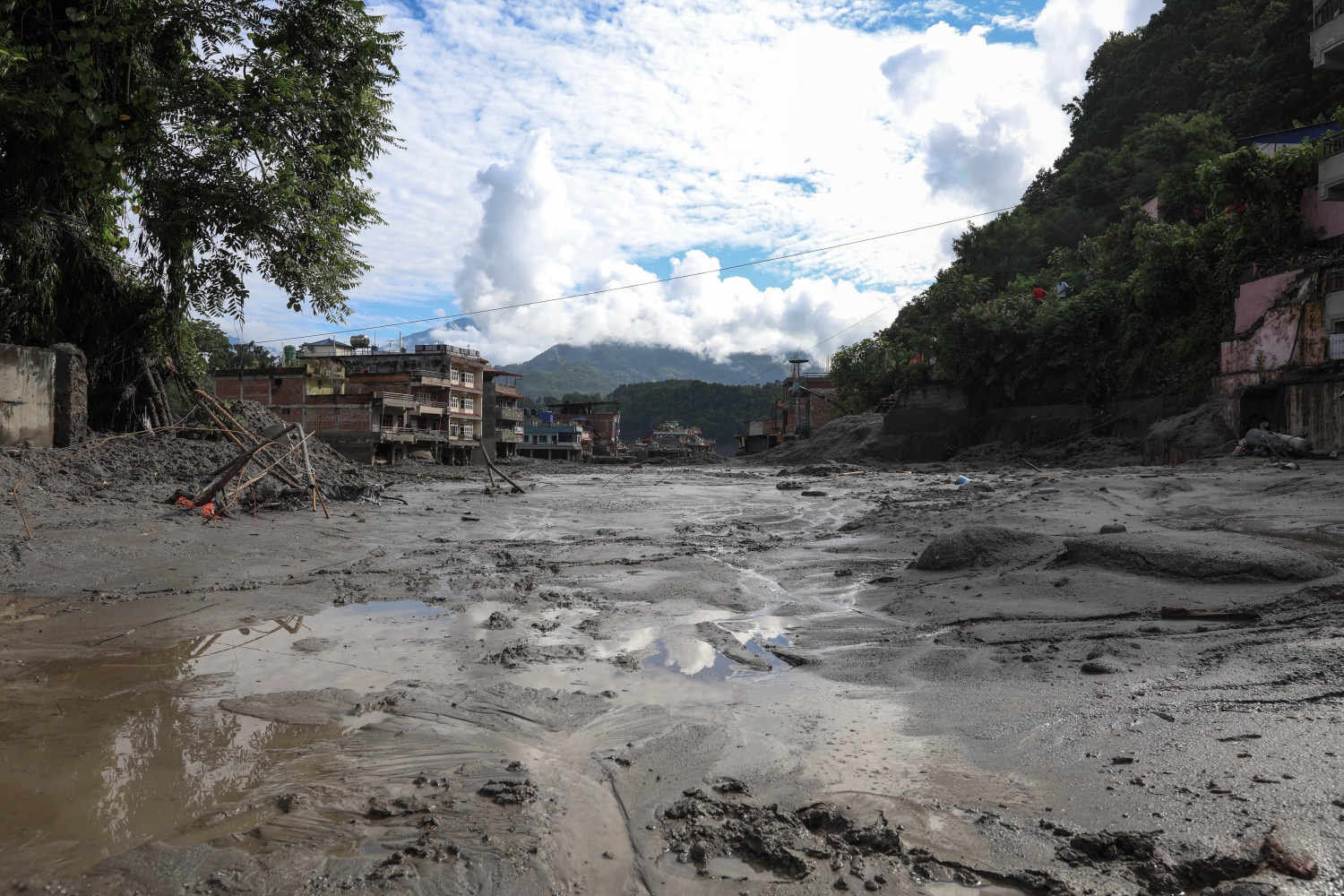
The catastrophic Himalayan ice-rock avalanche disaster in August underscored the vulnerability of mountain communities to climate-related hazards. It has also exposed the limitations of existing international arrangements for financing disaster recovery, climate adaptation and long-term resilience.
As world leaders gather at COP31 in Antalya, Türkiye, this week, Nepal has an opportunity to champion a bold new approach to climate finance. Alongside advocating for reforms in the existing system, Nepal should take the lead in proposing a Climate Debt Relief and Resilience Initiative to convert part of the debt obligations of climate-vulnerable countries into investments in climate adaptation, disaster recovery and resilience.
At COP29 in Baku, countries agreed on a New Collective Quantified Goal (NCQG) of mobilising $300 billion annually by 2035, with developed countries taking the lead, as part of a broader ambition to scale up financing from all public and private sources to $1.3 trillion annually.
The challenge at COP31 is to move beyond these pledges and establish how the promised resources will actually be delivered, by whom, through which channels, and on what timetable.
The world is currently far off track. Nepal and other developing countries should press for a credible financing trajectory for 2027–2030, with transparent reporting of actual disbursements rather than announcements and pledges. They should also insist that developed countries’ public-finance responsibilities remain clearly distinguished from private capital that may be mobilised.
GRANTS AND LOANS
Equally important is the quality of climate finance. A substantial proportion of what is counted as climate finance consists of loans rather than grants. Public bilateral and multilateral grants amounted to $29.7 billion in 2024, compared with $68.5 billion in loans.
This imbalance must be rectified by substantially increasing grants as the preferred instrument for adaptation, loss and damage, and disaster recovery. Highly concessional loans may have a role where debt sustainability permits, but vulnerable countries should not be expected to borrow more to address a crisis they contributed little to creating. Climate finance must not become another source of unsustainable indebtedness.
While reducing greenhouse-gas emissions is essential, countries such as Nepal urgently need resources to prepare for and adapt to climate impacts that are already occurring. Early-warning systems, glacier and glacial lake monitoring, climate-resilient roads and bridges, watershed protection, water security, resilient agriculture and disaster preparedness are essential investments. These investments generate enormous social benefits but often offer insufficient commercial returns to attract private investors.
Access to climate finance must also become much simpler. Developing countries face complicated procedures, lengthy approval processes and substantial documentation requirements when seeking resources from institutions such as the Green Climate Fund, the Global Environment Facility and the Fund for Responding to Loss and Damage. Smaller and poorer countries should not have to rely on expensive international consultants or create large bureaucracies simply to access financing intended to help them.
The Loss and Damage Fund must be substantially strengthened. Its establishment was an important achievement, but its resources remain far below the needs of countries experiencing catastrophic climate-related disasters. Nepal should advocate for predictable replenishment, grant-based assistance, rapid disbursement following major disasters, and recognition of both economic and non-economic losses, including the slow-onset consequences of glacier retreat and changing Himalayan water systems.
The World Bank and Asian Development Bank must become more responsive to climate vulnerability. While private investment can play an important role in renewable energy, hydropower, transmission infrastructure and commercially viable resilient infrastructure, it cannot finance every climate priority. They should expand grant and concessional financing, offer longer repayment periods and lower interest rates, provide guarantees and risk-sharing instruments, and better incorporate climate vulnerability into assessments of sovereign creditworthiness.
Climate finance must include affordable access to technology, expertise and institutional capacity. Nepal needs advanced glacier monitoring, satellite-based disaster surveillance, early-warning systems, climate-resilient infrastructure technologies, renewable energy storage and modern agricultural and water-management technologies. Financial assistance without technology transfer and capacity-building will not be sufficient.
All these priorities deserve sustained international attention. But there is a potentially transformative idea that could help address several of these shortcomings simultaneously: debt relief for climate resilience.
The international community has previously agreed to restructure, reduce or cancel developing-country debts for a variety of purposes. Why should similar international solidarity not be extended to countries facing the mounting costs of climate change?
Over the past five decades, debt relief has been used to alleviate extreme poverty, protect children, improve health, expand education, conserve biodiversity and help countries recover from natural disasters.
The Heavily Indebted Poor Countries (HIPC) Initiative demonstrated that substantial debt relief could be mobilised to reduce unsustainable debt burdens and free resources for poverty reduction.
There are also precedents for disaster-related debt relief and restructuring involving Honduras, Nicaragua, Indonesia and Sri Lanka. More recently, climate-resilient debt clauses have enabled countries such as Grenada and Barbados to suspend certain debt payments following qualifying disasters.
Debt relief therefore is not an entirely new or radical concept. The international community has already developed a variety of instruments to use debt restructuring and debt-service savings for broader development objectives.
The logical next step is to extend these approaches systematically to climate resilience. I propose that Nepal take the lead in building a coalition of climate-vulnerable countries, supportive developed-country partners, international financial institutions and multilateral development banks to develop a comprehensive Climate Debt Relief and Resilience Initiative.
Such an initiative could encompass three complementary instruments:
1. Debt restructuring and relief for climate resilience. Countries facing unsustainable or excessive debt burdens could negotiate reductions, restructuring or more favourable repayment terms with bilateral and multilateral creditors. The resulting fiscal space could be directed, through agreed national programmes, towards climate adaptation, disaster preparedness, resilient infrastructure and sustainable development.
2. Debt-for-climate and debt-for-resilience swaps. Under mutually agreed arrangements, creditors could reduce or cancel specified debt obligations in exchange for the debtor country’s commitment to invest equivalent or agreed amounts in nationally owned climate-resilience programmes. These investments could include early-warning systems, glacier and glacial lake monitoring, climate-resilient agriculture, watershed restoration, renewable energy and reconstruction of disaster-damaged infrastructure, and where appropriate, resettlement of vulnerable communities to safer locations.
3. Automatic suspension of debt servicing following catastrophic disasters. Countries experiencing major climate-related disasters should be able to obtain temporary suspension of principal and interest payments under pre-agreed arrangements. Such provisions would provide immediate fiscal breathing space when governments need resources most urgently for rescue, relief, rehabilitation and reconstruction.
The objective would not simply be to reduce debt. It would be to transform debt-service obligations into investments that protect lives, livelihoods, ecosystems and development gains.
WHY NEPAL?
The August disaster left Nepal facing enormous recovery and reconstruction needs. A comprehensive Post-Disaster Needs Assessment (PDNA) is estimated to require approximately $5 billion for recovery, rehabilitation and reconstruction.
The international response to immediate humanitarian needs has been generous, but the much larger challenge of long-term recovery remains.
Nepal has so far received a commitment of only $21.6 million from the UN Loss and Damage Fund. Existing international climate-financing mechanisms, including the Green Climate Fund, the Global Environment Facility and the Loss and Damage Fund, remain severely underfunded relative to the scale of global needs.
It would be unrealistic to expect these institutions alone to finance Nepal’s entire recovery program. This is where debt relief could make a meaningful difference.
Nepal’s external debt is estimated at $10–12 billion, equivalent to 24% of GDP. Its annual external debt-service payments are around $490 million — comprising $407 million in principal and $83 million in interest. These obligations are likely to exceed $500 million annually in the coming years.
Nepal is not among the world’s most heavily indebted countries, but these are substantial recurring foreign-exchange outflows for an economy with enormous development and climate-resilience needs.
Freeing up even a portion of these resources could help finance reconstruction following the August disaster, strengthen climate adaptation, improve disaster preparedness and protect the country’s long-term development investments.
Debt relief would reduce fiscal pressure. Resources currently devoted to external debt servicing could be redirected towards essential investments in health, education, infrastructure, poverty reduction and climate resilience.
It would reduce foreign-exchange vulnerability. Depreciation of the Nepali rupee increases the domestic-currency cost of repayment, placing additional pressure on the national budget.
Nepal needs to ensure that external borrowing finances productive investments that generate economic and social returns, rather than simply adding to obligations that compete with essential public expenditure.
With a well-prepared proposal, Nepal could invite external creditors to explore innovative arrangements that link debt sustainability with climate resilience. The potential benefits extend well beyond Nepal to LDCs and SIDS which face much heavier debt burdens, greater exposure to climate hazards and more limited fiscal capacity.
At a time when many developed countries face competing fiscal pressures and appear reluctant to provide massive new and additional climate-finance resources, debt relief may offer a more politically feasible avenue for international cooperation.
It would not necessarily require large new budgetary appropriations by creditor governments. Depending on the instruments used, it could involve restructuring existing obligations, foregoing some future repayments, exchanging debt claims for agreed investments, or temporarily suspending payments following disasters.
Debt relief involves real financial concessions and requires careful negotiation. Debt relief would not replace the obligation of developed countries to provide climate finance under the Paris Agreement. It should be an additional instrument within a broader climate-finance reform agenda, not an excuse to weaken existing commitments.
Debt-for-climate swaps must be transparent, based on realistic valuations and designed to avoid excessive transaction costs. Investments should be nationally owned, aligned with national climate and development priorities, and subject to appropriate accountability and independent monitoring.
Countries should not be required to accept intrusive external conditions or surrender control over their development priorities in exchange for relief. The initiative should be designed to complement, rather than compete with, existing UNFCCC processes and the broader G77 and China negotiating framework.
Nepal could invite other high-mountain countries, small island states, vulnerable coastal nations and disaster-prone LDCs to join an initial coalition. It should also reach out to constructive developed-country partners, potentially including Germany, France, the United Kingdom, Canada, Norway and Spain, as well as the World Bank, ADB and other regional development banks.
The immediate objective at COP31 need not be to negotiate and adopt a fully developed international mechanism. It may be too late in the current negotiating cycle to secure agreement on an entirely new proposal. A more realistic and potentially effective approach would be to build political support, identify co-sponsors and establish a small ministerial working group or coalition of willing countries to develop the initiative.
Nepal could offer to lead this process, under the stewardship of Finance Minister Swarim Wagle. The group’s mandate could include developing practical proposals on debt restructuring, debt-for-climate swaps, disaster-triggered debt suspension, grant-based adaptation financing and simplified access to international climate funds.
Its work could feed into the continuing UNFCCC climate-finance discussions scheduled to conclude in 2027, with the aim of presenting a more comprehensive proposal at relevant forums leading up to COP32 in Ethiopia in November 2027.
The fundamental moral and economic argument behind this proposal is compelling. Climate-vulnerable countries have contributed relatively little to the accumulation of greenhouse gases that drive global warming. Yet they face disproportionate costs from climate-related disasters, environmental degradation and the destruction of livelihoods and infrastructure.
For Nepal, this is an opportunity to turn a national tragedy into a constructive global initiative. By building a broad coalition of climate-vulnerable countries and supportive international partners, Nepal could help pioneer a framework that benefits not only its own people but millions of others facing similar threats.
The choice before the international community is increasingly clear: continue asking vulnerable countries to borrow more to cope with climate damage, or help them convert existing financial obligations into investments in a safer, more resilient and sustainable future.
Let us move from climate debt to climate resilience, and from promises of solidarity to practical instruments of climate justice.
Kul Chandra Gautam is a former Deputy Executive Director of UNICEF and Assistant Secretary-General of the United Nations.