ENGLISH
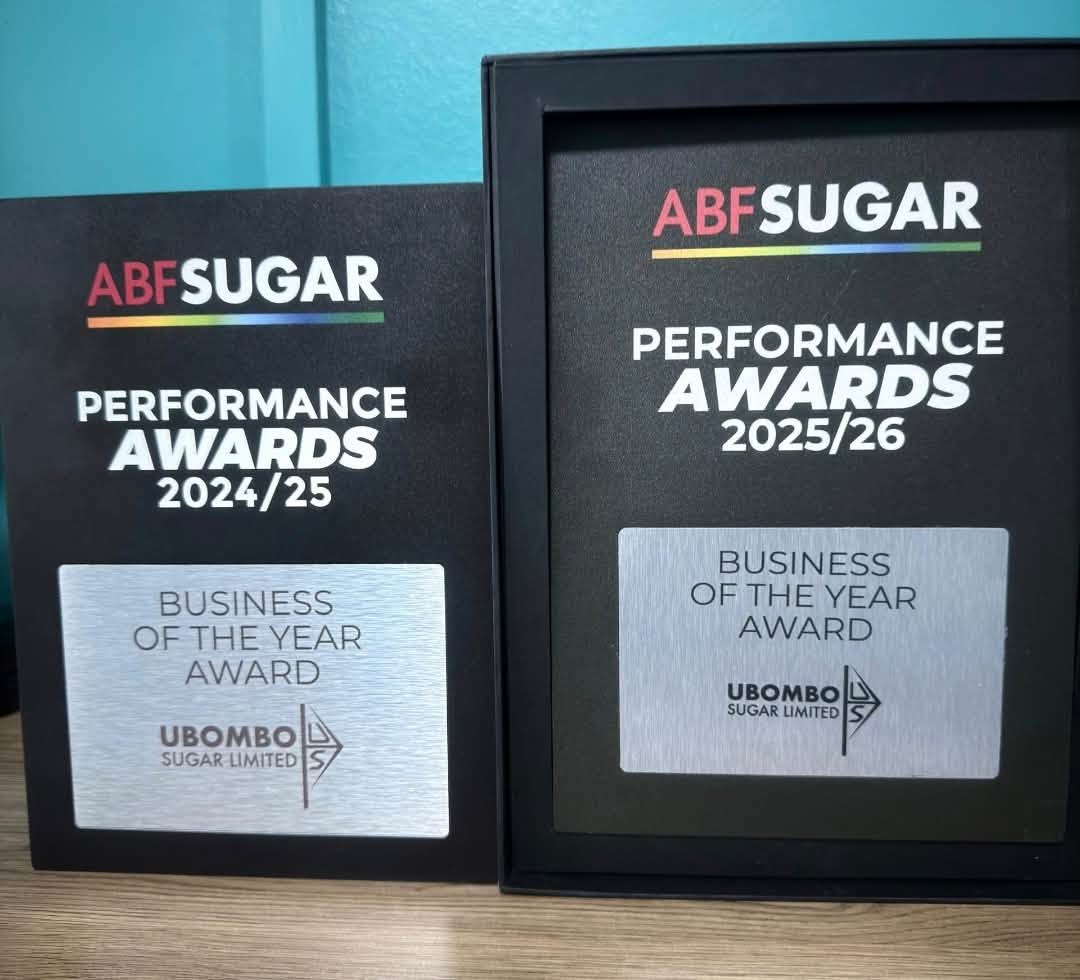
BIG BEND – Ubombo Sugar Limited has been named ABF Sugar Business of the Year for 2025/26 for the second consecutive year, outperforming the group’s businesses in Europe and Africa.
The achievement marks another milestone for the Eswatini-based sugar producer, recognising the efforts of its employees amid a challenging operating environment.
Ubombo Sugar Managing Director Muzi Siyaya said receiving the award for a second consecutive year was a tremendous honour and a proud moment for everyone at the company.
“Winning the ABF Sugar Business of the Year award for the second consecutive year is a tremendous honour and a proud moment for everyone at Ubombo Sugar. This recognition reflects the hard work, resilience and commitment of our people, particularly in what has been a challenging operating environment. I am immensely proud of our team and grateful for their continued dedication to the business,” Siyaya said.
The back-to-back recognition highlights the company’s performance within ABF Sugar, its parent group, which operates sugar production businesses across several markets in Africa and Europe.
The award comes as sugar producers continue to navigate operating challenges, making the contribution of employees and the resilience of business operations important to sustaining performance.
ABF Sugar is a major producer of sugar and sugar-derived co-products, supplying industries including food and beverages, pharmaceuticals, agriculture, horticulture, industrial manufacturing, and power and energy.
The group’s operations span markets in Africa, the United Kingdom and Spain, with businesses involved in sugar production, farming, packaging and the manufacture of related products.
Across its wider operations, ABF Sugar has a substantial agricultural footprint, working with growers and farming sugar cane and sugar beet to supply its processing facilities.
In Africa, its sugar cane operations are located in Eswatini, Malawi, South Africa, Tanzania and Zambia, while its packing operations include Rwanda.
The group also has consumer brands across its markets, including Bwana Sukari in Tanzania, White Spoon in Zambia and Illovo in multiple African countries.
Beyond sugar, some of its African operations produce co-products such as potable alcohol, furfural and electricity supplied to local power grids.
In the United Kingdom, British Sugar is the sole processor of the country’s sugar beet crop, while Azucarera is identified as Spain’s largest sugar producer. Their operations also produce co-products such as energy, animal feed, bioethanol, betaine and carbon dioxide.