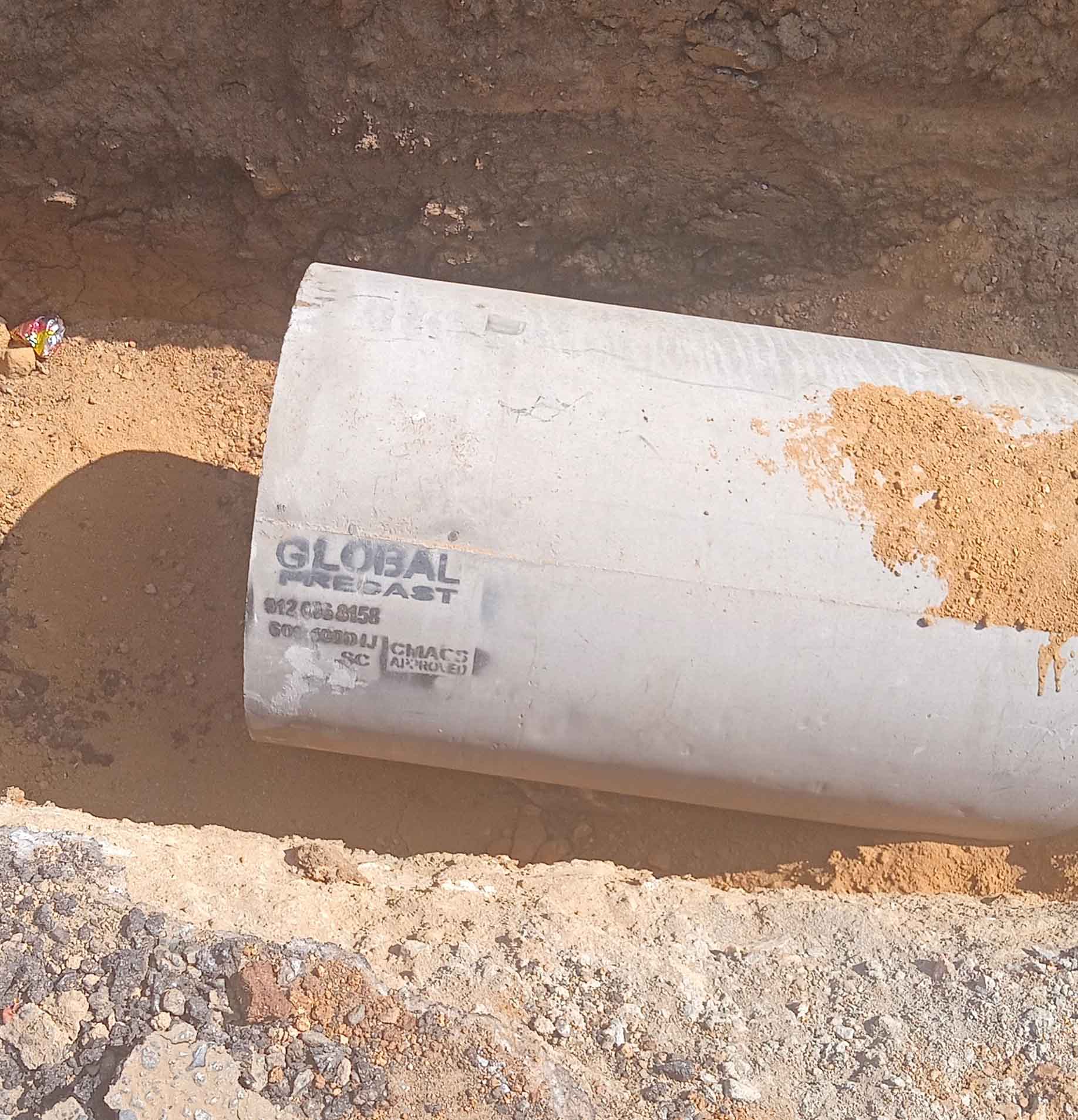
MANZINI – An undercover investigation by the Times of Eswatini SUNDAY has revealed that WBHO-J&E Construction is importing concrete material into the country.
This is despite the fact that precast material and articles of cement are manufactured on a large scale in Eswatini. The Manzini Mall and Bus Rank redevelopment project is being constructed by Stefanutti Stocks, which handled the first phase, while local firm J&E Construction, in partnership with South African company WBHO, is undertaking the subsequent construction phase of the project.
Investigations conducted by this newspaper established that some of the construction material used on the project was procured from Global Precast, a South African company. Global Precast has strategically identified a local agent to penetrate the Eswatini market. Some of its products are procured through a Matsapha-based company styled Thartia Construction Services.
It has been established that Global Precast announced on February 5, 2026, that Eswatini could place orders for its products through Thartia Construction Services. The announcement read: “Eswatini, you can order Global Precast products now through Thartia Construction Services.”
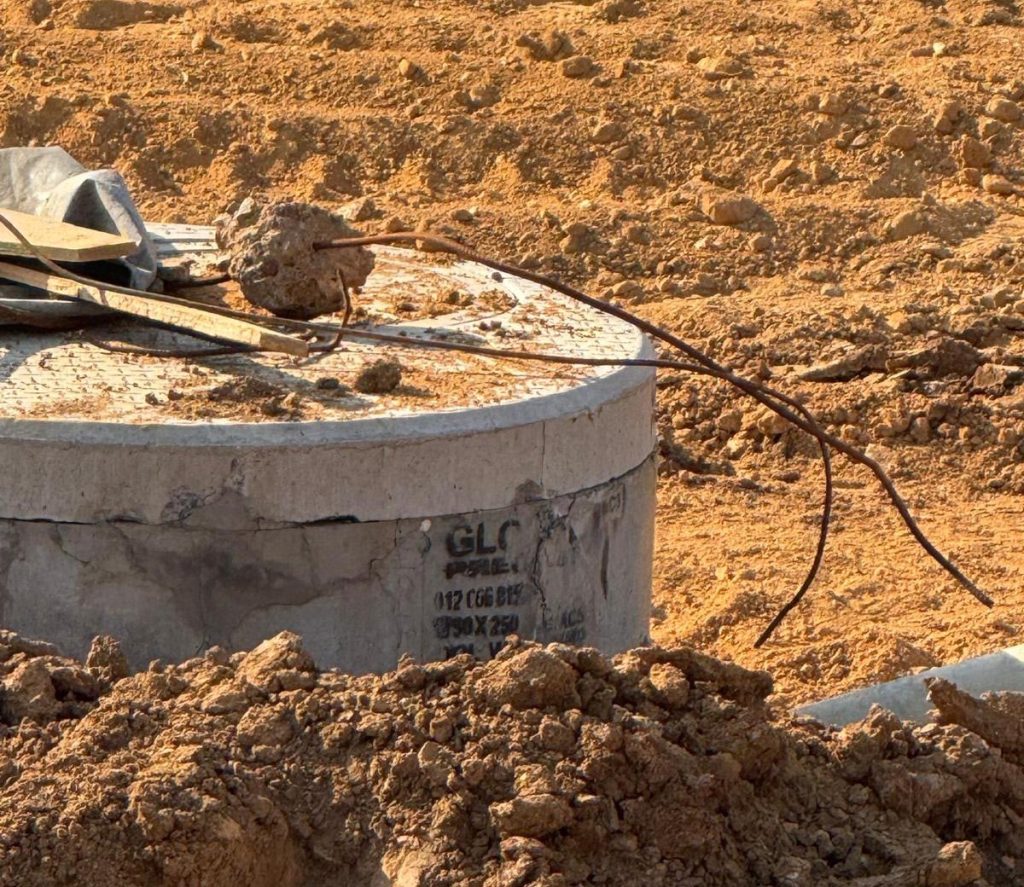
Acting on the announcement, this newspaper visited the Matsapha-based company and indeed identified products bearing the Global Precast trademark.
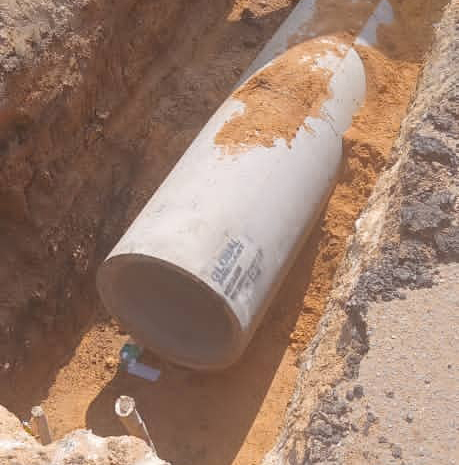
On the other hand, the team was able to identify imported kerbs, pavers and blocks on project site, which had been sourced from South Africa. The development has raised questions because local manufacturers say they have the capacity to supply much of the material needed for projects of this nature.
According to the Eswatini Construction Industry Council (CIC) Performance Report for the 2023/2024 financial year, one of the companies in the country, arguably the largest concrete block and brick manufacturer, has the capacity to produce approximately 90 000 to 100 000 pavers and 20 000 blocks per day.
In its another report, the CIC stated that the 2025/2025 financial year recorded a substantial increase in construction activity, with total project value rising by 296.6 per cent to E11.24 billion.
The report further shows that the growth was largely driven by foreign works, which accounted for 54.5 per cent of the total value, indicating a significant concentration of high-value projects in the hands of foreign contractors.
It is stated that general civil works remained a key contributor at 26.5 per cent, reflecting continued investment in infrastructure, while general building works accounted for 10.3 per cent, demonstrating the relatively lower value of building projects compared to large-scale civil works.
Concerned local industry players are of the view that they should have benefitted from the procurement of material, mainly the articles of cement, or rather precast materials, since the country’s construction industry is dominated by foreign companies.
Their argument is that local manufacturers have created permanent jobs and pay regular taxes to the Eswatini Government. They said the manufacturers also circulate the money they earn within the local economy, which supports other businesses and households.
Regarding the E2 billion Manzini Mall and Bus Rank projects, WBHO and Stefanutti Stocks, which are key players, were contacted for official comment on the importation of construction materials but did not respond.
However, a source close to the developer and the project owner said the current works being undertaken in Manzini are privately funded. He presumed the owner, who is based in South Africa, preferred the companies he knew, which could deliver material on agreed time and pricing.
The source said the project has strict timelines and deliveries, adding that it was possibly quicker to procure where the money is, that is South Africa. He said there were penalties prescribed for any failure to deliver the project on time, since the occupancy rate now stands at 90 per cent.
“Agreements have been signed and any failure on the developer’s side to deliver the project for occupancy for purposes of trading will result in penalties. To avoid talking and getting quotations in Eswatini, which is a long process, we presume he felt it is quicker to source some of these items where he is also based and where the money is actually kept,” the source, who is close to the project, said.
At the initial stage of the project, there was a government budget of E57 million for its start-up. The source, however, insisted that the E2 billion, which is the value of the project, comes from the private developer, who is not bound by the country’s procurement laws.
Minister for Commerce, Industry and Trade Manqoba Khumalo said his ministry, despite unveiling the JV, is not involved in the procurement part of the project.
John Mngomezulu, who is actively involved in the project, referred enquiries to the JV, which had not responded at the time the final report was prepared yesterday afternoon.
The Manzini Mall development project was conceptualised for implementation through a Public Private Partnership (PPP) between the municipality, the Eswatini Government and Ntoese Developers. The project entails the construction of a state-of-the-art Manzini Mall at the Old Trade Fair site, the reconstruction of the main bus rank site, and the construction of a bridge across the Mzimnene River.
The project is being undertaken in a three-phase approach, of which the first phase is the reconstruction of the Manzini main bus rank.
Chief Executive Officer of the Eswatini Public Procurement Regulatory Agency (ESPPRA) Vusi Matsebula said his entity did not have much to say about such an issue, hoping the CIC or Citizen Economic Empowerment could be of assistance.
Meanwhile, the CIC’s parent portfolio, which is the Ministry of Public Works and Transport, recently spoke about reforms that were being developed to address unemployment and strengthen the domestic value chain.
Principal Secretary in the Ministry of Public Works and Transport Thulani Mkhaliphi said government was developing these reforms in conjunction with the CIC. It was further stated that the ministry was overhauling its procurement system to ensure that infrastructure spending generates greater economic benefits for the country.
Mkhaliphi said the current system allowed much of the money borrowed to finance infrastructure projects to leave the country, because construction materials and other inputs were largely imported. “We are literally improving other economies while our own backyard is living hand-to-mouth,” Mkhaliphi was quoted as saying.
He said this had contributed to concerns among local construction companies that the country was effectively exporting jobs. The principal secretary stated that the problem went beyond the awarding of contracts to foreign companies, because Eswatini had not developed the value chain needed to supply the construction industry locally. He said government wanted to create an ecosystem capable of producing the supplies required by the building sector, retaining value, skills and outputs within the kingdom.
The proposed procurement policy would, therefore, require 80 per cent of the products needed for construction projects to be sourced locally. Where materials could not be obtained in Eswatini, procurement would, as a second option, be directed to suppliers within the Southern African Development Community (SADC).
The policy also proposes a one per cent import levy on selected foreign-manufactured building materials. The levy is intended to protect domestic producers from foreign competition and encourage greater investment in local manufacturing.
Another proposed measure is a centralised platform for advertising and allocating government construction contracts. Mkhaliphi said the platform would improve transparency and ensure that local firms had fair access to government tenders. He said the objective was to create sustained demand for local manufacturers, suppliers and contractors, while generating employment.
The opportunity is not limited to large construction companies, as the policy also provides for the development of artisanal skills and greater participation by local businesses.
Mkhaliphi illustrated the scale of the potential market by noting that the construction sector uses more than three billion nails a year, yet all of them are imported. Basic construction products such as shovels and steel pipes are also imported, highlighting the gaps in the domestic supply chain.
The reforms are aligned with the National Construction Industry Policy 2025-2031, which seeks to strengthen local participation through procurement preferences, support for local firms and skills development. Mkhaliphi said government and the CIC, led by Chief Executive Officer Maqhawe Mnisi, were working on policies to position local businesses to benefit more from infrastructure expenditure.
Under the proposed framework, government-funded infrastructure projects would give preference to local manufacturers and contractors. The broader aim is to turn public construction expenditure into a driver of domestic production, rather than simply a means of delivering roads, bridges and public buildings.
It is understood that government expects the approach to stimulate manufacturing, strengthen the construction supply chain, develop skills and create employment. The reforms would also seek to ensure that more infrastructure spending generates local wages, tax revenue, supplier opportunities and small business growth.
The draft regulations for the construction industry come with major changes. It is understood that much of the spadework has been done on the CIC’s draft regulations, which now await tabling in Parliament.
It was reported that several countries enforce Local Content Requirements (LCRs) or buy-local mandates that compel companies to purchase cement, steel and building materials domestically for public and infrastructure projects.
In South Africa, under the Preferential Procurement Policy Framework Act (PPPFA), government has implemented a strict circular banning the use of imported cement on all State-awarded and government-funded infrastructure projects, requiring 100 per cent local cement sourcing. To enforce these domestic mandates, South Africa relies heavily on domestic funding pools and public-private partnerships, or selectively negotiates bilateral loan conditions where acceptable.
Two weeks ago, the Times of Eswatini SUNDAY reported that Eswatini has been importing building blocks made of cement and concrete. Concrete blocks, which are manufactured in the kingdom, were imported from South Africa to the value of E6 million. The quantity was 4 017 050 kg.
This information was sourced from WITS, which stands for World Integrated Trade Solution. The World Bank, in collaboration with the United Nations Conference on Trade and Development (UNCTAD), and in consultation with organisations such as the International Trade Centre (ITC), the United Nations Statistical Division (UNSD) and the World Trade Organization (WTO), developed what would later be known as WITS.
Investigations by the Times of Eswatini SUNDAY further indicate that local small-scale manufacturers are now agents for precast companies in South Africa. Realising that they cannot compete with the South African companies, they have decided to team up with them instead.
The Times of Eswatini reported that up to 3 000 jobs would be created at the peak of construction during the second phase of the E2 billion Manzini Mall development.
This was revealed by Minister for Commerce, Industry and Trade Khumalo during a press conference announcing that South African construction giant WBHO, in joint venture with local construction firm J&E Construction, had officially been awarded the tender to proceed with the next phase of the highly anticipated mall construction.
The joint venture, which operates under the name Manzini JV, took over from Stefanutti Stocks, which had been engaged during the first phase of the project that mainly focused on groundwork preparations and the construction of the temporary Manzini bus rank.
The first phase has since been completed, paving the way for the commencement of the main construction works of the massive commercial development being spearheaded by Shenge Property Group.
Speaking during the announcement, Khumalo said government was excited by the continued progress of the project, noting that beyond being a commercial development, the Manzini Mall represented a key national infrastructure investment aligned with the country’s broader economic transformation agenda.
Khumalo said the project was very important to them as government because it was not only about infrastructure development, but also about job creation and economic stimulation. He said at the peak of construction, they were expecting around 3 000 jobs to be created, which was significant for emaSwati.
He said the project also aligned with the vision of His Majesty King Mswati III to see Eswatini transition towards first-world status through modern infrastructure development and increased investment activity.
He added that the development of the mall formed part of the broader vision of His Majesty King Mswati III to see the country modernise and develop infrastructure that matched international standards. Such projects, he said, improved the country’s infrastructure landscape while also boosting investor confidence.