…as it fights for QMMH retirees’ benefits
Mohloai Mpesi
PARLIAMENT’S Public Accounts Committee (PAC) says it will seek to block the government’s payment of a multi-million-maloti debt to Netcare until retired Queen ‘Mamohato Memorial Hospital (QMMH) employees receive their outstanding severance and provident fund benefits.
The Committee adopted the position this week when QMMH management and Ministry of Health officials appeared before it as part of its ongoing inquiry into the hospital’s operations and financial management.
PAC chairperson ‘Machabana Lemphane-Letsie said the Committee would do everything within its powers to stop any payment to Netcare until retired employees, some of whom have been waiting since leaving service in March this year, receive what they are owed.
“We should go and see whether we have paid Netcare, and if not, we should hold it. We should pay Basotho their money and give QMMH the remaining change,” Ms Lemphane-Letsie said.
The disputed debt forms part of a M237.94 million liability arising from the 2021 cancellation of the public-private partnership (PPP) agreement between government and Netcare. The amount includes approximately M84 million in interest accumulated over the past five years.
Last month, Public Debt Management Office director Khotso Moleleki told the PAC that the government had acknowledged the debt and was working towards settling it.
However, Auditor-General ‘Mathabo Makenete questioned the legality of the M237.94 million claim, telling the Committee there was insufficient evidence to substantiate how the liability arose following the collapse of the PPP.
Background
QMMH opened in October 2011 as Lesotho’s 425-bed national referral hospital under an 18-year PPP agreement signed in 2008 between government and the Tšepong Consortium, led by South African hospital group Netcare, which held a 40 percent stake alongside local and South African partners.
Although initially hailed internationally as a model for financing healthcare infrastructure in Africa, the arrangement eventually consumed as much as a third of Lesotho’s health budget in some years, attracting sustained criticism over its cost.
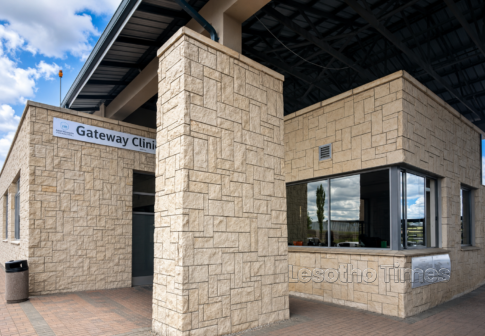
The government terminated the agreement in 2021 following a dispute over unpaid fees and a nurses’ strike, assuming direct control of the hospital and its filter clinics from Netcare in August that year.
Netcare subsequently took the matter to court, while separate litigation between Netcare and its local Tšepong partners over the consortium’s finances is also still before the courts.
Retirees speak out
Former Tšepong employees told the PAC they had been promised “transition money” as compensation for their years of service under Netcare and the Tšepong Consortium before the PPP ended, but say they never received it.
Sixty-three-year-old ‘Maeli Elizabeth Maile, who retired in March 2026 after joining Tšepong as a ward attendant in September 2011, said management never clearly communicated what would happen to the promised payment.
“We thought management was still preparing our transition money and that we would get it, but that never happened. There was no notification of any kind,” she said.
Ms Maile said employees were initially told they would retire at 65, but were later informed they qualified for early retirement because of the transition. They only received retirement letters two weeks before leaving at the end of March.
“We were told we would receive severance pay of two weeks for every year worked, and that we had accumulated only two years since Tšepong left. We were also told the Lesotho National Insurance Group (LNIG) would take responsibility, but no amount was mentioned,” she said.
Another retiree, ‘Malebohang Tšolele, told the Committee the transition payments appeared to have benefited expatriate doctors instead of Basotho employees.
“We get transition money for the years we worked, from when Tšepong opened until it departed. We were told of severance pay covering only two years, meaning we will not be paid for the years before that,” she said.
She added that workers had separately received payouts from the Metropolitan provident fund through LNIG covering their pension savings up to the point the government assumed control of the hospital.
“Right now we are only told about severance pay after working so hard for the government, but transition money is never mentioned. We are poor — it looks like we have not worked at all,” she said.
PS confirms Netcare has not been paid
It was on the strength of these complaints that the Committee resolved to seek to halt payment of the debt owed to Netcare until former employees receive their benefits.
Ms Lemphane-Letsie asked Ministry of Health Principal Secretary ‘Matšoanelo Monyobi whether the government had already settled the Netcare claim.
“To my knowledge, Netcare has not been paid, and they have instituted a case in the court of law,” Ms Monyobi replied.
Ms Lemphane-Letsie said Parliament would move to stop the payment process.
“We are going to stop it. We also have lawyers if it is in court, but we are going to stop that payment,” she said.
How the benefits work
Employees contribute between five and 10 percent of their salaries towards their pensions, with the employer matching five percent. The employer also pays approximately 7.2 percent in administration fees and a further 2.63 percent towards insurance.
Assistant Human Resources Manager Mabatloung Manyebutsi told the Committee that the Labour Code entitles retiring employees to severance pay.
“All workers were under a provident fund administered by Metropolitan Lesotho. The law is clear that a retiring employee deserves severance pay of two weeks’ salary for every completed year of service. The provident fund is more lucrative than severance pay because employees receive the package upon termination,” she said.
Memo presented as evidence
Member of Parliament, Katleho Mabeleng, told the Committee that a memorandum dated 2 August 2021, addressed to all staff, showed Tšepong had communicated its exit and government’s takeover well in advance. The memo warned employees that their benefits would change once they were absorbed into the public service.
Part of the memo reads: “As you are aware, the Government of Lesotho has decided to take over operations of the hospital and transfer employees with immediate effect. This has forced Tšepong to revise its exit and termination dates. All employment contracts have been transferred from Tšepong (Pty) Ltd to the Government of Lesotho as at 1 August 2021.”
The memorandum further stated that employees would receive only one month’s salary, pension fund benefits, prorated gratuity and 13th cheque, together with accrued leave and other outstanding allowances up to July 2021.
Committee member Dr Tšeliso Moroke said the hospital’s apparent failure to implement the provisions of the memo while continuing some Tšepong-era arrangements could amount to fraud.
“There has been theft here and a violation of the law. If a document communicates how things should be conducted and it is ignored, that is fraud,” he said.
Other concerns raised
Ms Lemphane-Letsie also told the Committee that the Central Bank of Lesotho had raised concerns over QMMH’s repeated failure to meet its obligations to LNIG, adding that responsibility lay with the hospital rather than the insurer.
She further alleged that some QMMH doctors were referring patients to their private practices before treating them at the hospital, while others were working with fraudulent qualifications.
“There are people working at QMMH with fraudulent qualifications. I have reported one such case to the Nursing Council, and police may already be looking into it. We cannot allow someone without proper qualifications to continue treating patients,” she said.