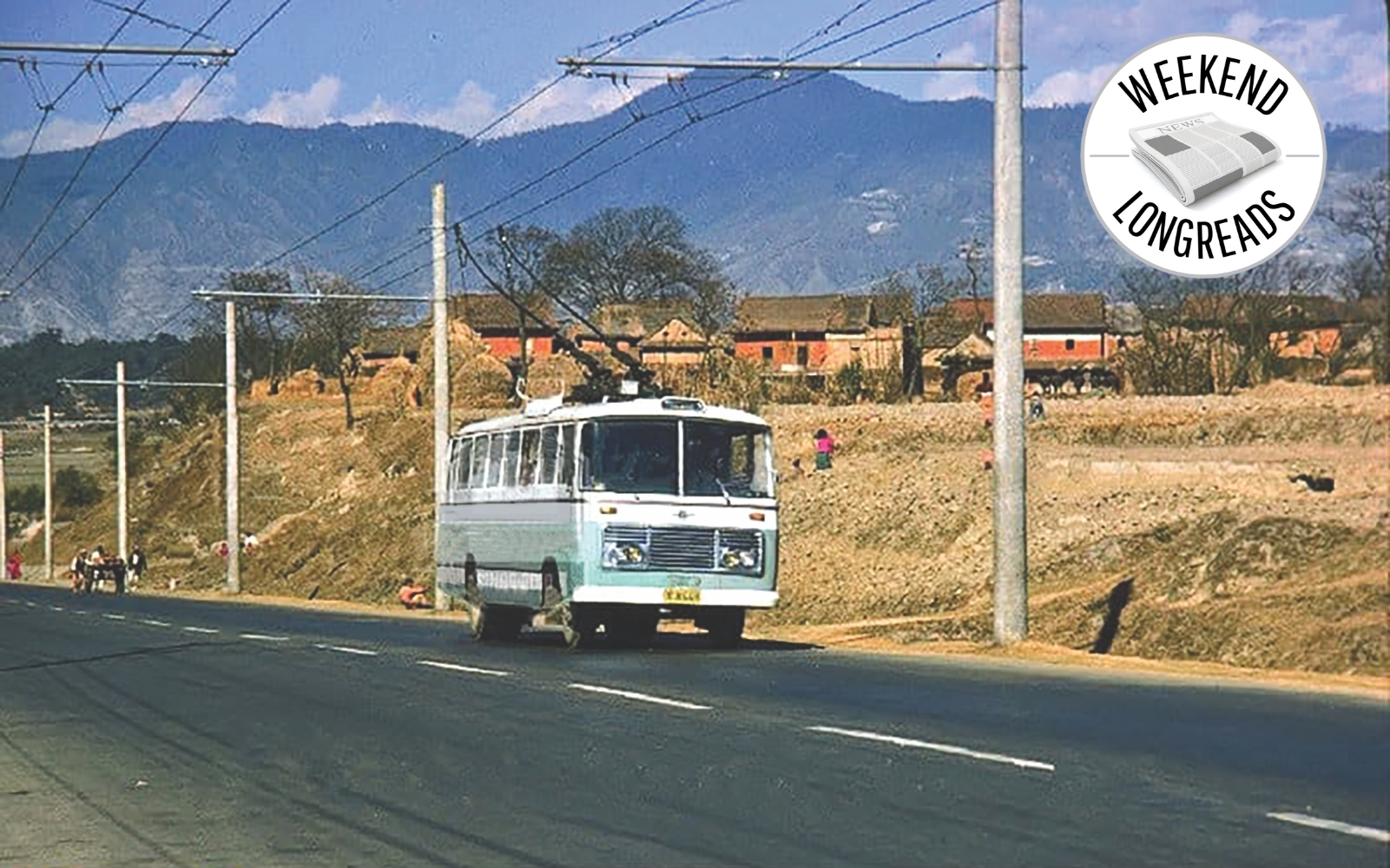
Fifty years ago, The World Bank ranked Nepal as the sixth poorest country in the world. But even back then Kathmandu already had a small but modern, efficient public transportation system.
It did not run on imported diesel but locally produced hydroelectricity. Unfortunately, like other well-designed, well-intentioned development projects in Nepal, the Bhaktapur trolley bus route was allowed to rust away – just like the cargo ropeway service joining Kathmandu to the plains.
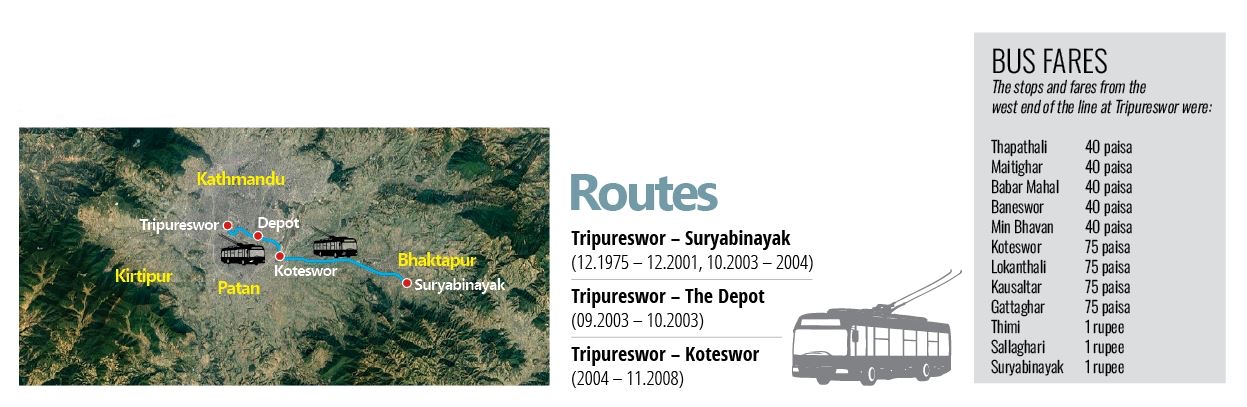
The Chinese built a 115km road from Bhaktapur to Kodari to the border (the Arniko Highway) in 1964. The road from Thapathali to Bhaktapur was improved in 1969, and four years later, the Chinese agreed to install the trolley bus service on the 13km route between Kathmandu and Bhaktapur.
Moulds for production of 10m tall concrete poles arrived from China. Land was acquired to build a terminal and workshop at Baneswor, a sub-power station was set up in Thimi and a bus terminus at Suryabinayak.
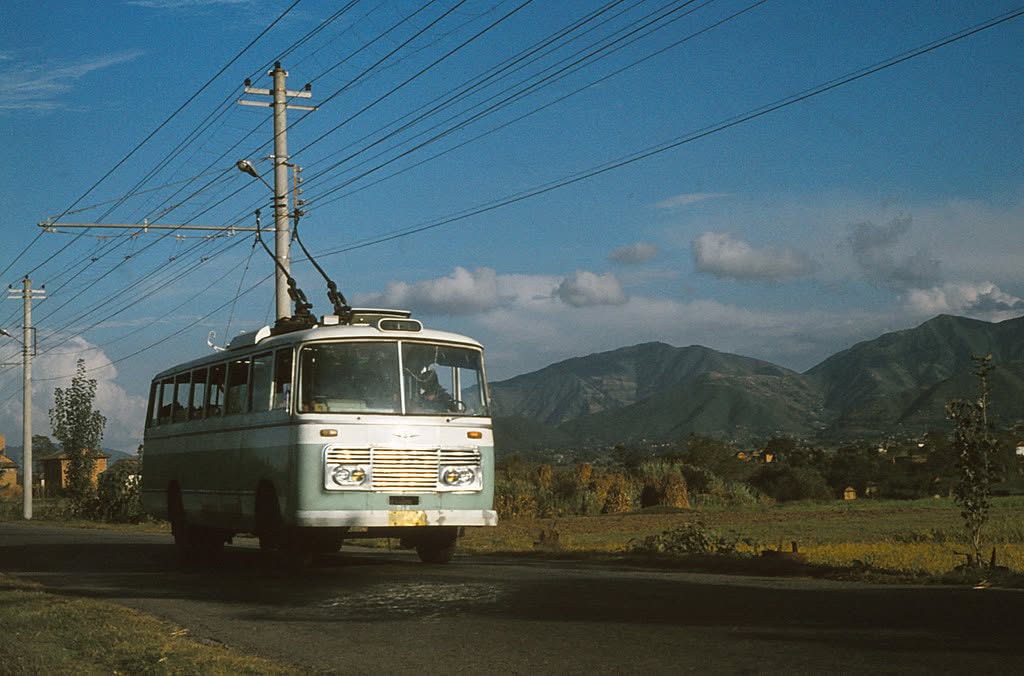
Each trolley bus had seats for 26 passengers with standing room for 35. It had an 80 HP, 600-volt (DC) motor, with a top speed of 50 km/h. The buses were type SK-541 manufactured in Shanghai in 1974.
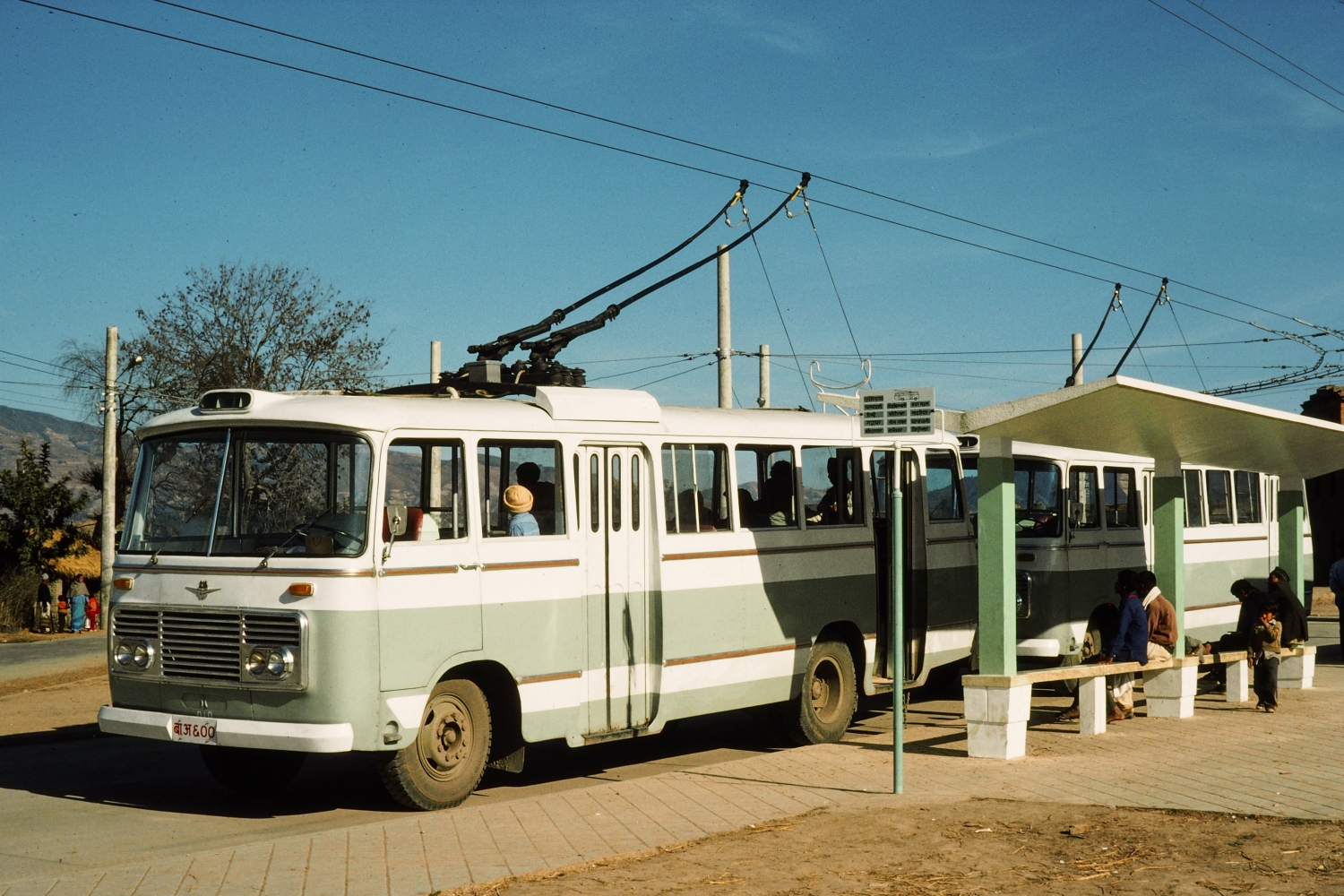
Prime Minister Tulsi Giri inaugurated the trolley bus line on King Birendra’s birthday, 28 December 1975. The government-owned Nepal Transport Corporation (NTC) managed the service and from the very beginning it faced competition from bus syndicates on the Kathmandu-Bhaktapur route.
Six buses and 25 minibuses were operating on that route in 1976, although up to 12,000 passengers a day were riding the 22 sleek trolley buses. Political pressure to reduce fares was brought to bear by government employees, students and workers who travelled daily on the electric buses. So the government issued them discounted season tickets.
A Tribhuvan University graduate student Arjun Raj Banshi wrote a dissertation on the trolley bus in 1982, showing that during its first four fiscal years (1976-77 to 1979-80), the trolley bus service lost Rs298,000, Rs325,000, Rs360,000 and Rs575,000.
The line never broke even for its entire operational life. The staff consisted of 49 working in management, 43 drivers, 37 conductors, 32 technicians, and 21 non-skilled workers. The general manager and board of directors were government-appointed.
Salaries, overtime and other facilities for the employees consumed more than 50% of total expenditure, and charges for electricity were 25%. While annual revenues increased each year, many riders hopped off without tickets, and conductors were lackadaisical in collecting full fares.
The Chinese initially had trained Nepali technicians, but they resigned to seek better job opportunities and higher salaries elsewhere. Workers also became dissatisfied because there were no provisions for life insurance for technicians working on 600 volt overhead lines.
Raj Banshi also noted that the Nepal Electricity Corporation was unable to guarantee a reliable and consistent daily supply of electricity, which affected the ability of the trolley bus to provide adequate and dependable service. Buses were often stranded for hours when the lights went off.
LONG DISTANCE TROLLEYS
Initial enthusiasm over the trolley bus line soon led to several ideas for building similar transportation systems in different areas of Nepal.
Trolley bus lines had political appeal, and a pre-feasibility study of electric public transport as an alternative to petrol-based service on the 200km Tribhuvan Rajpath linking Kathmandu with Birganj was carried out in 1977 by Centre for Economic & Development Administration (CEDA) and the Department of Electricity.
It showed that from 1977 to 1990 a trolley bus and truck system could generate profits of Rs14.7 million with an investment of Rs400 million. A minister told the National Panchayat in 1981 that a feasibility study was underway for introducing trolley bus or trolley truck services in some regions of the Tarai.
In 1984, the government announced that a technical survey for extending trolley bus service to Kirtipur and Patan Dhoka had been completed, and survey work for operating similar services from Jogbani to Dharan and Sunauli to Butwal would be undertaken during that fiscal year.
Offers from Nepali firms, with foreign collaboration were requested: to build and operate two trolley bus projects from Sunauli-Bhairawa-Butwal and Jogbani-Biratnagar-Dharan.
Feasibility studies to extend trolley bus operations from Suryabinayak to Banepa and to provide such services along Ring Road were prepared in 1989 and 1990 respectively. Upgrading an aging trolley bus system and expanding such services were among many challenges elected politicians in a new democratic order faced in Nepal.
In Nepal’s Eighth Five-Year Plan (1992-1997), the government stated:
‘With a view to minimising imported fuel consumption, trolley bus services will be extended to Tripureswor-Kirtipur and Thapathali-Patan Gate-Pulchok during the Eighth Plan period. Important contribution will be made to reduce the pressure of vehicles on the urban roads if trolley buses are operated throughout Ring Road of Kathmandu. Therefore, a 15-km trolley bus service will be operated in Teenkune-Chabahil-Maharagunj sector. In addition… a 22-km trolley bus service will be implemented between Ithari and Biratnagar.’
The Rising Nepal took up the cause of an expanded trolley bus system in a 1994 editorial:
‘As air pollution caused by the growing vehicle emission in the Kathmandu valley has resulted in a growing environmental problem, an alternative transportation means needs to be explored. The proposal to extend the country’s only trolley bus network to other routes in the valley is a relevant one to combat the pollution problem…. Why has the concerned authority been lagging behind in materializing the proposed scheme for broadening the network?’
Problems and prices escalated. Power failures affecting bus services became more frequent in the 1990s, as overall demand surged in the valley and those grandiose plans never materialised.
Nevertheless, NTC faced huge increases in the price of electricity. Bus service deteriorated because of lack of spare parts (China no longer made parts for 1974 buses), and maintenance delays kept only 13 of the 22 buses on the road.
A trolley bus making a round trip from Kathmandu to Bhaktapur used Rs125 worth of electricity, while an ICE bus consumed only Rs70 of diesel over the same distance. Studies revealed that the cost for new trolley bus infrastructure would be enormous: a double line overhead extension of wires to provide power to trolley buses would cost up to Rs8 million per km.
Furthermore, many of the existing roads (except Ring Road) were not wide enough to accommodate trolley buses along with the growing automobile, micro-bus and truck traffic.
China came to the rescue temporarily by donating 10 new SY-D60C buses manufactured in Shenyang in September 1996. Each bus cost U$79,000, had 32 seats and could accommodate 90 riders. The government renewed its call for foreign private sector investors to build and operate the two Tarai trolley bus routes under discussion since 1984.
SAME PROBLEMS AS NOW
Nepal’s Ninth Five-Year Plan (1998-2002) once more envisaged the extension Kathmandu-Bhaktapur trolley bus service to Kathmandu Ring Road and to initiate its privatisation. As newspaper articles chronicled the increasingly poor and erratic trolley bus services, CEMAT Consultants undertook a study in 1999 to examine future options. It called attention to the absence of an organized public transportation system in the Valley that had resulted in uncontrolled growth of private vehicles with the resultant traffic congestion and decrease in vehicle speeds.
CEMAT identified other significant issues: inflexible regulations of state-owned enterprises, government control of trolley bus tariffs, lack of technically qualified personnel, absence of provisions to take legal action against ticketless travelers, and lack of a preventive maintenance system for the buses and the overhead trolley network.
CEMAT believed that with 20 trolley buses running from Kathmandu to Bhaktapur and 28 buses operating on Ring Road, imports of diesel fuel would be reduced by Rs176 million annually. However, the investment required for the proposed Ring Road trolley bus system would be Rs416 million.
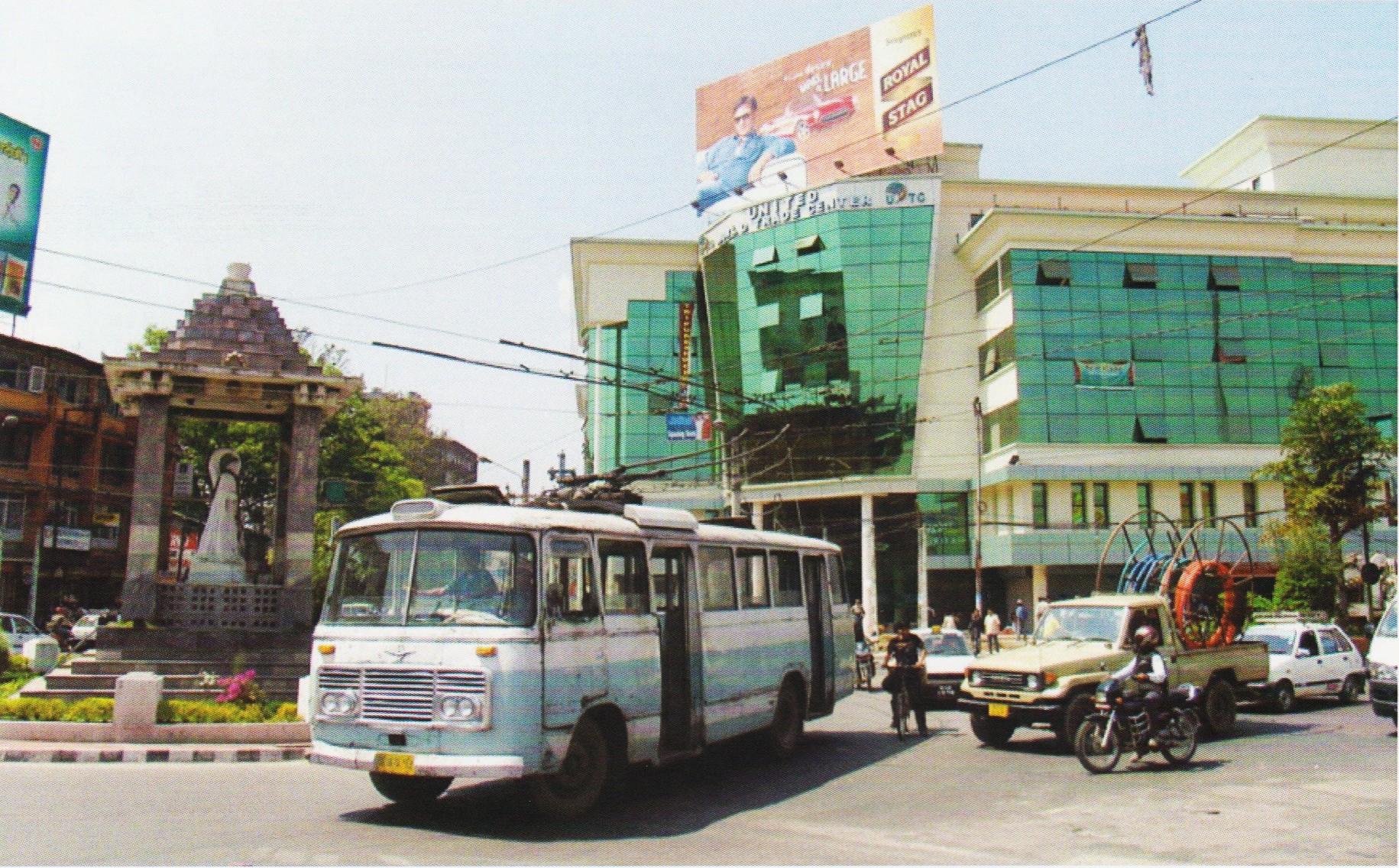
It was all too late. The trolley bus lost Rs13.1 million in 2000/2001. Its unpaid electricity bills exceeded Rs3 million. The last trolley bus left Bhaktapur on 19 December 2001.
A brief revival occurred in September 2003, when three buses emerged from their Min Bhawan garage and made a truncated 7km run to Tripureswor.
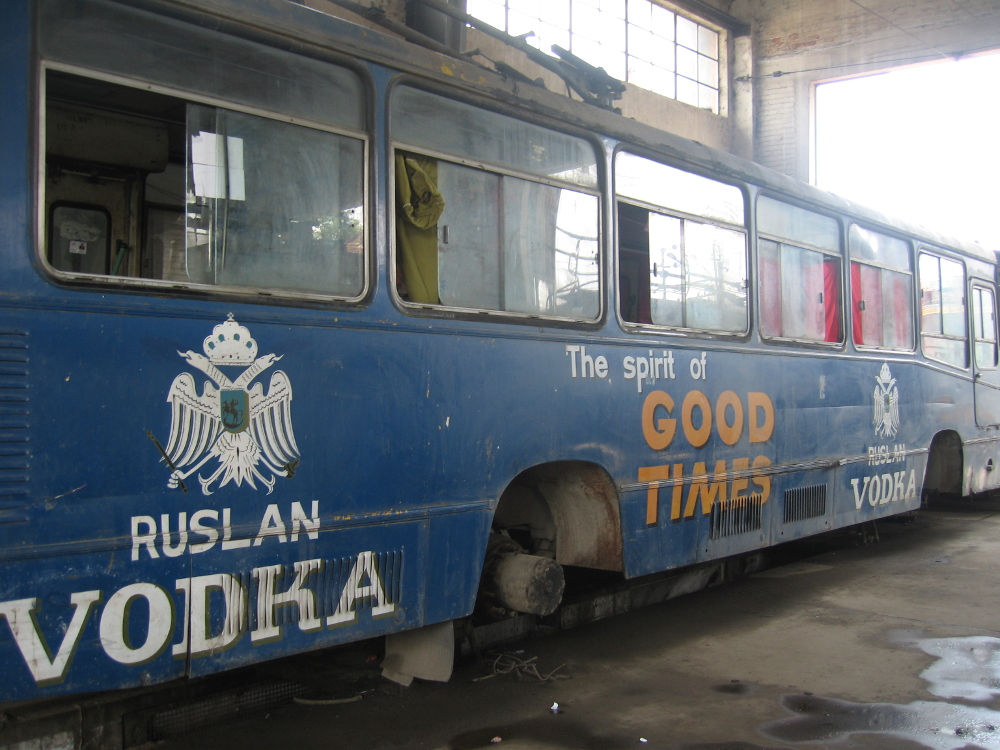
Only three buses carrying 200 passengers a day were operating on the Tripureswor to Koteshwor section in March 2005. The fate of the bus line was sealed in March 2007, when the government decided to remove all 278 trolley bus poles from Koteswor to Suryabinayak to make the Arniko Highway a four-lane road. They were dumped at Sallaghari for more than a decade – a monument to this failed experiment in electric public transport.
That October, the Maoist-affiliated Joint Republican Workers Front of Nepal was given authority to run what little was left of the trolley bus line in Kathmandu. Hundreds of Maoist Young Communist League (YCL) cadres already were living rent-free in former trolley bus offices and buildings in Baneswor.
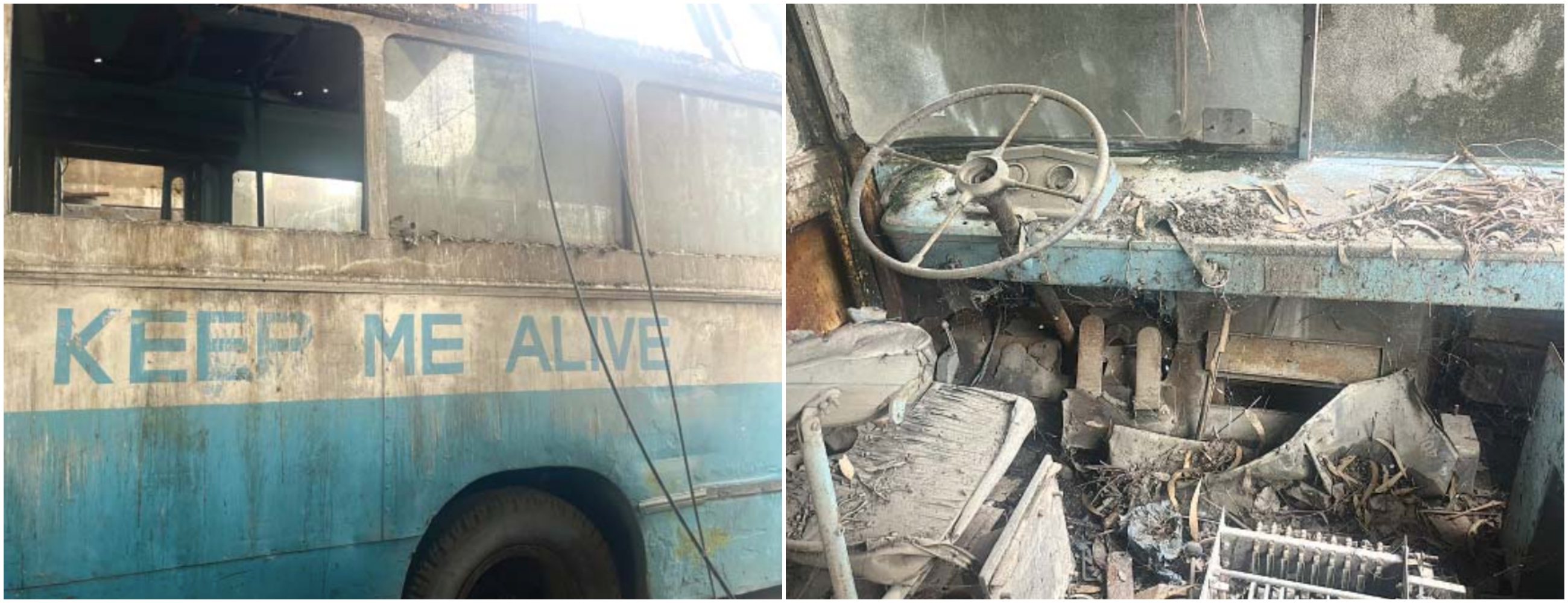
The denouement under Maoist management came quickly in November 2007: the saga of trolley bus service ended not as drama but as political farce.
Could the ultimate failure of the Kathmandu-Bhaktapur trolley bus have been avoided? Could the government’s once ambitious plans to build an extensive trolley bus network in Nepal have been achieved?
Good ideas were proposed, studied, and recommended, and public promises were made. However, always lacking were proper management by NTC, adequate funds, investments by firms willing to build new lines, and the political will to implement ambitious plans.
Dan Edwards is a former Peace Corps volunteer. This is the last episode of his series on the history of transportation in Nepal.