
The Falkland Islands Legislative Assembly on Thursday morning noted the recommendations of the Public Accounts Committee in which they commented the BAM Nuttall port facility project did not deliver value for money to the Falklands Government or to the taxpayer.
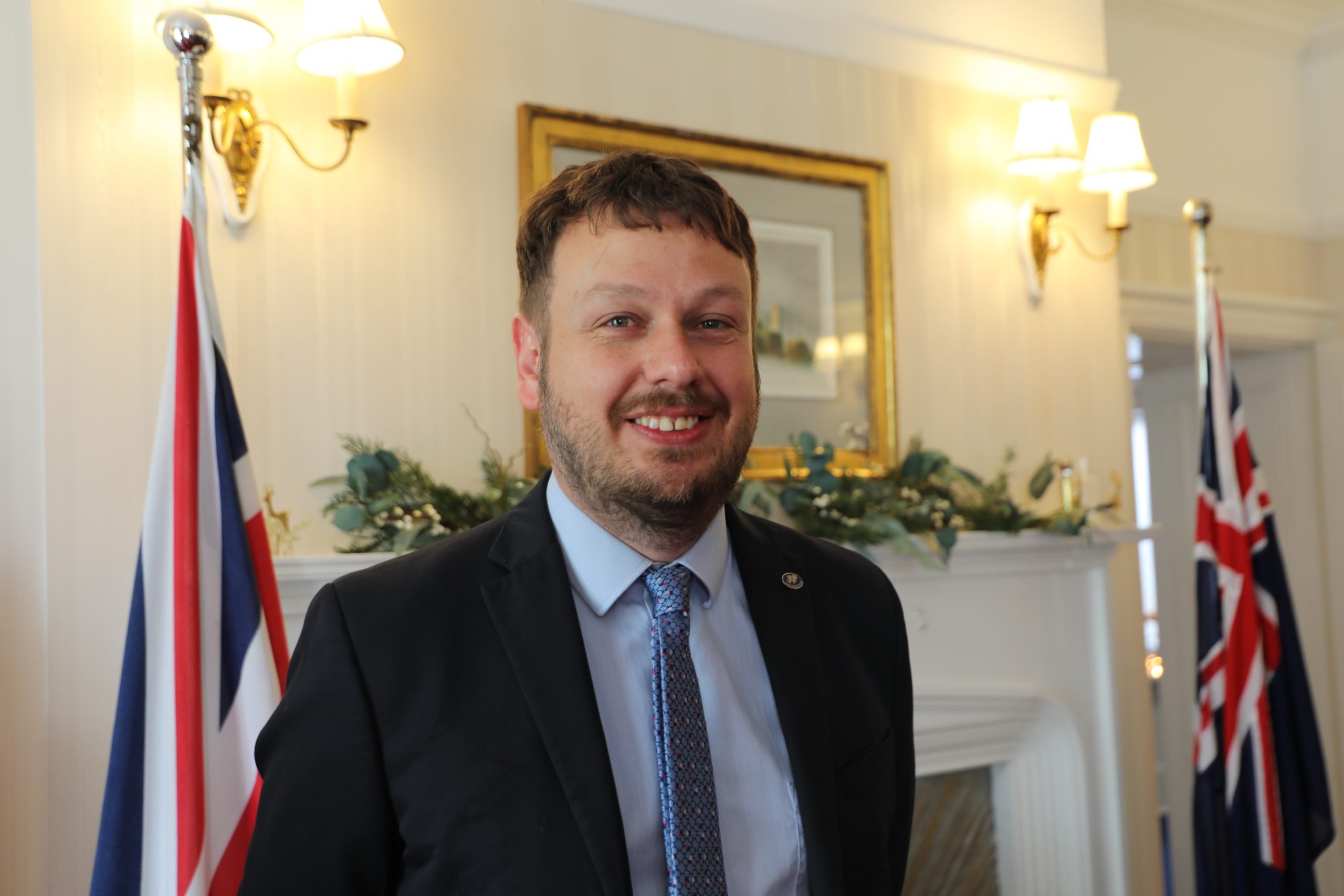
The motion, brought by MLA Stacy Bragger (pictured) asked members to formally note the findings of the Committee’s review into the proposed deep water port replacement project and triggered a requirement under the Public Accounts Ordinance 2009 for a written response from the Governor within six months.
Opening the debate, MLA Bragger described the report as a detailed examination of whether the significant public funds committed to the project had achieved value for money, assessed in terms of economy, efficiency and effectiveness. He said the need for a replacement port had long been recognised as critical to the Islands’ economy, particularly as the existing FIPASS facility nears the end of its operational life.
The Assembly heard that following a procurement process beginning in 2019, a contract had been awarded to BAM Nuttall under an early contractor involvement model, intended to provide cost certainty while allowing Government to retain control through staged approval gateways. However, despite those safeguards, the project saw substantial cost escalation, changes in scope and increasing financial risk.
Initial estimates of around £63 million rose significantly during development, with a negotiated figure of £129 million ultimately deemed unaffordable. The project was halted in 2022.
A central finding of the Committee’s report was that there had been insufficient transparency over the full cost of delivery, including associated Government expenditure on consultancy, legal support and project management. The report concluded that the project did not deliver value for money.
MLA Bragger outlined the series of recommendations aimed at strengthening future capital projects. These included ensuring that full project costs are identified at the outset, covering all associated expenditure, and developing a clear and transparent methodology for demonstrating value for money through a robust management arrangement.
The Committee also called for improved financial risk management, recommending that detailed risk evaluations be undertaken at an early stage and continuously reviewed throughout a project’s lifecycle. It emphasised that while delivery functions may be delegated, accountability for financial control must remain with Government.
Further recommendations included establishing regular financial risk reporting to members, strengthening project teams through the inclusion of dedicated finance professionals, and ensuring robust project management arrangements are in place from the earliest stages. The development of clear reporting tools, such as dashboard systems, was also highlighted as a means of improving transparency for elected members.
MLA Roger Spink welcomed the report and asked whether any outstanding recommendations would be implemented ahead of the six-month reporting deadline, given the importance of the Islands’ capital programme.
Responding, Chief Executive Andrea Clausen said Government acknowledged the report and would provide a full response in due course. She added that many of the recommendations were already in place, including the use of comprehensive cost assessments and internationally recognised risk evaluation methods in current port-related work.
She told the Assembly that specialist Treasury staff had been involved throughout both the BAM project and the current port programme, with strengthened governance arrangements, defined reporting triggers and tighter contract management now in place. She said project management and governance across Government had improved and “continually strengthened across FIG.”
However, Dr Clausen also suggested the report had placed significant emphasis on governance issues without fully recognising the complexities of delivering major infrastructure projects in the Falklands’ geopolitical and supply chain context. She added that up to £8 million worth of assets from the BAM project, including surveys and impact assessments, were still being used and could affect value for money calculations.
MLA Lewis Clifton sought assurance that the current port project would reflect the Committee’s recommendations. Mrs Clausen confirmed that new reporting systems were being developed and said the project was currently on track, with at least one element ahead of schedule.
Closing the debate MLA Dean Dent expressed confidence in strengthened oversight arrangements. With no objections raised, the motion was carried and the Assembly formally noted the Committee’s recommendations.