
The Federal Government has called for increased private sector participation and donor funding to sustain ongoing gains in the Ogoni environmental restoration project under the Hydrocarbon Pollution Remediation Project.
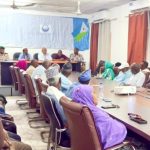
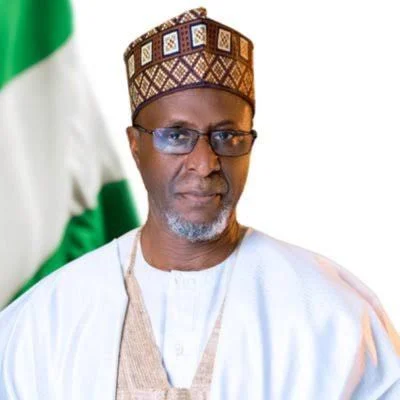
Speaking at a conference on donor facilitation and diplomatic support for HYPREP in Abuja on Tuesday, the Minister of Environment, Balarabe Lawal, stressed that the Ogoni cleanup programme was designed as a long-term intervention requiring sustained funding, technical support, and international cooperation.
“The project is supposed to be a lifespan project. We must move towards achieving its main aim, which is environmental restoration and sustainable development,” he added.
Lawal acknowledged the contributions of the United Nations Environment Programme, describing its assessment as the scientific foundation of the ongoing remediation efforts in Ogoni land.
“We are all here because of that UNEP report. It provided the scientific foundation for what has become one of the world’s most ambitious environmental remediation programmes,” he said.
According to him, hundreds of hectares of hydrocarbon-polluted land have been remediated, while additional sites are currently undergoing cleanup operations.
“We have remediated hundreds of hectares of polluted land, and more sites are still being worked on. Water schemes have also been delivered to affected communities,” he stated.
He added that ecosystem restoration, livelihood support programmes, and healthcare projects were ongoing across affected communities.
“Body health facilities are being constructed, livelihood programmes are empowering thousands, and we are also restoring access to safe drinking water because the first victim of pollution is water,” he said.
The minister also disclosed that the Centre of Excellence for Environmental Restoration was nearing completion, describing it as a major milestone in the project.
“If you go there, you will see one of the biggest edifices being constructed under HYPREP. It will serve as a postgraduate and research institute for environmental remediation,” Lawal said.
Despite the progress, he warned that funding challenges remain a major threat to sustaining the project.
“While substantial progress has been made, the journey is not yet complete. The implementation of UNEP recommendations requires long-term commitment and sustained financial and technical support,” he said.
Lawal therefore, appealed to development partners, donor agencies, international financial institutions, foundations, and private sector players to scale up their support.
“We need your support—financial, technical, scientific, and strategic. No organisation or government can do it alone,” he said.
He further described the Ogoni cleanup as a global model for environmental recovery, climate resilience, and international cooperation.
“The restoration of Ogoni land is not merely a Nigerian undertaking; it is a global model. Its success will show what is possible when governments, communities, and partners work together,” he added.
Also speaking, the Chairman of the Board of Trustees of the Ogoni Trust Fund, Emmanuel Deeyah, said the conference was organised to attract financial, technical, and institutional support for the cleanup exercise.
“We are looking for resources, financial support, expertise, partnership, and collaboration. Government cannot do everything alone,” he said.
Deeyah said the agitation for environmental justice in Ogoni dated back to 1991 when residents drew global attention to the environmental degradation caused by oil exploration activities.
“We farm in Ogoni land and we also fish, but our waters were polluted and the land could no longer support farming activities,” he said.
He explained that the UNEP report recommended that oil companies should contribute $1bn every five years for 30 years to support the remediation programme.
“We have done 10 years now and we have not even received the full $1bn that was supposed to be contributed. The refineries and local operators have not contributed a dime,” he stated.
Last week, the Hydrocarbon Pollution Remediation Project announced the closure of 30 contaminated sites in Ogoniland, Rivers State, while investigations have commenced on 18 high-risk polluted locations in residential communities.