Seithati Motšoeneng
THE government has urged Basotho not to panic over forecasts of an emerging El Niño weather pattern, stressing that while the coming rainy season could bring below-average rainfall, it does not automatically mean Lesotho will experience a drought.
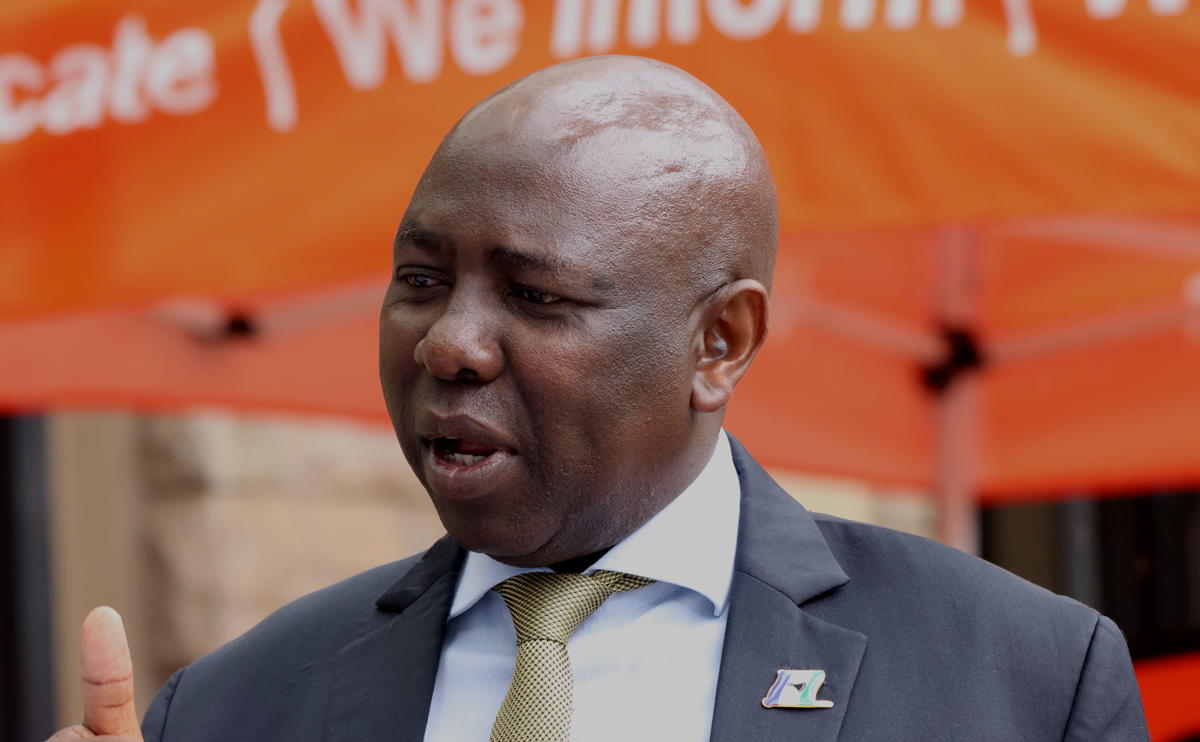
Minister of Environment and Forestry, Thabo Mofosi, said the country’s weather outlook points to a high likelihood of El Niño conditions developing ahead of the 2026/27 summer rainfall season. However, he cautioned that Lesotho’s climate was influenced by several weather systems and not El Niño alone.
Speaking at a media briefing yesterday on the country’s climate outlook, Mr Mofosi said forecasts indicate an increased probability of below-normal rainfall rather than a complete failure of seasonal rains.
“These conditions do not mean Lesotho will receive no rain at all,” Mr Mofosi said.
“The forecast indicates a high probability of below-average rainfall rather than a guaranteed drought.”
He said the government was encouraging farmers to begin preparing now, particularly with the main summer cropping season approaching.
“We are currently encouraging farmers to take advantage of prevailing weather conditions by focusing on water conservation, harvesting and the protection of water sources,” he said.
Mr Mofosi also urged farmers to consider planting drought-resistant crop varieties where necessary to reduce the impact of possible dry spells.
His remarks came after the Lesotho Meteorological Services (LMS) released its seasonal climate outlook on 30 June, indicating that much of the country’s eastern and central regions were likely to receive near-normal to above-normal precipitation during the current winter season.
The western lowlands, however, have a slightly higher probability of experiencing below-normal rainfall, although near-normal conditions remain the most likely outcome across much of the country.
“As this is the winter, generally dry season, rainfall is expected to be limited, with precipitation mainly associated with the passage of cold fronts,” the LMS said in its outlook.
The meteorological service said it was closely monitoring the development of El Niño and was working with the Disaster Management Authority (DMA) and the World Food Programme (WFP) under the Anticipatory Action initiative to prepare for any potential impacts.
According to the LMS, El Niño has produced varying outcomes in Lesotho over the years.
“While the intensity of El Niño has caused severe drought in Lesotho in past years, in other instances it has resulted in normal or above-average rainfall in certain parts of the country,” the department said.
The LMS said El Niño was expected to become the dominant climate driver during the October 2026 to March 2027 rainfall season. However, uncertainty remained regarding both the timing of its development and the strength of its effects.
Meteorologists said they would continue monitoring evolving El Niño-Southern Oscillation (ENSO) conditions and issue updated seasonal forecasts as confidence in the outlook improves.
The department also reassured the public that regular updates would be provided in the lead-up to the critical October-to-March rainy season, enabling farmers, communities and disaster management authorities to make informed decisions based on the latest climate information.