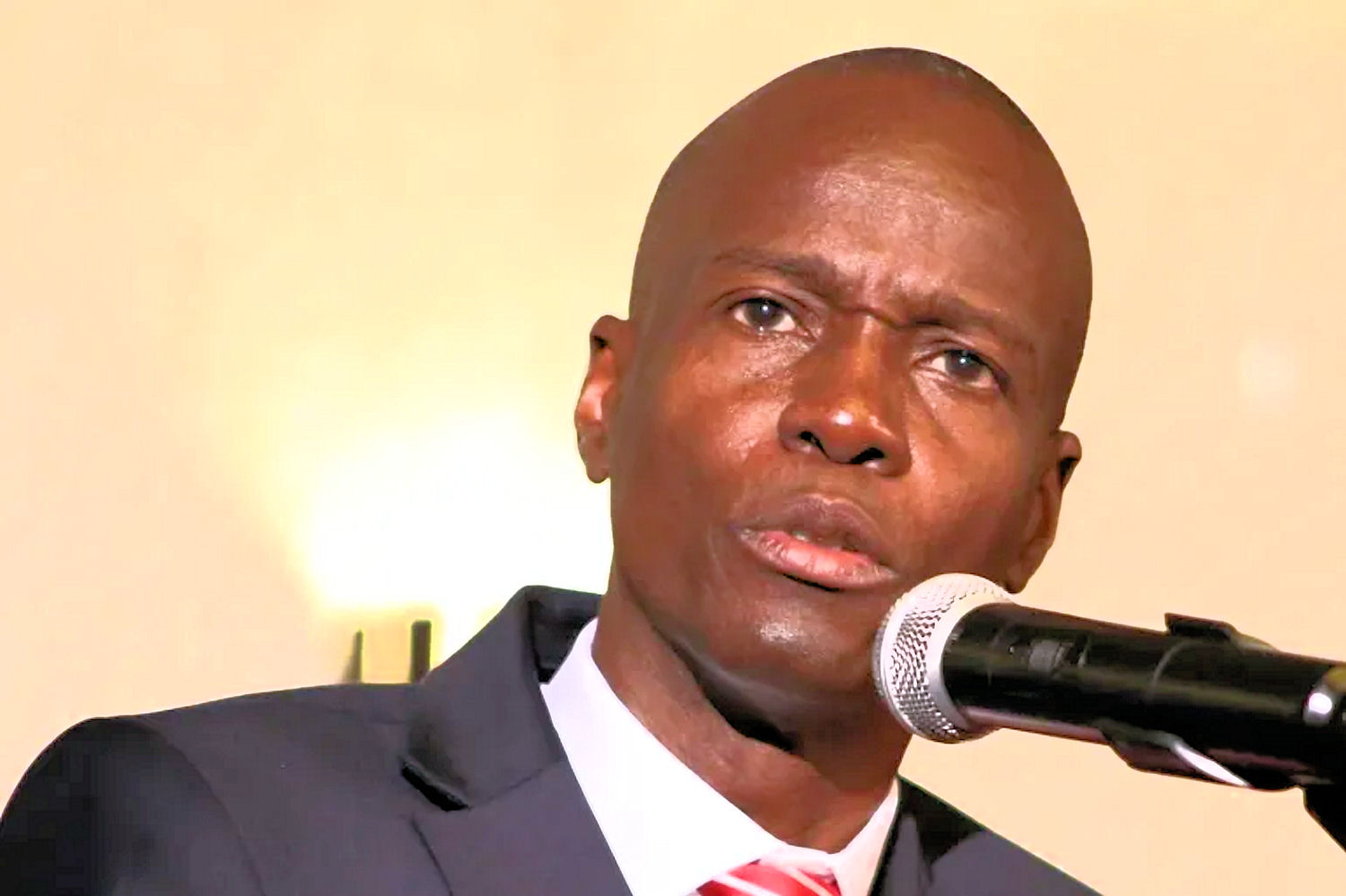

On May 8, 2026, a federal jury in Miami delivered a landmark verdict in one of the most audacious political crimes of the 21st century: the assassination of Haitian President Jovenel Moïse. After 39 days of testimony spread across nearly nine weeks of trial, and just over two days of deliberations, jurors found four South Florida men guilty of conspiring to kidnap and kill a sitting head of state.
The verdict was historic, but for many observers — and for the Haitian people still reeling from the chaos that followed Moïse’s death — it was only a partial answer to a much deeper question: Who truly ordered and funded the murder?
The Night of the Assassination
At around 1 a.m. on Jul. 7, 2021, a team of just over two dozen foreign mercenaries — mostly former Colombian soldiers — stormed the rented, walled residence of President Jovenel Moïse in the Pèlerin 5 neighborhood, about a mile up the road to Kenscoff above Pétionville.

Moïse was shot 12 times inside his bedroom. His wife, Martine Moïse, was gravely wounded in the same attack. She survived by pretending to be dead and was subsequently medevaced to the United States for emergency surgery.
The assassination plunged Haiti into a political abyss from which it has yet to emerge. More than 50 suspects have been charged in Haiti, but the domestic investigation has been chronically stalled by judicial dysfunction and political interference.
Meanwhile, U.S. federal prosecutors in the Southern District of Florida — because much of the conspiracy was apparently planned and financed on U.S. soil — mounted the only legal response to the magnicide to date.
The Defendants and the Conspiracy
The four men convicted on May 8, 2026, are: Arcángel Pretel Ortiz, 53, a Colombian living in Miami; Antonio “Tony” Intriago, 63, a Venezuelan-American; James Solages, 40, a Haitian-American; and Walter Veintemilla, an Ecuadorian American mortgage broker from Broward County, FL.
A fifth co-defendant, Christian Emmanuel Sanon — a Haiti-born physician/pastor who lived in South Florida and was initially chosen as the plotters’ preferred successor to Moïse — had his case delayed due to undisclosed health issues and will be tried separately.
Pretel Ortiz and Intriago were the co-principals of two Doral, Florida-based firms known collectively as CTU: Counter Terrorist Unit Federal Academy and Counter Terrorist Unit Security.
Veintemilla was the principal of Worldwide Capital Lending Group, also based in South Florida.
Solages served as CTU’s operational representative in Haiti.
“Only the oligarchs and the system could kill him,” Martine Moïse said. “I would like the people who did this to be caught. otherwise they will do it again.”
According to prosecutors, the plot originated in early 2021, when the group began scheming to remove Moïse from power and install a handpicked successor who would award them lucrative security and infrastructure contracts in Haiti. “This case is very simple,” lead Assistant U.S. Attorney Sean McLaughlin told jurors in closing arguments. “This is a case about greed, arrogance, and power.”
The scheme evolved over several months from a plan to arrest Moïse under a bogus warrant signed by a Haitian investigative judge, to an outright assassination. Prosecutors forensically traced approximately $343,000 used to finance the plot, sourced through loans, wire transfers, and — remarkably — U.S. federal pandemic relief funds. (The FBI’s estimate is likely low, because a Dominican money laundering analyst calculated in 2022 that $20 million was channeled through Dominican banks for the operation.)
Veintemilla’s lending company provided a $175,000 loan to CTU, funded in part through fraudulently obtained CARES Act Paycheck Protection Program and Economic Injury Disaster Loan money. Each defendant played a distinct role: Pretel Ortiz directed tactical planning and coordinated by phone with the Colombian mercenaries in Haiti; Intriago managed day-to-day logistics including payroll and equipment; Solages served as the on-the-ground liaison and fixer in Haiti, coordinating with local actors and conducting surveillance of the president’s residence; and Veintemilla served as the primary financier, according to U.S. prosecutors.
The jury found all four men guilty on five counts, including conspiracy to provide material support resulting in death, conspiracy to kill and kidnap a person outside the United States, conspiracy to commit offenses against the United States, and mounting an expedition against a friendly nation — a violation of the U.S. Neutrality Act, which prohibits U.S. citizens and residents from waging war against a nation at peace with the United States. (Never mind that the U.S. government itself regularly carries out such hostile actions.)
Intriago faced three additional counts related to the smuggling of bulletproof vests and tactical gear from Miami to Haiti. All four defendants face possible life sentences, with a sentencing hearing before District Judge Jacqueline Becerra scheduled for Jul. 28.
In total, 13 people were charged in the U.S. case. Eight took plea deals before the trial, and six of those cooperating witnesses took the stand. Five are already serving life sentences.
Key Testimony: The Witnesses Who Built the Prosecution’s Case
The government’s case rested heavily on the testimony of cooperating witnesses who had pleaded guilty to their own roles in the conspiracy. Their accounts, delivered over weeks of dramatic courtroom testimony, painted a vivid and sometimes contradictory picture of a conspiracy riddled with deception, confusion, and moral ambiguity.
Martine Moïse
The trial opened with one of the trial’s most emotionally powerful moments: the testimony of Martine Moïse, the slain president’s widow. She was the government’s first witness when the trial began on Mar. 9, 2026, and she testified through a Kreyòl interpreter. Speaking from personal experience of the night’s horror, she described how she had gone to bed around 10 p.m. on Jul. 6 while her husband remained awake working. She awoke to the sound of gunfire. In perhaps the trial’s most haunting exchange, she recounted turning to her husband and asking what was happening. He replied: “Honey, we are dead.”

Martine Moïse testified that she was shot multiple times when Spanish-speaking men entered their bedroom and ultimately survived by feigning death.
Her testimony established the human reality at the center of the case and directly implicated the Colombian mercenaries recruited by CTU.
Rodolphe Jaar
Haitian-Chilean businessman Rodolphe “Dodof” Jaar was one of the conspiracy’s most significant insider witnesses. A former DEA informant and one-time cocaine trafficker, Jaar owned a house near Moïse’s residence where the conspirators — including the Colombian mercenaries — gathered in the hours before the assassination. He had pleaded guilty prior to trial and was already serving a life sentence handed down in June 2023.

As a cooperating witness, Jaar testified that he contributed more than $150,000 to the operation — the single largest individual financial contribution (known so far) to the plot — covering housing, equipment, and alleged bribes paid to members of the presidential security detail. His testimony was essential in tracing the money flows that financed the killing. He also acknowledged an unusual sidelight: an interview he gave to the New York Times while hiding in Haiti had been arranged by someone he believed at the time was an FBI agent. He later learned the man was not a federal agent at all. Jaar’s willingness to testify came with the hope of a sentence reduction — although his life sentence has already been imposed.
John Joel Joseph
Perhaps the most riveting witness of the trial was former Haitian Senator John Joël Joseph, who testified under the name “John” over three and a half days. John had pleaded guilty and received a life sentence in December 2023, and his testimony for the prosecution was among the most detailed accounts of the conspiracy’s inner workings and its chaotic final hours.
John described the gathering at Jaar’s house on the night of Jul. 6, 2021, where he found himself alongside defendant James Solages, DEA informant Joseph Vincent, former Haitian Justice Ministry official Joseph Félix Badio, and Rodolphe Jaar. He watched as a circle of roughly 10 men formed around Solages, who then ordered what he called “the special commando” team – also called the “Delta Team” – into a pickup truck for the mission to kill the president.

“The person who was calling the shots was James Solages,” John testified. “He took his position as the boss.”
John also described how the plan underwent a dramatic and disturbing shift on the eve of the killing. What had originally been conceived as an operation to force Moïse into exile suddenly became something else: a plan to “kill and burn” both the president and his wife. According to John, Solages told the group “one entry, one exit” — a phrase John interpreted as an unambiguous order to execute Moïse. Shocked by the change, John, who cried on the stand, insisted he had believed the original goal was exile, not murder. He testified that he was ultimately left stranded as the convoy of Colombian commandos, Haitian national police officers, Solages, Vincent, and Badio moved out toward the president’s hillside compound in the middle of the night.
Defense attorneys challenged John’s credibility extensively, noting that he had met with prosecutors 31 times to prepare his testimony and that his account had shifted over time. John acknowledged withholding information early on, but attributed that to fear for his life, insisting that hs trial testimony was the truth.
Mario Antonio Palacios Palacios
Mario Antonio “Floro” Palacios Palacios was the only member of the five-man “Delta Team” — the group of former Colombian special forces soldiers who physically entered Moïse’s bedroom and killed him — who managed to escape after the attack. He tried to flee to Panama, via Jamaica, where he was arrested in October 2021, before being extradited to the United States. He pleaded guilty and was sentenced to life in prison in March 2024, and testified at the Miami trial as a cooperating witness.
His testimony was among the most harrowing of the trial. Palacios also broke down in tears on the stand. “I did not travel to that country to do anything wrong,” he said. “While I was there, I agreed to participate in this. What happened there does not represent me as a person. For that reason, I have agreed to tell the truth, because I am not a criminal, and I am very sorry for what happened over there.”

Palacios testified that he had been deceived from the very beginning. He said he was recruited for what he was told was a security job in an unspecified Central American country. He was not informed that the assignment was in Haiti until he was already committed. Once there, he and his fellow Colombians were made to wait weeks for weapons that never arrived and were promised a monthly salary of $2,500 and a $300,000 bonus — neither of which was ever paid.
Initially, the men were told they would be providing security for Sanon, he said. They were given only two shotguns for the job.
It was not until the very last moment, Palacios testified, that the mission’s true nature became clear. He described being told that a Haitian armed group was supposed to attack the president’s house first, and that the Colombian team would follow to search for videos and computers. But when the gang members could not be reached by phone on the night of the attack, the order came through. “They gave us the order,” Palacios said. “We had to do the job they were going to be doing.”
Like John, he identified Solages as “the boss” who gave the command to proceed to the president’s residence. Ballistic evidence presented at trial matched bullets recovered from both Moïse and his wife to a rifle used by the Delta Team. (The defense argued that two of the recovered bullets were “pristine” and planted.)
“Captain Mike” — Germán Alejandro Rivera García
Among the most revealing of the cooperating witnesses was Germán Alejandro Rivera García, a retired Colombian Army captain who went by the code name “Mike” or “Mikael” within the conspiracy. He had commanded the Colombian mercenaries on the ground in Haiti. Rivera had pleaded guilty and testified against the four defendants in what proved to be some of the trial’s most striking testimony.
Rivera testified that Arcángel Pretel Ortiz — who wore fake U.S. military-style uniforms and referred to himself as “Colonel Gabriel,” after the archangel Gabriel — had assigned angelic code names to all of the plot’s principal figures. Pretel went by “Gabriel,” Rivera by “Mikael,” and others received names like “Uriel” and “Rafael.” When a defense attorney displayed a group chat message from May 10, 2021, featuring an image of a winged angel with a sword and armor, Rivera explained that the group did not see themselves as ordinary angels.

“Not just angels with arms and wings,” Rivera testified, “but rather avenging angels.”
Unlike John and Jaar, Rivera said he communicated directly and regularly with Pretel Ortiz and Intriago throughout the operation, as well as with Solages. He testified that the critical shift — from kidnapping to assassination — came approximately two weeks before Moïse was killed, in the aftermath of a failed Jun. 19, 2021, operation to seize the president when he returned from a state visit to Turkey. After that failure, a new figure entered the scene: the previously mentioned Joseph Félix Badio, a former Haitian Justice Ministry official who had recently been fired, whom Pretel Ortiz introduced to the group as “the cousin” — the new CTU representative in Haiti. Pretel Ortiz told Rivera to take his orders from Badio going forward, Rivera testified. At that point, the group also switched its designated presidential successor from Sanon to Wendelle Coq Thélot, a justice of Haiti’s Supreme Court and a close associate of Badio. Thélot died as a fugitive in January 2025 before she could face justice.
Rivera also noted that he joined the operation because he was struggling financially to support his wife and child — a reminder that the conspiracy exploited vulnerable former soldiers by offering them promises of money that largely never materialized.
The Central Mystery: Who Ordered and Funded the Killing?
Despite the sweeping scope of the Miami trial — 39 days of testimony, more than 40 witnesses, 8,000 gigabytes of data recovered from over 100 electronic devices across three countries — the verdict has failed to answer the question that haunts the case most profoundly: Who are the intellectual authors of Jovenel Moïse’s assassination?
The men convicted in Miami were architects of the plot’s operations. They hired the mercenaries, supplied the weapons and gear, arranged some of the financing, and pulled the logistical strings. But neither the prosecution nor the defense, across weeks of competing narratives, came close to identifying the higher-level mastermind(s).
The figure who looms largest over the unanswered questions is Badio, whose name was cited repeatedly throughout the testimony of multiple witnesses as an influential organizer and logistics coordinator. Rivera testified that it was Badio who effectively redirected the operation toward assassination following the failed arrest attempt after the trip to Turkey. Yet Badio has never been charged in the U.S. case, and, although he was arrested in Haiti in October 2023, his whereabouts and legal status remain unclear.

The defense teams, for their part, argued a strikingly different theory: that their clients were not the masterminds but the duped. They contended that the four defendants believed they were operating under a legitimate Haitian judicial warrant, signed by an investigative judge named Jean Roger Noelcius — a document they claimed authorized Moïse’s arrest.
The judge himself testified via video that the warrant was illegal because he had no authority to order the arrest of a sitting head of state. Defense attorneys also argued that the actual killing of Moïse was carried out not by the Colombian commandos but by members of the presidential security detail and rogue Haitian national police, who killed the president before the commandos ever arrived. Central to this theory is the figure of Badio, who, according to John’s testimony, suggested after the assassination that they should cut up Moïse’s body, place it in a barrel, and dump it in the ocean — suggesting a level of foreknowledge and cold calculation that pointed toward deeper Haitian involvement.
The defendants further claimed, without success, that they had operated with the tacit approval of the U.S. government. Prosecutors sharply denied any such backing, however many observers find it inconceivable that an operation of this size and duration could have been carried out without the U.S. Embassy and its robust intelligence gathering capabilities (and the U.S. government’s previous association with many of the plot’s actors) having foreknowledge of, if not involvement with, the plot.
Several other factors may have hampered pursuit of higher-level culpability. One reason may be that parts of the case were handled under the Classified Information Procedures Act (CIPA), a law that restricts the public’s access to potentially “sensitive details” of secret U.S. operations. Another possibility is that several plea agreements and closed-door processes limited what attorneys could reference in open court. Yet a third reason may be the lack of cooperation (or the feigned appearance of it) between Haitian and U.S. investigators, which has left key witnesses in Haiti off the stand in Miami.
Meanwhile, Haiti’s investigation has charged more than 50 suspects. A 2024 round of indictments was overturned on appeal in October of the same year, and a new investigation was ordered. The judicial system’s dysfunction has rendered meaningful progress nearly impossible. None of the indictments have identified who ordered and financed the assassination at the highest level.
What the Miami verdict has established is the operational layer of a complex, multi-actor crime. It has shown that South Florida served as a staging ground, that a group of greed-driven individuals exploited Colombia’s vast pool of unemployed former special forces soldiers, and that the $343,000 budget — a surely only partial sum for the murder of a head of state — was assembled through a patchwork of loans, fraud, and individual contributions. But it has not told us who commissioned the hit, who provided any backing from within Haiti’s political or business elite, or whether the conspiracy extended to figures with far more power and wealth than a Doral security firm and a Broward mortgage broker.

Martine Moïse herself, in the immediate aftermath of the killing, pointed to a different class of suspects altogether. She told the New York Times that she didn’t think that the Haitian police had identified those who ordered the murder.
“Only the oligarchs and the system could kill him,” she said. “I would like the people who did this to be caught, otherwise they will kill every single president who takes power. They did it once. They will do it again.”
Two of Moïse’s wealthy bourgeois opponents were named in early reporting as Dr. Reginald Boulos and Dimitri Vorbe, though Boulos has denied involvement. Boulos was detained by Immigration and Customs Enforcement (ICE) in July 2025 and deported to Colombia in April. Since September 2025, Vorbe has been in ICE custody in Florida.
The Main Take-Aways from the Miami Trial
Prior to the trial, the involvement of Jovenel Moïse’s political opposition in Haiti was only rumored, but now it has been very clearly revealed.
Testimony detailed the central role played by actors, allies, and/or veterans of the Democratic Political Sector (SDP) of André Michel, Marjorie Michel, and Nènèl Cassy, the Inite/Espwa sector of the late President René Préval, the Lavalas Family party of former President Jean-Bertrand Aristide, and even former President Michel Martelly, who helped hoist Moïse to power but later had a falling out.
Most of the Haitian public, both in Haiti and its diaspora, see this trial merely as a first step in finding justice for Jovenel Moïse, whose reputation and tragic status has grown since his death. It will push Haitian authorities to eventually deliver a trial of its own, which seems unlikely under the current corrupt de facto Prime Minister Alix Didier Fils-Aimé.
The sentencing for the four convicted men is scheduled for Jul. 28 before Judge Becerra. There still is no date for when Sanon will be tried. Some of the defendants who pleaded guilty but testified for the U.S. government may see sentence modifications depending on their continued cooperation.
For Haiti, a nation still in the grips of an historic political struggle between the armed groups of Haiti’s poor neighborhoods demanding services and “system change” or, at the very least, national dialogue, and the massacring police and mercenary death-squads and drones of an illegitimate government literally imposed by U.S. gunships, the Miami convictions offer a small measure of justice and legal accountability. But the deeper reckoning — naming and prosecuting the people who most wanted Jovenel Moïse dead and had the resources and political will to make it happen — remains unfinished business.