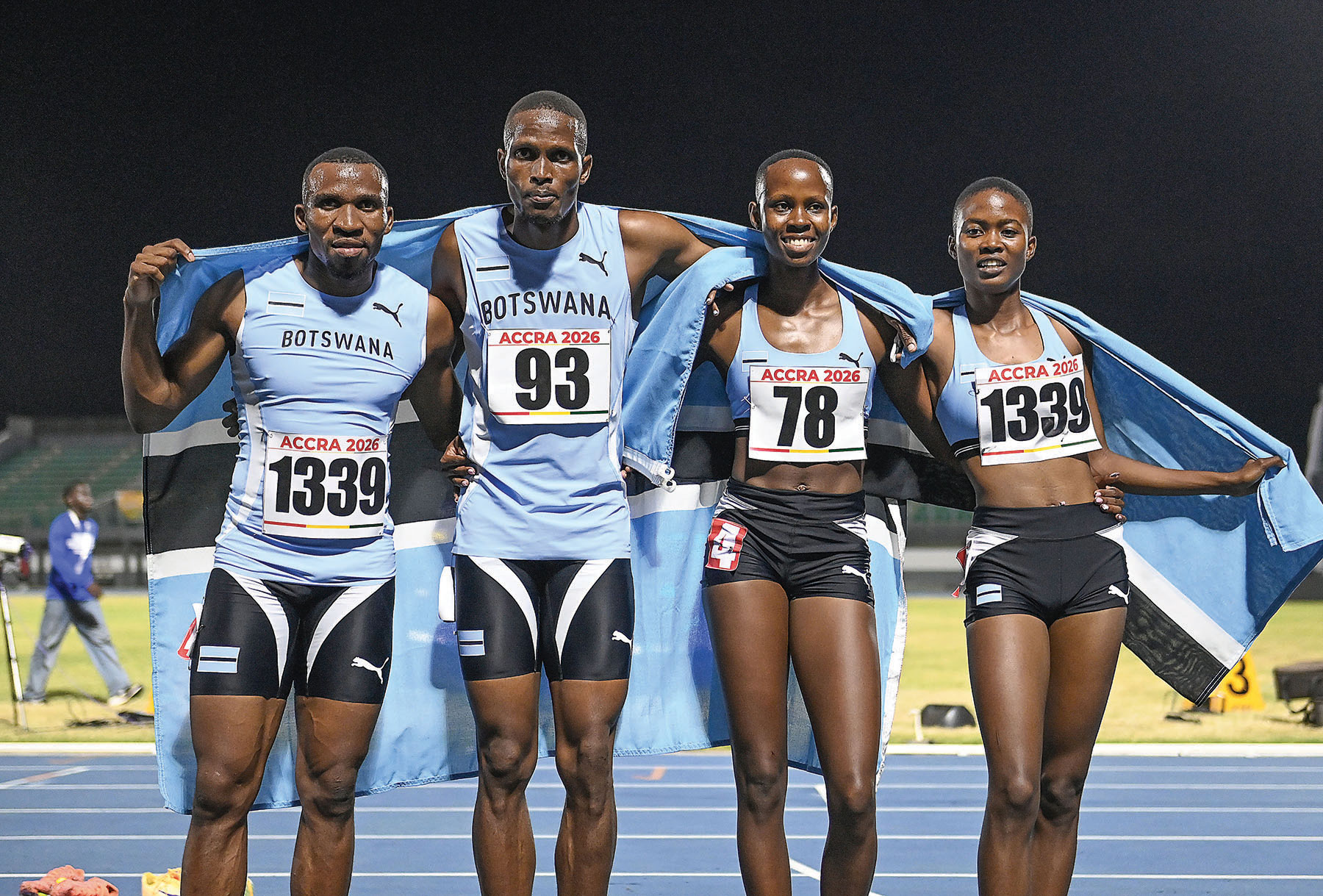
The medal count continues to rise for Botswana at the ongoing African Athletics Championships in Ghana. Glory and national pride, as expected, beckons.
Beyond the medals however, greater value lies elsewhere. According to the team management, the country’s greatest victory lies in the valuable experience gained by its young athletes competing on one of Africa’s biggest stages.
Team manager Keabetswe Friday says the championships have highlighted both the country’s growing strength and the areas that still require improvement if Botswana is to consistently compete among Africa’s athletics elite.
According to Friday, Botswana’s technical team deliberately set an ambitious target of four gold medals to challenge athletes mentally and physically against the continent’s top competitors. As of Thursday, Botswana had secured two gold medals and four silver medals, remaining firmly in contention to reach that target.
The gold medals came through Lee Eppie in the men’s 400 metres and Kemorena Tisang in the men’s 400m hurdles.Silver medals were won by Victor Ntweng in the men’s 400m hurdles, Oratile Nowe in the women’s 800 metres, Obakeng Kamberuka in the women’s 400 metres, and Botswana’s mixed 4x400m relay team.
Despite the encouraging performances, Friday admits that the championships also revealed important lessons for Botswana’s developing athletes, particularly when competing under pressure at senior level.
“The competition showed us where we still need improvement, especially with young athletes competing at senior level. One of the biggest challenges was handling pressure on the big stage and maintaining a strong finish. Justice Oratile impressed in the heats but struggled in the final, while Oratile Nowe narrowly missed gold at the finish line,” he says.
However, the team Botswana manager stresses that such moments should be viewed as part of the athletes’ growth and development rather than setbacks. He notes that Botswana’s 100m athletes did not perform as expected. That said, he believes the competition offered younger athletes a valuable opportunity to learn and gain confidence competing against experienced continental stars.
Friday adds that Botswana’s progress remained encouraging, especially considering that some athletes competing in Ghana had recently been participating in school sports and were now stepping up in the absence of more experienced athletes.
He also praised Botswana’s mixed 4x400m relay silver medal, saying the women’s side had improved significantly after years of development. The result, he says, boosted Botswana’s hopes of qualifying for the World Championships.
The performances of athletes such as 4x400m mixed relay Karabo Mantswinyane and Kamberuka were highlighted as signs that Botswana’s women sprinters are steadily improving and growing in confidence at continental level.
Friday further says, “Eppie’s development within Botswana’s relay programme, transitioned him into a full-time 4x400m athlete had contributed greatly to his gold-medal performance. Exposing young athletes to elite competition now would strengthen Botswana’s future relay teams and improve competition for national team call ups at the highest level.”