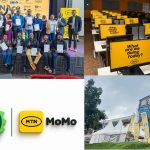
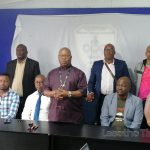
The Mandela Institute for Development Studies (MINDS) recently concluded its 2026 Leadership Development Program (LDP) in Swakopmund, equipping 24 scholars and alumni from nine African nations with practical skills to address the continent’s most pressing challenges.
Held from 17 to 20 August, the four-day intensive workshop brought together dynamic young leaders for practical leadership training, cross-border peer exchange, and cultural immersion along Namibia’s central coast.
Unlike traditional academic seminars, the program focused on action-oriented leadership. Participants engaged in practical exercises designed to enhance self-awareness, analyze complex political and social systems, navigate competing stakeholder interests, and build collaborative solutions tailored to African contexts.
Speaking on the impact of the initiative, Dr Nkosana Moyo, Founder and CEO of MINDS, emphasized that academic access alone is not enough to drive continental growth.
“A scholarship can open the door to a university, but Africa also needs graduates who can lead across differences and turn knowledge into collective progress. The LDP makes the Pan-African purpose of the MINDS Scholarship practical,” Moyo said.
The first two days were facilitated by Rachel Nyaradzo Adams, a MINDS Trustee and founder of Narachi Leadership. Sessions on systemic and situational leadership, self-awareness, politics and contestation, and coordinating action with others examined how values, power, context and relationships shape leadership choices.
Scholars gained tools to recognise their leadership patterns and to work through disagreement without losing sight of shared purpose. Learning with peers from different countries and fields challenged assumptions, widened perspectives and put collaboration into practice.
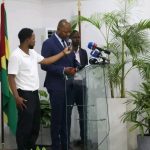
On Day 3, Dr Nkosana Moyo, Dr Alice Mogwe, Professor Siphamandla Zondi and Francis Daniels led a panel on Intra-African Travel, Migration and Xenophobia. The discussion examined how policy, institutions and public attitudes shape the experiences of Africans who cross borders, connecting Pan-Africanism to mobility, dignity and belonging.
The objective of the Entrepreneurship Showcase was to give MINDS scholars and alumni practical pitching experience before accomplished leaders, connect promising ventures with experienced mentors who can support their growth, and celebrate the entrepreneurial spirit within the MINDS
community.
Tlamelo Cindy Melemo from Botswana presented Sebaga Africa, while Abba Said Uba from Nigeria pitched Safebox Technologies. Both were recognised as the session winners for demonstrating strong clarity, collaboration and practical thinking in their presentations.
The final day extended learning beyond the conference room. At Spitzkoppe, scholars experienced Namibia’s granite landscape, explored the area’s history and heritage, and visited an Ovahimba community. The cultural immersion reinforced the idea that effective African leadership must take culture, identity, place, and local knowledge seriously.
Launched in 2017, the MINDS Scholarship Program for Leadership Development supports postgraduate study outside a scholar’s home country but within Africa. The LDP deepens that cross-border experience by giving scholars and alumni structured space to reflect, learn from one another, and build relationships that can outlast the scholarship period.
The LDP is therefore not an add-on to the scholarship; it is the bridge between academic opportunity and leadership practice. Participants leave with stronger self-awareness, tools for collective action, and a peer network that understands Africa’s challenges do not stop at national borders. The result is more capable leaders and stronger relationships across institutions, sectors, and countries.
The LDP concluded with a gala dinner at which all 24 scholars and alumni received certificates of participation. The gathering celebrated the knowledge gained, the relationships formed, and the responsibility to apply that learning in universities, workplaces, institutions, and communities.