1. Why is Volkswagen holding crunch talks with workers?
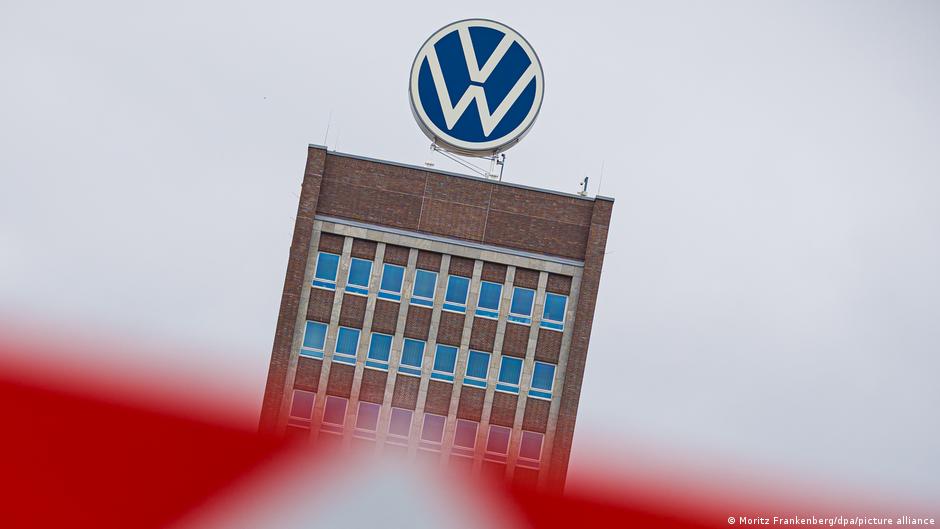
Volkswagen’s management is holding extraordinary meetings with workers this week amid an unprecedented cost-cutting drive, including reports of up to 100,000 job losses and the possible closure of several German car factories.
Germany’s auto industry faces a deep structural crisis due to intense pressure from Chinese rivals, the transition to electric vehicles (EVs), higher production costs and other challenges.
As Europe’s biggest carmaker by volume, VW has the heaviest exposure to overcapacity in its German plants, high fixed costs and its reliance on China.
Workers have been particularly concerned by how the restructuring was communicated so far, which representatives have described as “disastrous.”
Nine separate meetings will be held, starting on Tuesday at VW’s headquarters in Wolfsburg, with talks at other sites including Emden, Zwickau, Braunschweig and Hanover before the end of the week.
Workers had already agreed to around 50,000 job cuts, mainly through voluntary redundancy schemes. But management now thinks a further 50,000 jobs will have to be lost.
2. Why does Volkswagen need to make such drastic cuts?
CEO Oliver Blume has stressed that VW is in a “more than critical state” and that the measures adopted so far are not enough to restore competitiveness.
“We are oversized. That often makes us too slow and too complicated,” he told staff in an interview on the company’s intranet last week.
With nearly 630,000 workers, VW has grown more bloated than its peers over decades after choosing to control more stages of production — including components and software — while mopping up rivals such as Skoda, Porsche, SEAT and Bugatti.
The automaker was also slow to transition to EVs just as Chinese competitors gained ground, causing a large sales drop in its former number one market — China.
Blume warned that VW is currently over-producing around half a million vehicles in Europe every year.
While closing German factories would be a last resort, Blume said management “cannot currently see any way of them remaining profitable in the 2030s.”
Other automakers have criticized Germany’s high operating costs, including Mercedes-Benz CEO Ola Källenius, who last month spoke of a 70% cost gap between the firm’s Hungarian and German operations.
3. What reaction is expected from workers?
Blume is expected to face an angry reaction from VW employees, who rank as some of the best-paid auto workers in the world thanks to the power and influence of unions and the works council.
After already accepting VW’s earlier restructuring plans, Christiane Benner, the head of the IG Metall union, said workers “are getting another slap in the face.”
During the meeting with workers in Wolfsburg on Tuesday, VW works council chair Daniela Cavallo said “trust” in Blume and the executive board “has been damaged,” but “not yet beyond repair.”
Last month, VW’s supervisory board — which includes shareholders and worker representatives — rejected the second round of cost-cutting proposals.
The move is further complicated as VW is part-owned by the state of Lower Saxony, which holds 20% of the voting rights. The state has refused to sign off on the plans, according to German media reports.
“Lower Saxony is automotive country … and this must remain so,” said Olaf Lies, the state’s premier on Monday. “Now it is important to me that we find joint solutions.”
4. How is Volkswagen planning on getting back on track?
Blume told the Bild am Sonntag newspaper last weekend that he had drawn up “the largest transformation plan in the history of the Volkswagen Group.”
His Target Vision 2030 plan aims to cut VW’s model lineup by half and lower overheads, particularly in Germany. The automaker will also reduce its global production target, which peaked at about 11 million vehicles in 2018, to 9 million a year in the future.
Faced with rising competition from China, along with US tariffs, geopolitics and red tape, Blume warned that VW management has to “assume the risks will get worse, worldwide.”
Most global automakers are struggling to react to Chinese EVs flooding global markets, increasingly unpredictable markets and the mounting pressure of EU net-zero rules, which include fines for not hitting emissions targets.
Blume told the newspaper that the next few years would be “decisive” in determining which carmakers remain viable.
He said although VW achieved a solid 3.8% operating margin, the profits are not enough to invest in new technologies, products and maintain the company’s sites.
Edited by: Tim Rooks