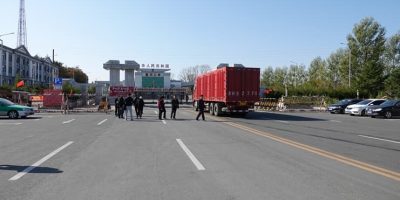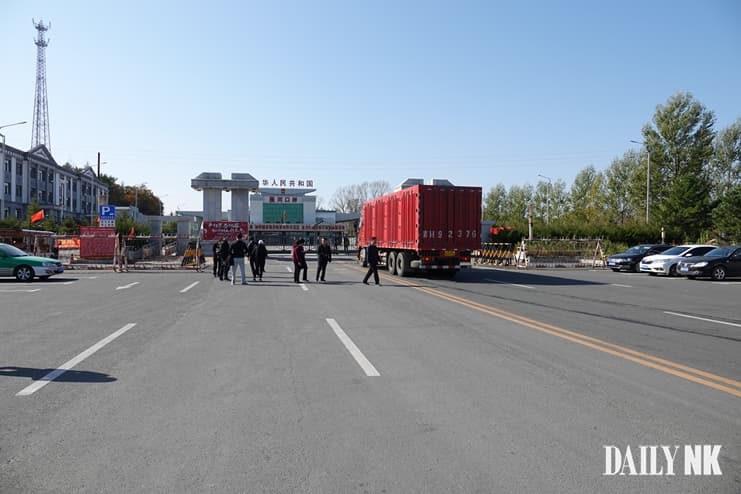

North Korea has begun allowing new cars to be imported from China through official customs channels, but few brokers are eager to take advantage of the change, as new vehicles carry thin profit margins and slow returns compared with the used cars whose imports remain suspended.
“Hyesan recently started allowing new car imports through customs,” a source in Ryanggang province told Daily NK on Monday, referring to a border city that has long served as a hub for informal trade with China. “But compared to used cars, you have to put in a lot of money for not much return, so it’s not an exaggeration to say there are almost no brokers willing to invest fresh capital to get into this.”
Vehicles are among the items whose supply, sale and transfer to North Korea are restricted under United Nations Security Council sanctions imposed over the country’s nuclear and missile programs. In Ryanggang province, which borders China, vehicles have long been brought in through an unofficial channel known as state smuggling, informal trade that operates with the tacit tolerance of local officials. Since July 20, however, vehicles have been allowed to enter through customs, though only new cars can currently be imported officially, according to the source.
The problem, brokers say, is that new cars are simply less profitable than used ones.
Slim margins make new cars a hard sell
Because the purchase price of new cars in China is clearly known, brokers have little room to mark up prices when reselling them in North Korea. Profits can shrink further when multiple brokers import similar models at the same time and end up competing for buyers. As a result, brokers are focused on selling off the new car inventory they already have rather than investing fresh capital to bring in more.
Used cars, by contrast, vary widely in price even for the same make and model year, depending on mileage, the condition of the engine and transmission, whether major parts have been replaced, and features like heating and air conditioning. Because the resale price in North Korea can shift depending on how a car’s condition and strengths are presented, brokers have relatively more room to turn a profit than with new cars.
A man in his 50s with experience importing vehicles said, “Even when we brought in cars through state smuggling, we handled far more used cars than new ones, but now used cars can’t be imported through customs or through smuggling.” He added, “Bringing in a single new car costs more than 100,000 Chinese yuan (about $14,870), but it’s not easy to even make 5,000 yuan (about $745) in profit.”
He said the purchase price for used sedans in China ranges widely, from the 60,000 yuan (about $8,920) range to more than 100,000 yuan (about $14,870). “Selling one usually nets somewhere between 7,000 yuan (about $1,040) and 10,000 yuan (about $1,490) in profit, and with good luck, you can make even more.”
Brokers also favor used cars because their lower price tags make them sell faster than new ones. The shorter turnaround between importing and selling a vehicle gives brokers a clear advantage when it comes to cash flow.
As a result, even though new car imports through customs are now permitted, brokers are reportedly more focused on when they will be able to bring in the used cars they have already purchased but have not been able to collect. With used car imports suspended, the money brokers sank into vehicles already bought in China has been tied up for an extended period.
Brokers are said to be hoping a solution emerges soon, whether that means resuming used car imports through state smuggling or through official customs channels. Rumors circulated this month that new measures on the used car import issue were imminent, but with no sign of movement, brokers’ frustration is reportedly deepening.
“Brokers who already bought used cars in China are completely focused on when they’ll be able to bring them in, whether through customs or state smuggling,” the source said. “Many are frustrated that their money has been tied up for months, leaving them unable to invest in other business.”
He added, “They’ve already paid in full for their wakeu, a state-issued license required to conduct foreign trade, but still can’t bring in their vehicles. The state hasn’t offered any countermeasures, and brokers have considerable complaints about that.”
Reporting from inside North Korea
Daily NK operates networks of sources inside North Korea who document events in real-time and transmit information through secure channels. Unlike reporting based on state media, satellite imagery, or defector accounts from years past, our journalism comes directly from people currently living under the regime. We verify reports through multiple independent sources and cross-reference details before publication.
Our sources remain anonymous because contact with foreign media is treated as a capital offense in North Korea — discovery means imprisonment or execution. This network-based approach allows Daily NK to report on developments other outlets cannot access: market trends, policy implementation, public sentiment, and daily realities that never appear in official narratives.
Maintaining these secure communication channels and protecting source identities requires specialized protocols and constant vigilance. Daily NK serves as a bridge between North Koreans and the outside world, documenting what’s happening inside one of the world’s most closed societies.