Digital invoicing, online accounting, neobanks, instant payments, and automated administration are spreading quickly across both private life and business, often at little or no direct cost to users.
Yet despite the speed of innovation, wider adoption still lags, as familiarity, trust, and everyday routines continue to shape how people respond to fintech.
Fintech is steadily moving from the margins into the mainstream, touching everything from invoicing and payments to bookkeeping and back-office administration. The tools are increasingly available, often easy to access, and in many cases cheaper than the systems they aim to replace. Even so, broad-based adoption has not arrived as quickly as the sector once expected.
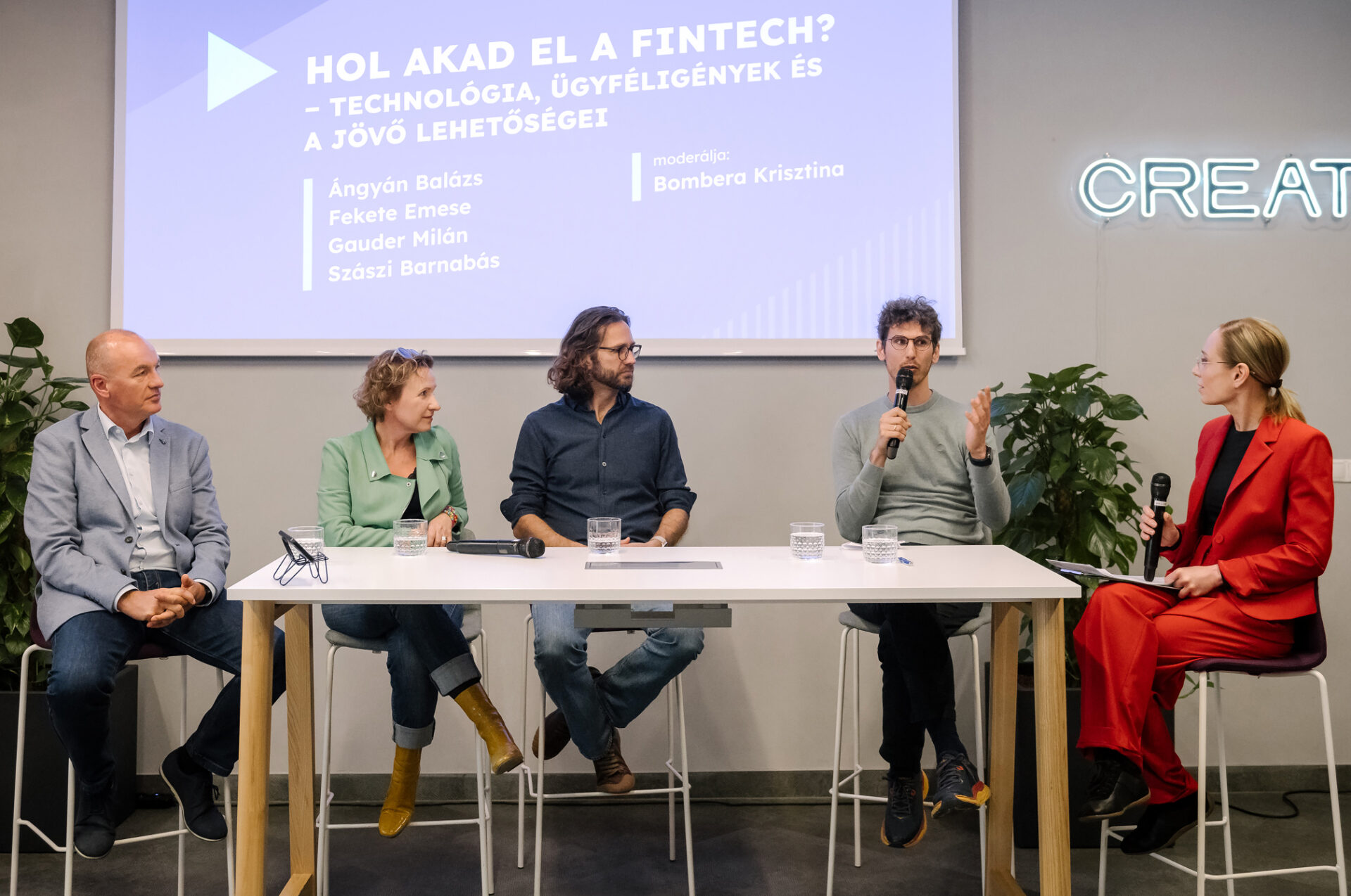
That tension was at the center of a recent roundtable organized by Számlázz.hu, where participants discussed how technology can be more closely aligned with real business needs and what role AI and innovation now play in shaping the sector.
“The future of fintech does not depend on what the technology can do, but on when people start believing it was really built for them,” said Emese Fekete, deputy editor-in-chief of Forbes Hungary. She argued that the media also carries responsibility here, by avoiding specialist jargon and explaining clearly and critically what a given solution replaces, when it helps, and how it should be used. In that sense, the challenge is not only product development, but interpretation.
That idea was echoed from a different angle by tech investor and philanthropist Milán Gauder, who said the most promising fintech areas are usually tied to visible weaknesses in existing systems. Cross-border payments remain one of the clearest examples, in his view, because they are still “slow, expensive, and unpredictable.” Fraud prevention is another.
Solving Real Problems
For Gauder, the fintech companies most likely to succeed are not necessarily those trying to rebuild the system from scratch, but those that attach themselves to existing payment or financial infrastructure and solve a real customer problem.
“The fintechs that can be truly successful are the ones that connect to a larger infrastructure and either solve a customer problem or create a real convenience service,” said Gauder. That helps explain why some services break through quickly while others remain niche: users adopt new financial tools when the value is tangible, not simply because the technology is new.
Still, rational value alone is often not enough. Barnabás Szászi, head of the ELTE Behavioral Science Lab, argued that one of fintech’s biggest obstacles is simply human behavior. People tend to stick with what they already know. Familiar systems feel safer, demand less effort, and do not require new habits. In the business world, fintech usually sells efficiency, but not everyone finds that compelling enough to justify change.
“People are naturally attached to what they already know,” said Szászi. “What they are familiar with feels less risky, they do not have to learn how to use it, and they may even have an emotional attachment to it.” That creates a mismatch between what fintech companies believe they are offering and what some users are actually looking for. A more efficient tool may still fail if the user does not feel a meaningful improvement in everyday life.
This gap becomes even more visible in the business segment. Participants at the roundtable broadly agreed that fintech has advanced more visibly in consumer markets than among businesses. Companies tend to move more slowly and often react decisively only when an outside force, such as regulation, pushes them to do so. When that happens, adoption can be fast. But absent that pressure, the promise of efficiency alone does not always move the market.
Accelerating Development
Balázs Ángyán, managing director of Számlázz.hu, said the industry also contributes to the problem. Fintech is evolving so quickly that it is often difficult not only to understand the underlying technology but even to grasp exactly what is being offered to customers. The rise of AI is intensifying this dynamic by accelerating development while making the sector even more complex.
“It is very easy in this environment to fall into the trap where the experts become an inward-looking circle, people who can easily discuss complicated issues among themselves, while ordinary users have long since been left behind,” Ángyán said. That observation points to a broader weakness in the sector: if innovation becomes harder to explain, adoption may slow even when the product itself improves.
What the discussion ultimately suggested is that fintech’s next stage of growth may depend less on another technological leap than on whether the sector can become more legible and more human. Consumers and entrepreneurs do not simply want efficiency in the abstract. They want to feel that a new solution makes life or work meaningfully easier, not just more digital.
That is why the key issue may no longer be whether fintech can, in principle, improve everyday life. In many cases, it already can. The more difficult question is whether users perceive that improvement clearly enough to overcome habit, caution, and the fatigue that often accompanies constant technological change.
In that sense, fintech can make life easier, but only when it stops feeling like another system to learn and becomes a solution people can actually trust. Until»then, convenience and anxiety may continue to grow side by side.
This article was first published in the Budapest Business Journal print issue of May 8, 2026.