…as Southern High Court opens
Hopolang Mokhopi
CHIEF Justice Sakoane Sakoane has urged Basotho to prioritise dialogue and mediation through families, traditional leaders and church structures before resorting to litigation, warning that the growing burden of cases on the courts threatens the delivery of justice.
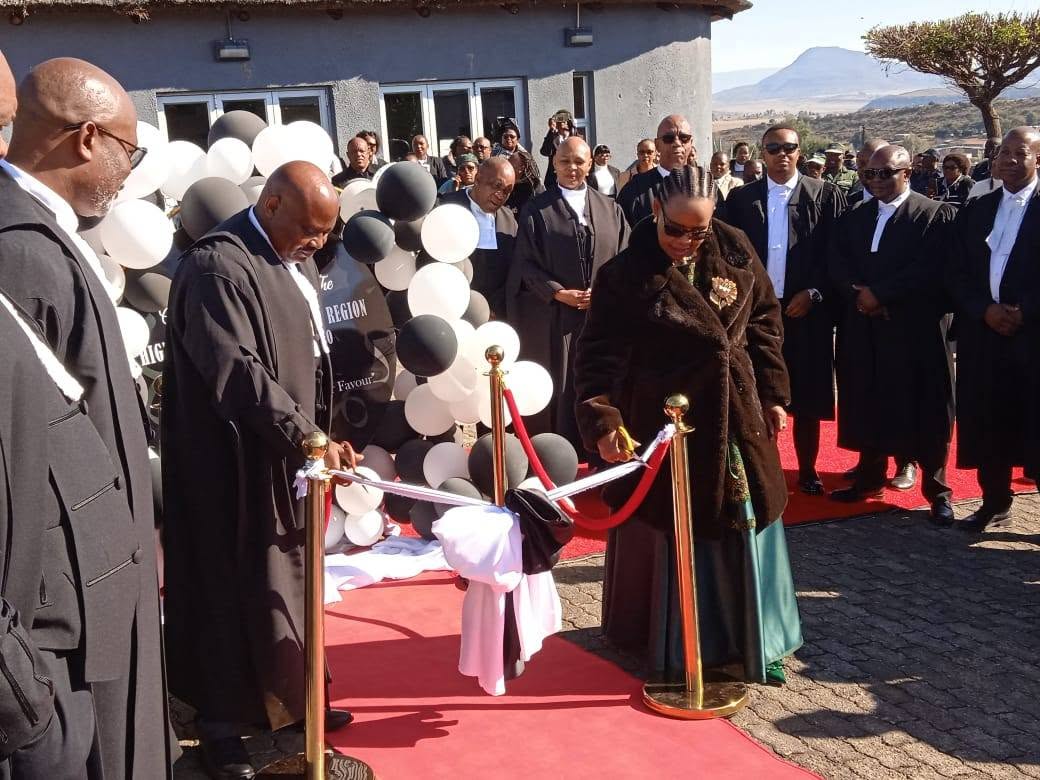
Speaking during the official opening of the Southern Division of the High Court in Mohale’s Hoek on Friday, Justice Sakoane appealed to communities to resolve disputes peacefully and help reduce pressure on the justice system.
The event was attended by several dignitaries, including Deputy Prime Minister Justice Nthomeng Majara, and Minister of Justice and Law, Richard Ramoeletsi, senior government officials, members of the judiciary and local leaders.
This Southern Region High Court has relieved the burden on the main High Court in Maseru. It serves the districts of Mafeteng, Mohale’s Hoek, Quthing and Qacha’s Nek.
Justice Sakoane said while the courts remain an important avenue for justice, communities should make greater use of traditional and community-based mechanisms to settle disputes.
“Lesotho’s Christian values should guide communities to resolve conflicts peacefully. Litigation must remain the last option,” Justice Sakoane said.
He further encouraged members of the public to avoid criminal activity and report offences promptly to assist law enforcement agencies and the courts.
The Chief Justice highlighted mounting pressure within the judiciary, citing a shortage of judges and inadequate court infrastructure as major challenges.
He said the backlog of criminal cases, some dating back to 2014 and 2020, demonstrated the urgent need for reforms within the justice system.
“The backlog of criminal cases points to the need for urgent judicial reforms,” he said.
Justice Sakoane also observed that before 2026, accused persons were not required to disclose their defence before trial, a situation he said had at times weakened police investigations and delayed court proceedings.
Mr Ramoeletsi described the opening of the Southern High Court as a major milestone in decentralising judicial services and bringing justice closer to ordinary citizens.
“This day signifies progress in making justice accessible to society,” Mr Ramoeletsi said.
He said access to justice remained a fundamental human right recognised by both the Constitution and international law and stressed that the government had a responsibility to ensure every citizen can access fair and timely legal redress regardless of location.
Mr Ramoeletsi said the opening of the court formed part of broader reforms aimed at restructuring and strengthening judicial services across the country.
He also raised concerns over the shortage of correctional facilities for women and juveniles in the district, saying the absence of such infrastructure often complicated the temporary detention process for judges and law enforcement agencies.
To address this challenge, he announced that the government planned to begin constructing dedicated facilities for women and children from next year, with completion targeted for 2027.
For her part, Ms Majara said the establishment of the Southern Region High Court reflected the government’s commitment to decentralising the justice system and improving access to court services.
“The expansion to other regions marks a significant step towards ensuring more Basotho can access justice without travelling long distances,” Ms Majara said.
She commended Justice Sakoane and the judiciary for advancing access to justice and revealed that the government was also planning to construct a permanent court building for the Southern Region. The court currently operates from a rented building.
Ms Majara noted that before the establishment of the Northern and Southern High Court divisions, judicial services had largely been concentrated in Maseru.
She assured residents of Mafeteng, Mohale’s Hoek, Quthing and Qacha’s Nek that the government remained committed to supporting the justice sector through adequate resources and continued infrastructure development.
High Court and Court of Appeal Registrar, Advocate ‘Mathato Sekoai, said Friday’s ceremony officially marked the launch of both the Mohale’s Hoek High Court and the Judicial Commissioner’s Court.
Adv Sekoai explained that High Court services had historically been centralised in Maseru before expansion efforts began in recent years, including the establishment of the Northern Division at Tšifa-li-Mali in Leribe.
She said the Chief Justice had committed during the opening of the Northern Division to continue expanding judicial services nationwide.
“The court services in Mohale’s Hoek began operating in February with both the High Court and Judicial Commissioner’s Court,” she said.
Mohale’s Hoek legislator, Zizakele Mdlokovane, welcomed the development, saying it demonstrated the government’s efforts to improve service delivery.
“Mohale’s Hoek previously lacked an Ombudsman’s office but now has one, alongside the DCEO and the High Court,” Mr Mdlokovane said.
He urged residents to protect public infrastructure and support efforts aimed at ensuring justice was delivered effectively.
Representing the local community, Mohale’s Hoek area Chief, Amohelang Moletsane, said residents were proud to witness the establishment of the court in their region.
He said delays in justice often fuelled frustration, revenge and crime within communities.
“When justice is not served promptly, it creates resentment and contributes to criminal activity. We believe that with the High Court now operating in our region, justice will become more accessible,” Chief Moletsane said.
Post Views: 492