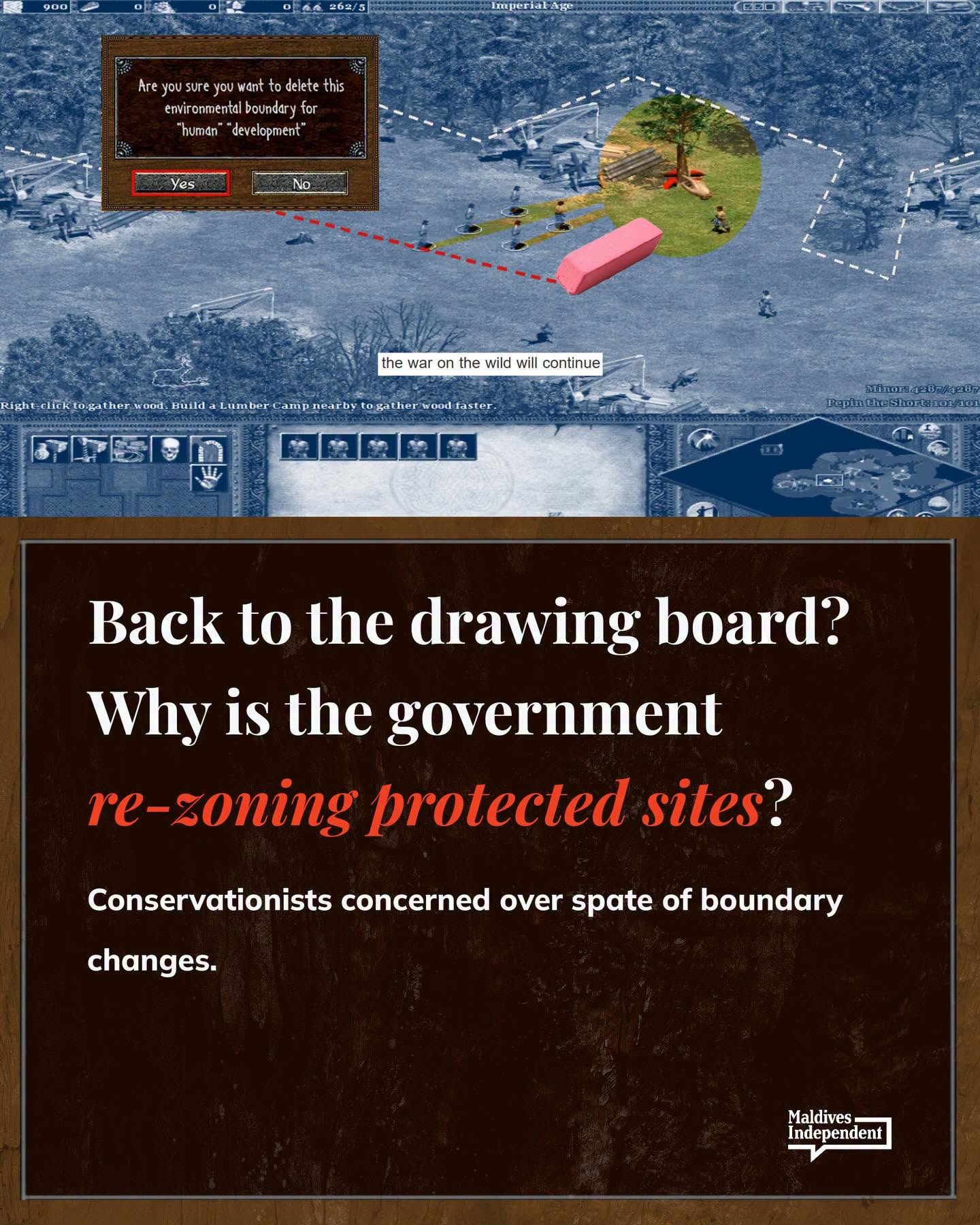
What is the actual value of environmental protection if a boundary of a protected area can be moved the moment it becomes inconvenient to developers or politicians?
A series of recent boundary changes gazetted by the environment ministry highlights a troubling trend: protected areas are increasingly treated as flexible lines on paper rather than permanent safeguards.
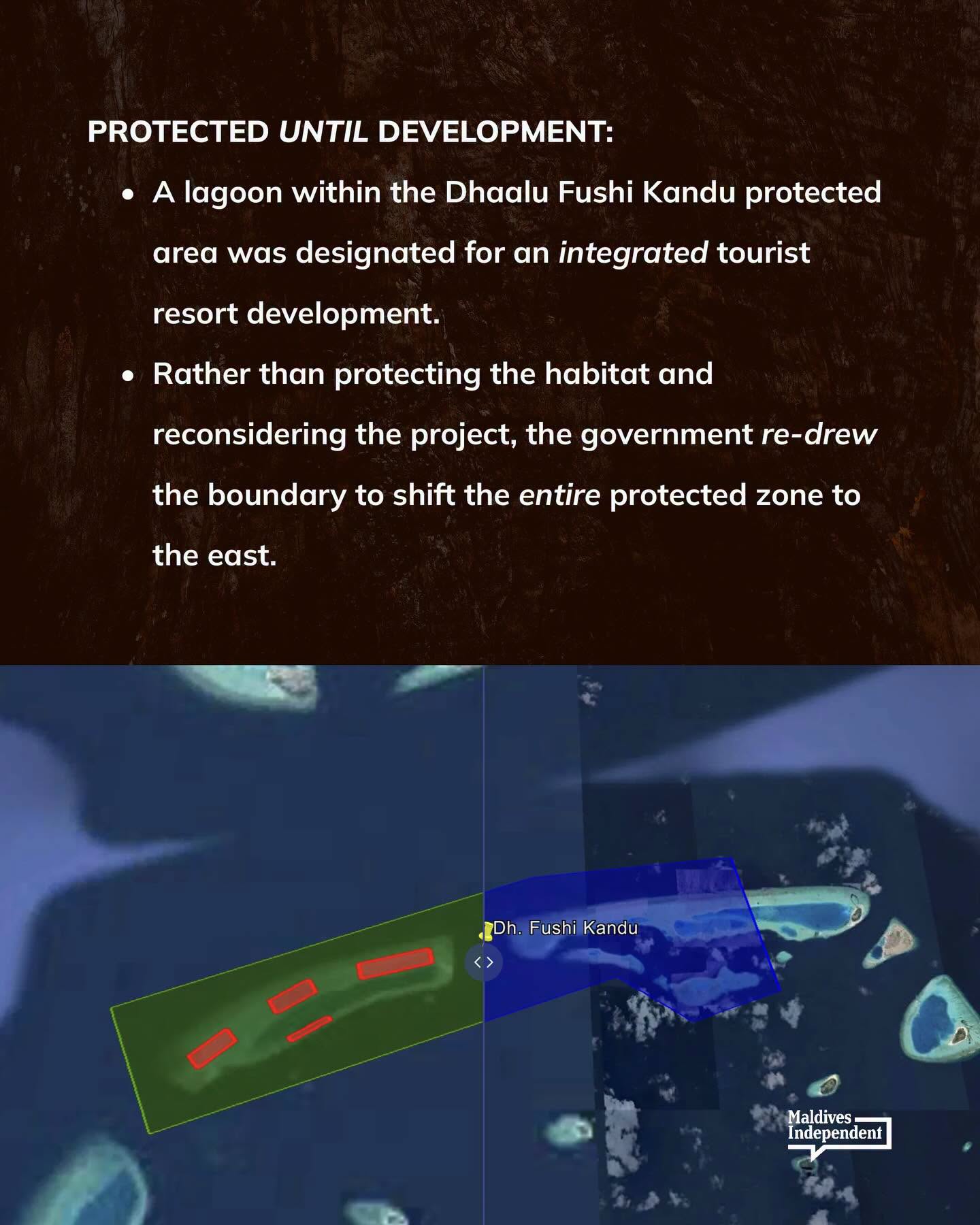
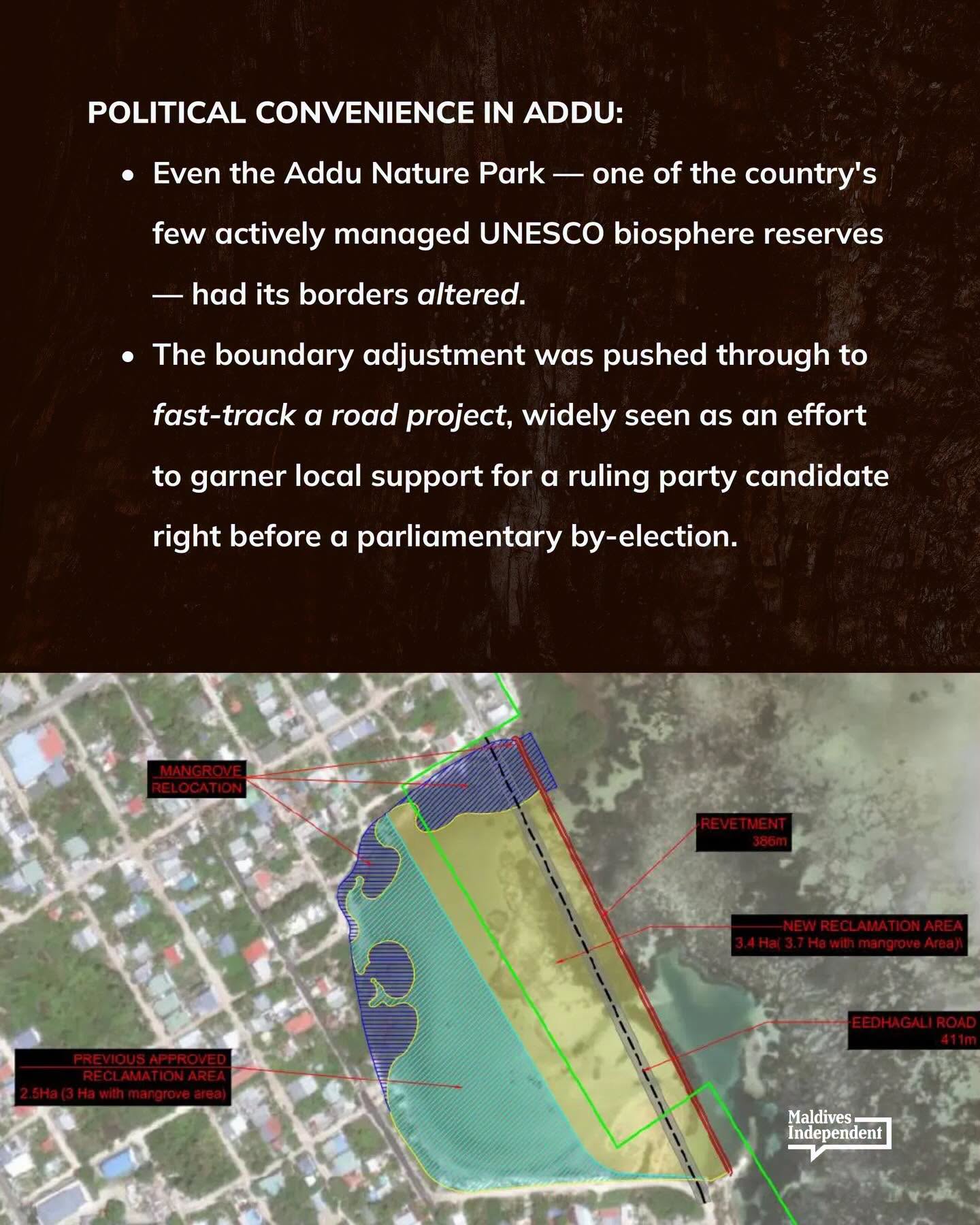
The most glaring example is Dhaalu Fushi Kandu. To clear the way for a private company to build a 120-hectare integrated tourist resort, the government simply redrew the map — shifting the protected boundary entirely eastward so it no longer covers the lucrative lagoon slated for development. A similar logic unfolded in the Addu Nature Park UNESCO biosphere reserve, where borders were altered just in time to fast-track a road project ahead of a parliamentary by-election.
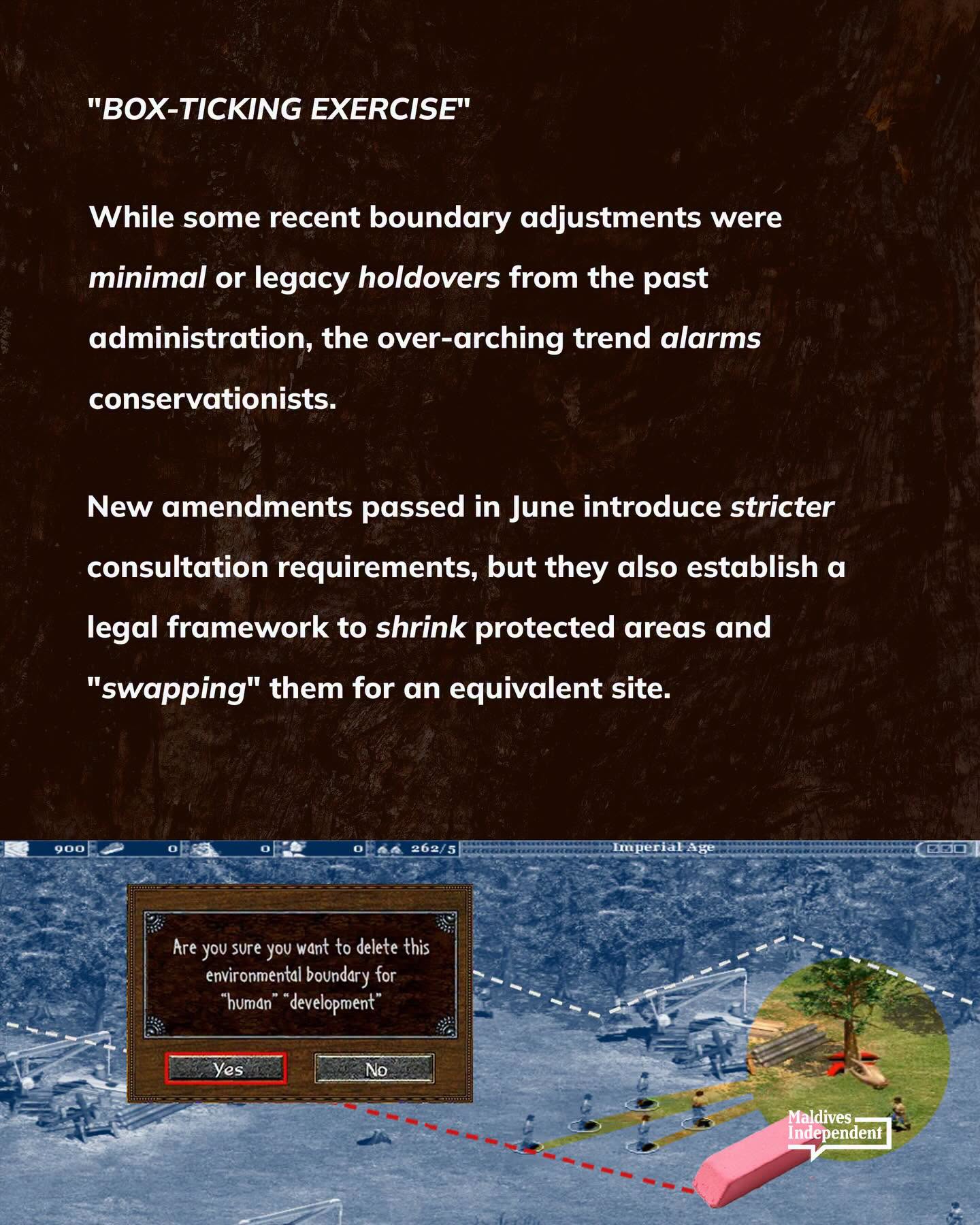
While regulatory authorities point to new rules meant to tighten safeguards, conservationists warn that creating a legal mechanism to “swap” or shrink ecosystems might just formalize an easier pathway for future destruction.
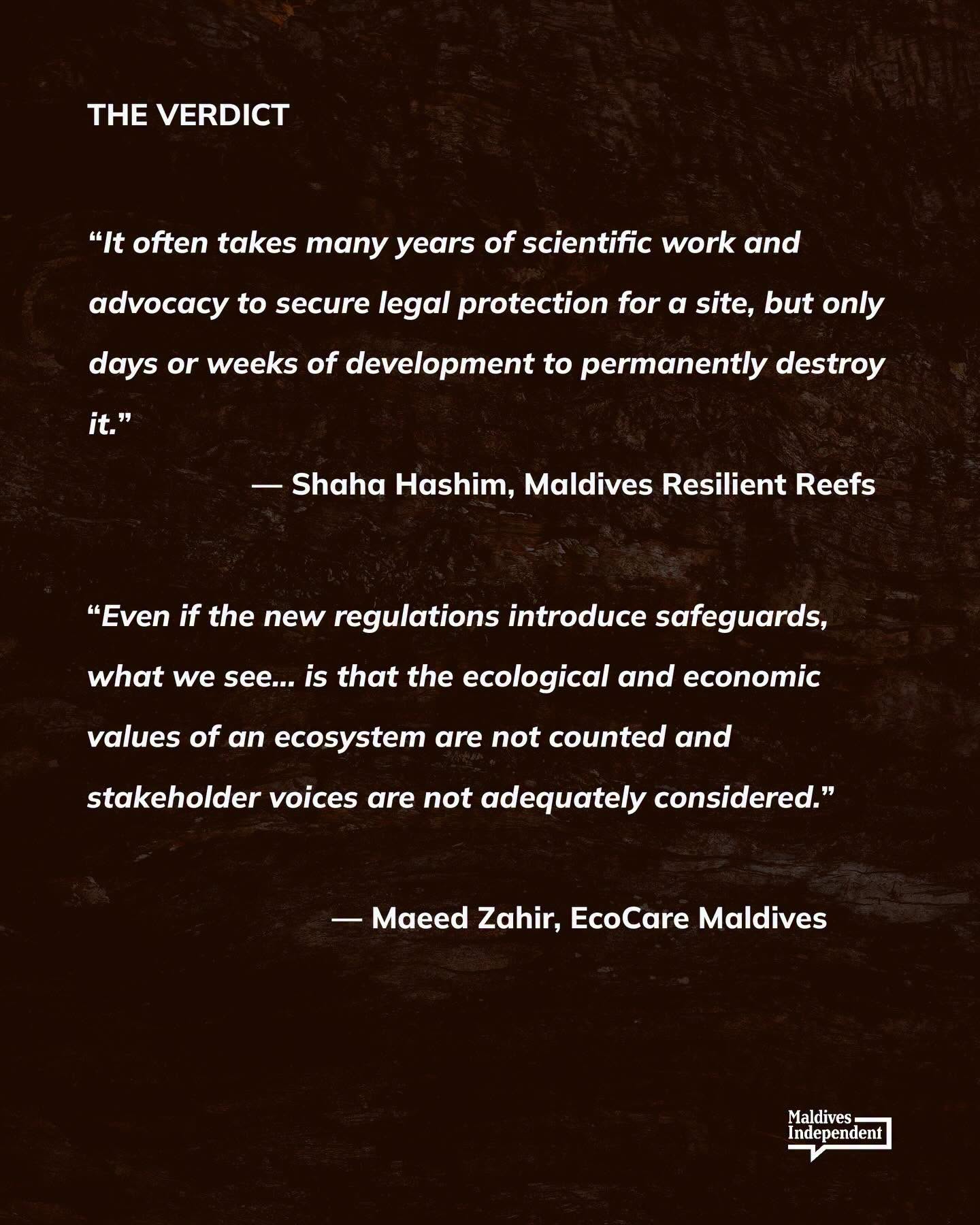
It takes years of scientific advocacy to secure legal protection for a site, but only days of development to permanently destroy it. When these changes happen behind closed doors without transparent justification, it undermines public confidence in the very idea of protection.
Read the full report into how the maps are being redrawn: https://maldivesindependent.com/environment/back-to-the-drawing-board-why-is-the-government-re-zoning-protected-sites-02e7