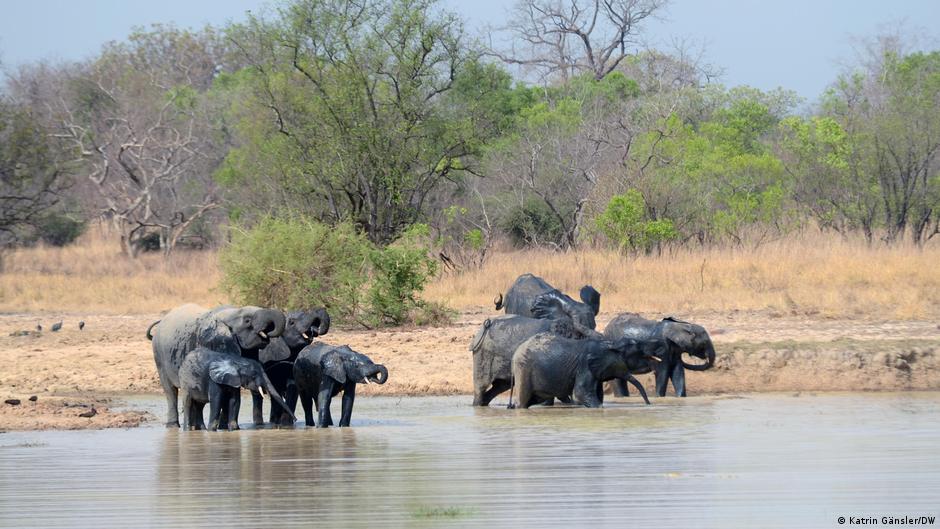
Prince Harry has long been a supporter of African wildlife and nature. When the British royal first became involved with African Parks in 2016, he served as a prominent figure supporting awareness on elephant conservation.
Later, the son of King Charles III became president of the organization before joining its board in 2023.
But reports indicate that in just a few weeks’ time, he will step down from his position at African Parks. The NGO claims that the move is merely part of a reshuffling of its board.
But Dutch journalist and author Olivier van Beemen, who has extensively investigated the South Africa-based wildlife conservation group, believes the association between Harry and African Parks has increasingly become a burden — for both sides.
Prince harming
Harry’s role was to mainly open doors for African Parks, van Beemen says. His fame attracted media attention and helped the NGO gain access to potential donors. But his notorious falling-out with his family increasingly failed to improve the organization’s coffers and image.
At the same time, allegations of human rights abuses at African Parks made the prince’s association with the organization increasingly problematic.
“I think they now see each other more as a liability,” van Beemen told DW, stressing that the full story reaches far beyond a junior member of the royal family simply stepping down from a ribbon-cutting role.
An NGO with state-like powers
According to its own figures, African Parks manages 24 protected areas in 13 African countries, covering more than 20 million hectares. By 2030, the organization aims to manage as many as 30 parks.
Its business model is known as delegated management: African governments hand over the long-term management of protected areas to the group.
The land formally remains state-owned. But the organization takes on wide-ranging responsibilities, including conservation, infrastructure, tourism and anti-poaching operations.
For African governments, this model offers a major advantage: African Parks brings international funding, expertise and personnel to protected areas that many states would otherwise struggle to manage on their own.
In order to achieve its objectives on the ground, African Parks employs a host of armed rangers across the continent, who are allowed to use indelicate methods if and when needed; in some cases, its influence even extends to managing border controls.
“They take over the state’s monopoly on the use of force within the park,” says van Beemen, adding that some critics of the NGO have gone as far as describing African Parks as a “state within a state.”
It is in this context that mounting allegations of human rights abuses have been recorded in recent years, with conservation efforts repeatedly coming into conflict with local communities.
The shadow of the Baka case
The worst allegations of rights abuses emerged in 2023 at Odzala-Kokoua National Park in the Republic of Congo.
Members of the indigenous Baka community reported violence, torture and sexual abuse at the hands of African Parks’ rangers.
The NGO subsequently commissioned the London-based firm Omnia Strategy to investigate the allegations, resulting in African Parks eventually acknowledging certain instances of human rights abuses two years later — though the full investigation report was never made public.
According to van Beemen, the report was not even shown to the government of the Republic of Congo, despite African Parks operating there under an agreement with the government. To this day, it remains unclear what exactly happened in Odzala-Kokoua, and how many people were affected.
African Parks has promised reforms while conceding past failures in its own systems and processes; still, it has remained highly intransparent about the details involved in the entire scandal, says van Beemen.
Division over findings in Dutch book
The Dutch journalist has meanwhile published a book on the whole affair, titled “Beasts and Men.” The volume won several awards in the Netherlands and has attracted international attention and acclaim.
However, African Parks fundamentally rejects van Beemen’s portrayal of the organization, saying his book contains “hundreds of factual inaccuracies” as well as “a similar number of deeply misleading statements.”
Regarding the human rights abuse allegations, African Parks says some of the cases described by van Beemen had occurred outside the NGOs control.
At the same time, it stressed in a statement that it has a zero-tolerance policy toward abuse, and that there is training in place on human rights standards as well as a comprehensive complaints mechanism for transgressions.
But as part of his research, van Beemen also spoke to several former rangers and people affected by conservation operations in several African countries, where he says he repeatedly encountered a fundamental problem perpetuated by African Parks: the loose definition of what constitutes poaching.
According to the accounts he collected, the NGO also treats some locals who hunt animals for their own consumption as poachers, rather than using that term exclusively to describe professional poachers who kill rhinos or elephants for international criminal networks.
Van Beemen said that during his research in Zambia, former rangers told him about the brutal treatment the people taken into custody on such grounds can face: “This can involve beatings. It can involve very serious torture,” he told DW.
Hiding behind a colonial mindset?
The history of African Parks is also controversial. The organization was founded by Dutch businessman Paul Fentener van Vlissingen, who — according to van Beemen — reporetedly held Africans in low regard.
Among other things, he refused to accept the international economic sanctions against the South African apartheid system during the 1980s.
A former close associate of the founder told the Dutch journalist that at the top echolons of the organization, Africans were allegedly considered incapable of protecting their own natural resources because they lacked the money and management skills to do so.
In its early years, African Parks was headquartered in the Netherlands where according to van Beemen, employees would routinely look at maps of Africa and plan where the organization could take over additional parks.
“For me, it was very difficult not to think of the colonialists of earlier centuries looking at the same maps and searching for opportunities for colonial expansion,” van Beemen told DW.
African Parks meanwhile has also rejected this particular characterization of its ethos, pointing at the many relevant contracts it has signed with African governments in good faith and with mutual respect.
Conservation and accountability
The scandal meanwhile also hits closer to Europe not only because of Prince Harry’s departure from the NGO but also due to the fact that European and German funding also goes to projects involving African Parks.
The organization stresses that these funds enable it to enter cooperations with local communities, which African Parks claims are increasingly at the heart of its work:
The organization says that there are local people living in 64% of the areas where it manages wildlife and nature, while legal access to resources is allowed in 90% of the parks. Only four of the 23 parks are fully fenced, it adds.
But without sufficient scrutiny and accountability, there is no way of verifying the details behind those claims, as the image of the NGO continues to tank under a heap of abuse claims.
Edited by: Sertan Sanderson