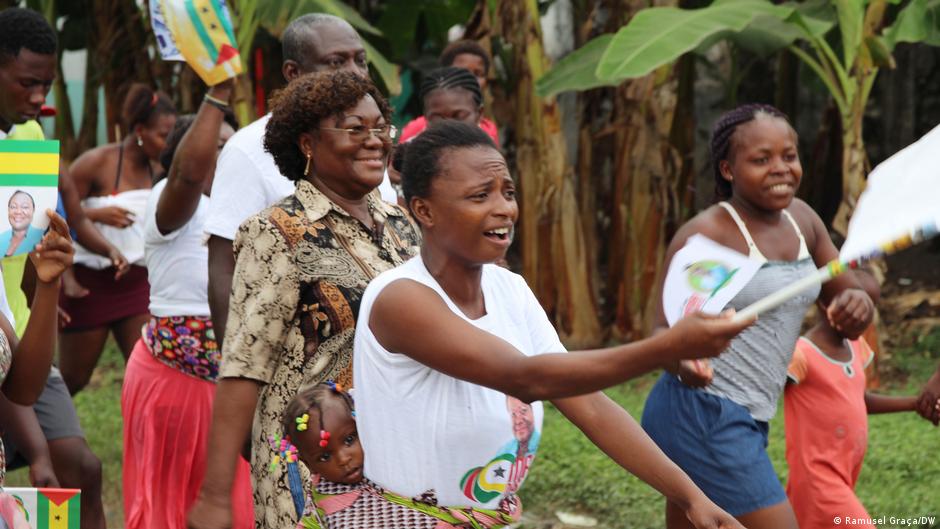
Voters in Sao Tome and Principe will elect a new president on Sunday, ahead of parliamentary elections at the end of September. For the island nation of just 245,000 people, the elections are a major domestic political event. They are also attracting growing international attention.
Since signing a military cooperation agreement with Russia in April 2024, the archipelago in the Gulf of Guinea has attracted renewed geopolitical interest.
The key question is whether Russia is seeking to expand its influence in the South Atlantic through the archipelago — or whether the military agreement is largely symbolic, with Sao Tome and Principe merely continuing its long-standing foreign policy of maintaining ties with a wide range of international partners.
More strategic than its size suggests
On July 12, the former Portuguese colony marked the 51st anniversary of its independence. Although Sao Tome and Principe is one of Africa’s smallest countries by both area and population, its location gives it strategic significance far beyond its size.
The archipelago lies on the Equator in the Gulf of Guinea, a region crossed by major international shipping lanes and home to significant oil and gas reserves. At the same time, piracy, organized crime and the protection of maritime trade routes have turned the Gulf of Guinea into a key security hotspot.
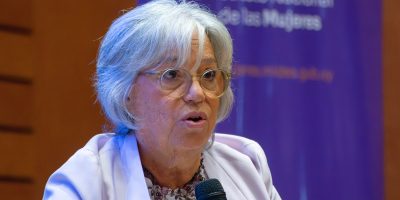
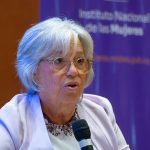
“Sao Tome and Principe is a small country, but because of its geographical location in the Gulf of Guinea, it has enormous strategic importance,” former Foreign Minister Elsa Pinto told DW.
“Major commercial and military routes pass through our waters. Even during the colonial era, our archipelago was of great importance because of its location between Africa and South America.”
Pinto said the country’s location had been a strategic asset for centuries.
“Sao Tome was first a major center for sugar production, later the world’s largest cocoa producer, and also an important hub in the transatlantic slave trade. That geostrategic importance has never disappeared.”
A military agreement with geopolitical implications
Sao Tome and Principe drew international attention in the spring of 2024 after it emerged that the government had signed the open-ended military cooperation deal with Russia.
According to Russian officials, the agreement covers military training, technical assistance, cooperation on arms and military equipment, intelligence sharing, and reciprocal visits by naval vessels and military aircraft. A separate accord was also signed between Russia’s Interior Ministry and Sao Tome and Principe’s national police.
Coming amid Russia’s war in Ukraine, the agreement was closely watched in Europe and the United States. Portugal and the US have long been among Sao Tome and Principe’s most important security and development partners.
Then-Prime Minister Patrice Trovoada defended the deal.
“We are an independent and sovereign country. Nobody can tell us how we should deal with Russia,” he said.
‘The timing was the real issue’
Political analyst Arzemiro dos Prazeres, a former politician and president of the parliament, believes the significance of the agreement has often been overstated.
“The agreement between Russia and Sao Tome and Principe has remained largely ineffective,” he told DW. “It was signed, but it has never been implemented. Nothing has actually been put into practice.”
For that reason, he believes much of the international criticism was misplaced.
“I agree with former Prime Minister Patrice Trovoada. This is a perfectly ordinary military agreement, similar to those Sao Tome and Principe has signed with the European Union, Brazil, Angola or Portugal. The real issue was the timing of the agreement, which triggered considerable controversy.”
Russia has significantly expanded its military and security presence across several African countries in recent years. But unlike Mali, Burkina Faso, Niger or the Central African Republic — where Moscow has focused on security operations — Sao Tome and Principe’s importance lies primarily in its strategic location in the Atlantic.
Balancing partnerships instead of choosing sides
Elsa Pinto rejects suggestions that her country is turning away from the West.
“Sao Tome and Principe wants to maintain good relations with all countries — the United States, Europe, Russia and China alike.”
She says the country’s foreign policy remains rooted in non-interference and in the principles of the African Union and the United Nations.
“We will not abandon our values and principles. Our international partnerships are above all intended to support the country’s development,” she said.
For that reason, she does not expect the elections to produce any major shift in foreign policy.
“Very little will change. Sao Tome and Principe will continue cooperating with both Western and Eastern partners,” Pinto added.
That approach reflects the country’s diplomatic evolution. Following independence in 1975, Sao Tome and Principe initially aligned itself closely with the Soviet Union under a Marxist system. After the introduction of multiparty democracy in the early 1990s, it gradually strengthened ties with Western partners while maintaining relations with a broad range of countries.
Carlos Vila Nova: incumbent with the advantage of office
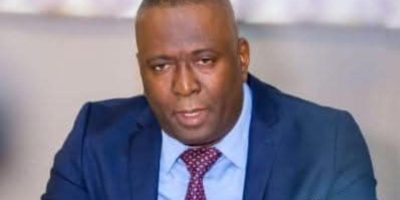
Four candidates are running in the presidential election, but observers consider incumbent Carlos Vila Nova the clear frontrunner after former PM Jorge Bom Jesus withdrew from the race, citing an “avalanche of criminal falsehoods” and a climate of “division and political tension” surrounding his candidacy, according to RFI.
Vila Nova has campaigned on a message of political stability and national unity. His challengers, meanwhile, have called for a generational shift in politics and more open debate about the country’s future.
Political analyst Arzemiro dos Prazeres believes Vila Nova is heavily favored to win. “I therefore expect the election to be decided in the first round, making a runoff unnecessary,” he said.
Under Sao Tome and Principe’s semi-presidential system, the president holds significant constitutional powers, including appointing the prime minister, vetoing legislation, dissolving parliament and serving as commander-in-chief of the armed forces.
The European Union is once again deploying an election observation mission. Its chief observer, Portuguese Member of the European Parliament Sergio Humberto, said the mission aims to help ensure a transparent and peaceful electoral process.
A small nation amid great-power rivalry
Whether the military agreement with Russia represents a genuine shift in foreign policy or simply reflects Sao Tome and Principe’s pragmatic effort to diversify its international partnerships remains open to debate. One thing is clear, however: international interest in the country is growing.
For Sao Tome and Principe, the priority is to secure investment, development assistance and security cooperation from as many partners as possible.
Russia sees the archipelago as an opportunity to expand its presence in the Atlantic. Europe and the United States, meanwhile, regard the country as a relatively stable democratic partner in a strategically important region.
That is why the upcoming presidential and parliamentary elections are about far more than domestic politics. They are taking place at a time when even the world’s smallest states are increasingly becoming arenas for competition between major powers.
For Sao Tome and Principe, the challenge will be to preserve its carefully balanced foreign policy — and with it, its room for diplomatic maneuver.
This article was originally published in German.