Speed
Cambodia’s decision to pursue compulsory conciliation under the UN Convention on the Law of the Sea is not a move toward confrontation. It is a move away from uncertainty. It is a choice for peace, law and good faith at a moment when the only agreed bilateral framework for managing the maritime issue has been abandoned by Thailand.
Cambodia therefore welcomes Thailand’s decision to engage with the compulsory conciliation process. This is a constructive step. A peaceful resolution of the maritime dispute is not only in the interest of Cambodia and Thailand, but also in the interest of ASEAN, regional stability, energy security and long-term neighbourly relations.
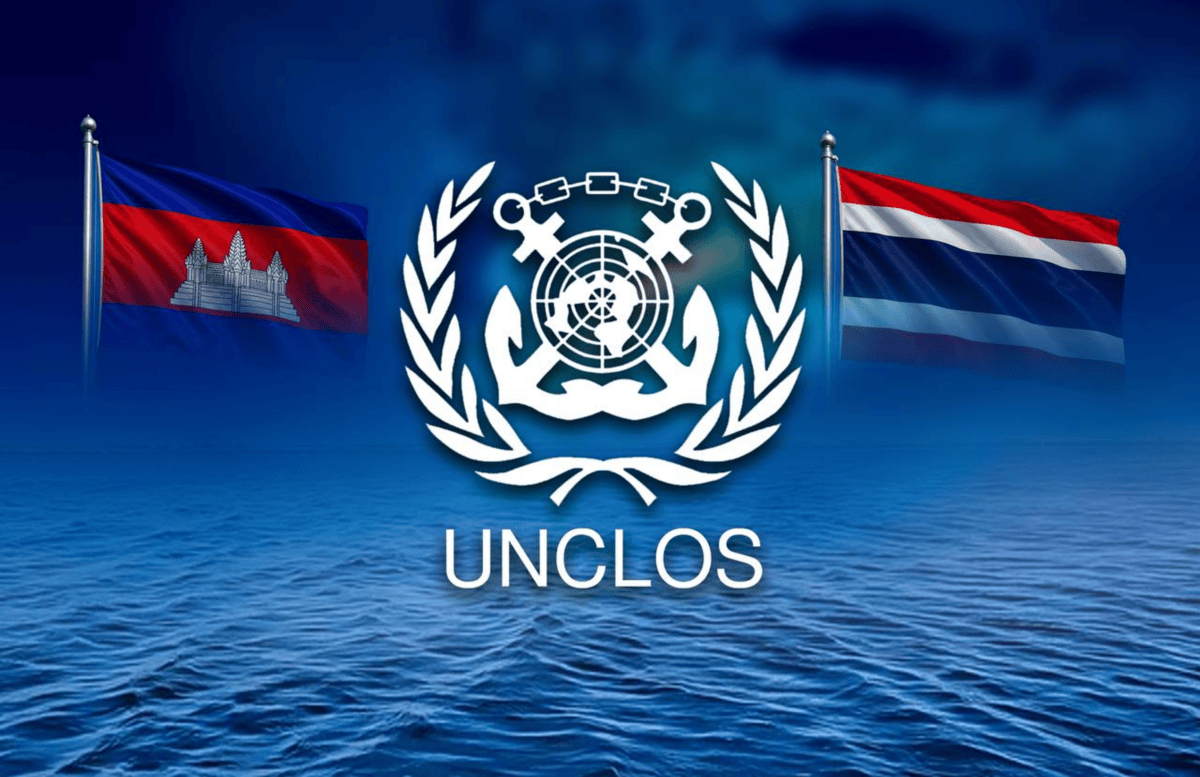
For Cambodia, compulsory conciliation is not an act of escalation. It is the opposite. It is a peaceful, lawful and disciplined mechanism provided by UNCLOS, a treaty to which both Cambodia and Thailand are parties. It allows both sides to present their positions before an independent conciliation commission and to work toward practical recommendations that can support a negotiated solution.
The facts are clear. For more than two decades, Cambodia and Thailand relied on the 2001 Memorandum of Understanding as the only agreed bilateral framework to manage the overlapping maritime claims in the Gulf of Thailand. That framework was designed to facilitate direct negotiations and create a pathway toward resolving maritime issues, including possible cooperation over valuable resources. Cambodia did not walk away from that framework. Thailand did.
Despite Cambodia’s request that Thailand reconsider, the Thai government unilaterally terminated the MoU 2001. What Thailand described as a fresh start in fact removed the only agreed framework that had kept the issue manageable for more than two decades. Once that framework was abandoned, the bilateral process was clearly exhausted. Cambodia was therefore left with a responsible choice: allow the dispute to remain frozen indefinitely, or turn to a peaceful legal mechanism under international law.
Cambodia chose law. Cambodia chose peace. Cambodia chose a path that gives both countries a structured opportunity to reach a solution.
This decision should not be misrepresented as hostile. Cambodia has not chosen confrontation, coercion or unilateral action. It has chosen a recognised international process grounded in UNCLOS. Compulsory conciliation is not a court judgment imposed on unwilling parties. It is a conciliatory process intended to assist both sides in narrowing differences, clarifying legal and practical issues, and creating conditions for agreement.
That is why Thailand’s participation is welcome. It shows that there remains space for good faith engagement. Cambodia hopes that Thailand will participate sincerely, constructively and with a shared understanding that maritime stability benefits both nations.
The Gulf of Thailand should not remain a zone of uncertainty. For 25 years, both countries have known that the overlapping maritime area holds significant economic potential. Properly managed, these resources could contribute to national development, energy security, job creation and shared prosperity. They could support the future of both peoples.
Thailand and Malaysia have already demonstrated that maritime cooperation can be transformed from a source of dispute into a source of mutual benefit. Their joint development experience has long served as an example in the region. Cambodia and Thailand should be able to pursue a similarly practical and forward-looking approach, adapted to their own legal and political circumstances.
But such cooperation requires certainty. It requires trust. It requires a framework. When the MoU 2001 was terminated, the existing framework was removed. UNCLOS compulsory conciliation now provides a new disciplined space for both sides to work seriously toward an outcome.
The experience of Timor-Leste and Australia is instructive.
Their compulsory conciliation under UNCLOS is widely regarded by international legal experts as swift, effective and constructive. It helped create the conditions for a maritime boundary treaty and demonstrated that even complex disputes can move toward resolution when parties engage in good faith.
Cambodia believes the same spirit should guide the present process. With political will, respect for international law and genuine commitment to peace, there is no reason why Cambodia and Thailand cannot make progress.
Some may argue that international legal mechanisms could harm bilateral relations. Cambodia rejects that view. A peaceful legal process should not damage relations between neighbours. On the contrary, it can strengthen them by replacing uncertainty with clarity, suspicion with dialogue and political pressure with principled engagement.
A durable solution would benefit both countries. It would reduce tension. It would provide greater certainty for future cooperation. It would reassure investors. It would contribute to regional energy security. Most importantly, it would show that Cambodia and Thailand, as responsible members of ASEAN and the international community, are capable of resolving difficult issues peacefully.
Cambodia’s position is therefore simple and consistent. We remain committed to sovereignty, maritime rights and international law. We remain committed to peaceful settlement. We remain committed to good neighbourliness. We remain ready to engage with Thailand in good faith.
The choice before both countries is not between bilateral relations and international law. The two should reinforce each other. International law provides the foundation for stable bilateral relations. Good faith engagement gives that law practical meaning.
Cambodia has opened the door to a peaceful solution. Thailand’s decision to engage with the process is welcome. The task now is for both sides to enter conciliation with seriousness, discipline and mutual respect.
The people of Cambodia and Thailand deserve more than delay, uncertainty and political rhetoric. They deserve peace. They deserve development. They deserve a solution based on law, fairness and mutual benefit.
Cambodia stands ready — not for conflict, but for a lawful and peaceful settlement.
Roth Santepheap is a geopolitical analyst based in Phnom Penh. The views and opinions expressed are his own.