AP
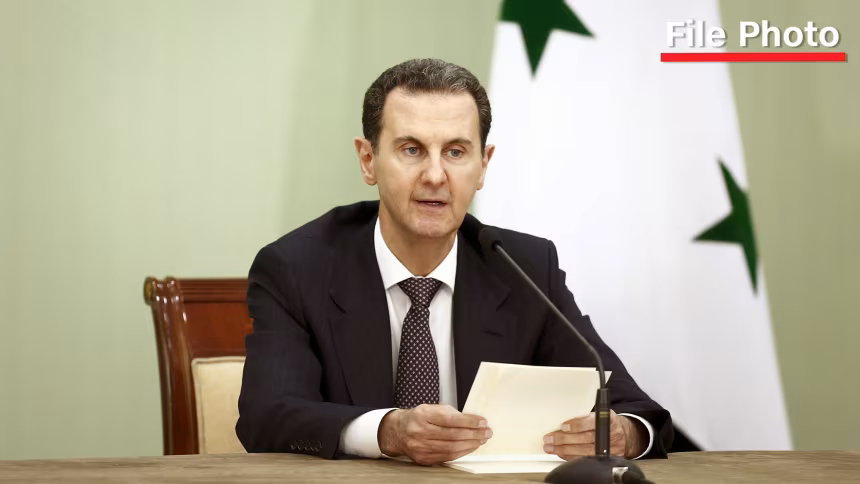
A Syrian court sentenced ousted Syrian President Bashar al-Assad along with his younger brother to death in absentia on Tuesday for crimes against humanity and war crimes during Syria’s 14-year conflict that left about half a million people dead.
The sentences at the Fourth Criminal Court in Damascus are the first against Assad or members of his inner circle since the Assad family’s five decades in power came to an end 20 months ago.
“Bashar Assad used state agencies to commit war crimes and crimes against humanity,” said judge Fakhareddine al-Aryan during a court session that was aired live on state TV.
Also sentenced to death in the same case was Assad’s maternal cousin Atef Najib, who was convicted of overseeing a crackdown in the southern province of Daraa that led to the uprising and later the civil war.
Amid tight security, Najib stood inside a cage wearing a prisoner’s uniform as the judge read the sentence. A crowd of people gathered outside the courthouse in central Damascus to hear the verdict.
Assad and his brother Maher fled to Russia after the government’s fall in December 2024 and received political asylum. Syria’s new rulers have asked Russia to hand the Assads over.
Najib, who was sanctioned by the U.S. Department of the Treasury in April 2011, was later detained and is one of the highest-ranking officials to be put on trial.
Najib is a former Syrian army brigadier general who was head of the Political Security Branch in southern Syria’s Daraa province under Assad in 2011.
During his tenure, more than a dozen teenagers who scrawled anti-government graffiti on a school wall in Daraa were arrested and tortured. The case became a catalyst for mass protests against the repressive policies of Assad’s security forces.
The protests were met by a brutal government crackdown and spiraled into a 14-year civil war that ended with Assad’s ouster in a lightning rebel offensive.
Maher Assad was a former commander of the Syrian military’s 4th Armored Division – which Syrian opposition activists have accused of killings, torture, extortion and drug trafficking, in addition to running its own detention centers.