Introduction:
For most of the world, the year 2001 is defined by the tragedy of September 11. For Eritreans, another date looms just as large: September 18th, 2001 – our own internal political blackout. Apart from brief flashes like Operation Forto or the late Finance Minister Berhane Abrehe’s open challenge, high-level political boldness within the regime largely died on that day with the arrest of the G-15.
Today, the G-15 occupies a fractured place in collective memory. To PFDJ loyalists, they were opportunists who committed treason in a time of national vulnerability [war]. And even to some critics within the opposition, and an argument that I am seeing more frequently, they were former regime heavyweights whose late-stage call for political reform was a bid to swap totalitarianism for a milder authoritarianism. But both narratives tend to talk about the G-15 rather than look at what they actually wrote. For those unfamiliar with this critical juncture in our history, the most reliable way to evaluate their intent isn’t through the unsubstantiated claims that are being conjured in the Eritrean political online spaces, but through their own words and their actions. Luckily, the open letter by the G-15 remains online, and their words documented. I will be using the open letter, in combination with “Conversations with Eritrean Political Prisoners” by Dan Connell as my sources.
Fallacy #1: The G-15 Never Believed in Democracy:
First, the claim that the G-15 did not believe in genuine democracy is difficult to reconcile with what they actually wrote. From the opening of the letter, they described their purpose as a call for “peaceful and democratic dialogue,” the rule of law, justice, and most important piece that a lot of people seem to conveniently forget a “peaceful, legal, and democratic transition to a truly constitutional government.” They went further, explicitly stating that establishing internal democracy within the PFDJ was essential to achieving a democratic constitutional government. In other words, it was a precursor to a multi-party system, and not just a hard stop at making Eritrea a one-party vanguard.
Their demands for Eritrea’s political future were not vague and they did not mince their words. In the open letter, they called for free and fair elections, political pluralism, public participation, freedom of expression, an independent judiciary, and the dismantling of the Special Courts. They also called for the formation of political parties and for the future of the PFDJ itself to be decided democratically through its congress. Thus, the assertion that the G-15 were merely seeking to replace one authoritarian government with another does not fit comfortably with the open letter they left behind. Whatever criticisms one may have of individual members or of the political history of the G-15, their 2001 open letter explicitly advocated constitutional government, political pluralism, free elections, institutional checks and balances, and democratic participation.
Critics however often look past the open letter and point to the political lineage of the EPLF. Because the G-15 emerged from a Marxist-Leninist liberation front characterized by central planning, strict hierarchy, and internal purges (dynamics that are reminiscent of communist struggles elsewhere), many assumed their true goal was internal regime reform rather than genuine democratization. But judging their intentions based on political origin rather than documented evidence is unfair. Opinions and views can evolve; thus, we cannot conflate legacy with trajectory. In reality, as the Cold War collapsed and single-party Marxist models fell apart after the dissolution of the Soviet Union, the Front was forced to confront its own ideological future as independence approached in 1991. The G-15 were not immune to this evolution. They came to recognize, albeit a little too late, that the centralized and heavy-handed system of governance they helped build was a beast that was too big to tame. Petros Solomon himself admitted that he was misguided when it came to Marxist Leninism, and that political plurality is far better than having one ideology governing the country (Connell, pg. 130-131).
I recently discussed this issue with fellow Awate.com columnist Semere Habtemariam, who framed the conflict with sharp clarity. His analysis was that Isaias Afwerki is a leader accustomed to total control, and the G-15’s vision of constitutional governance was entirely foreign and inherently unacceptable – a direct threat to his personal power base.
Fallacy #2: The G-15 Committed Treason:
The second allegation that the G-15 committed treason is far more serious and demands an equally rigorous standard of evidence. Yet the government’s own internal narrative presents the group’s actions in contradictory terms. Through the internal dispute that was occurring within the Front, the G-15 repeatedly insisted that the political crisis brewing within the party had to resolved through peaceful, institutional, and legal mechanisms. As political tensions began to escalate, the group explicitly rejected resorting to extrajudicial, covert, or violent means although some of those members had just enough clout to mobilize the army to take such actions. The idea to arrest Isaias Afwerki for subversion was entertained by one of the members of the G-15 before the individual changed their mind. I will not be revealing their name.
To set a precedent and a good example, the G-15 instead petitioned for an open, democratic dialogue through emergency meetings of the Central and National Councils, which were supposed to be the very legislative bodies to handle such state crises.
To understand the orgin of the G-15, we must look directly at the systemic failures of the 1998-2000 Eritrea-Ethiopia border war. The group’s formation was a direct response to the catastrophic strategic decisions made during the conflict, which resulted in devastating loss of life, territory, and military power. Most notably, during the Barentu Offensive in May 2000, Eritrean defense lines near Barentu on the Western Front suffered a near-total operational breakdown. This collapse has been attributed to the President’s deliberate micromanagement of the battlefield, bypassing established military command structures, and the most idiotic of all – sidelining seasoned commanders that possess military prowess and proved so during the Gedli era.
As Dan Connell notes, this fundamental breakdown in military command spun into a severe crisis among the top military brass and political elite. Yet, when Isaias leveraged the PFDJ central office to silence internal dissent, it weaponized these very operational failures to construct a narrative of betrayal, accusing the G-15 of undermining national security during wartime.
The supreme irony of this accusation lies in the behavior of what I would like to call “volunteer” commanders themselves during the height of the crisis. It was the very leaders Isaias had sidelined, most notably Major General Berhane Gerezghier, Petros Solomon, and General Ogbe Abraha, all widely renowned for their tactical brilliance during the Gedli, who voluntarily rushed to the command post during the May 2000 collapse. Rather than exploiting the military’s vulnerability for political leverage, these veterans demonstrated immense selflessness by taking direct operational control, reorganized retreating forces, stabilized defense lines, and salvaged the nation’s defense in its hour of greatest peril. So yes, the very people that PFDJ and unfortunately, an overwhelmingly misguided group of Eritreans condemned as traitors were the people that helped save the day. We rewarded them by giving them an all-expenses, one-way paid trip to IraIro.
Exposing the sheer absurdity of these state allegations, I want to bring a piece by Saleh Younis of Eritrea Digest, who posed the key logical contradictions surrounding the regime’s charges against specific members of the group.
“How did Aster Fessehazion do this exactly? And when did Germano Naty meet with peace facilitators? How did then-Foreign Minister Haile Derue communicate with the peace facilitators if Yemane Gebreab accompanied him everywhere ALL THE TIME? Or: what could compel a people who spent most of their youth fighting for Eritrea’s independence, some in wars more severe than the Weyane Offensives, to capitulate now? – 02.02.02 Eritrea’s Day of Shame by Saleh Younis
To label men and women who dedicated their entire youth to securing the nation’s sovereignty and who voluntarily placed themselves in harm’s way to save the country as traitors is not just a mere distortion of history, but an inverted reality crafted to protect autocratic control.
Effect on Eritrea after G-15 Arrest
As we all knew, September 18th, 2001 was when Eritrea officially descended into autocracy and any democratic potential in the country was systematically destroyed. Institutions such as the security apparatus, military, and party were replaced with absolute, and personalized autocratic control. By arresting the G-15, silencing independent journalists, and shuttering the private press, the regime effectively froze the country’s political evolution.
However, the most catastrophic consequence was the complete dismantling of constitutional governance and state institutions. The legislative branch in Eritrea is for all intents and purposes non-existent; the National Assembly (Hagerawi Baito) was effectively dissolved after its final session in February 2nd, 2002 and has never convened since. The 1997 Constitution, drafted with extensive public participation, was permanently shelved before implementation. Governance by law was replaced by governance by executive decree (whatever Isaias says, goes!), leaving the judiciary stripped of independence and opening under the Special Courts, which comprises of the most incompetent generals in the army, and the most common form – arbitrary detention. Eritreans have normalized the abnormal, and it is a failure on Eritreans for enabling/allowing this to happen.
Equally telling is the paralyzed state within the party itself. PFDJ has not convened a single party congress since 1994, which by the time that this article has been published, 32 years ago. Rather than functioning as a modern political movement or an institutionalized party, the PFDJ exists merely as an administrative shell to enforce regime loyalty. Critical decisions regarding state security, international relations, and domestic policy are all made exclusively by the President, and hardly by his immediate enclave (useful idiots) that he surrounds himself with. Thus, all formal state structures are either hollowed out, bypassed, or useless without significant and radical overhaul.
Ultimately, the 2001 purge transformed Eritrea into a totalitarian police state, triggering a massive, decades-long national exodus whose devastating demographic and socio-economic ramifications the nation has yet to fully confront. With all political space eradicated, national service converted into indefinite forced labor, and civic institutions reduced to empty facades, generations of young Eritreans have been left with a bleak triad of choices: silent endurance, active complicity, or perilous flight from their homeland. The 2001 crackdown did not merely eliminate a group of political dissenters; it systematically dismantled the foundational institutions, legal safeguards, and intellectual capital required to sustain a modern, rule-of-law republic.
Effect on G-15 Immediate Family
In recent years, I have had the privilege of connecting both online and in person with several children and relatives of the G-15 political prisoners. Out of deep respect for their privacy and safety, I will not disclose their names or specify family ties, but a few of their experience warrant being shared. While they confided deeper, more painful secrets that I choose to leave unwritten out of respect for their trauma, one account particularly stood out: the relentless suffocating surveillance of a young child endured at the hands of Hagerawi Dihnet (National Security), under the direct orders of Abraha Kassa, simply while walking to school or meeting with friends. Their own friends would later become tools of espionage by the National Security Office as they grew older. Another individual shared they wrestled with thoughts of suicide as a child after watching their parent forcibly dragged from their home.
Beyond direct state harassment, these children faced a profound, agonizing isolation. In the wake of the arrests, societal fear ran so deep that many were essentially ostracized from Eritrean society. Acquaintances and neighbors would cross the street or turn away to avoid them, and classmates distanced themselves in school out of terror of being associated with so called “enemies of the state.” For some, the tragedy was multiplied: families like those of Ibrahim Mahmoud (son of Mahmoud Sheriffo and Aster Fissehatsion), and Meaza and Hanna Petros (2 of the 4 kids of Petros Solomon and Aster Yohannes) lost both parents to state detention, leaving their children to grow up entirely without parental love, guidance, or protection. Unsurprisingly, this combination of state surveillance, social abandonment, and sudden loss left many with a visibly damaged sense of self-confidence, and a heavy psychological burden they still carry today.
Yet, despite having their childhoods stolen and normal lives denied to them, these individuals have demonstrated extraordinary resilience, courage, and grace. Consider Meaza Petros Solomon: she earned her Master’s degree through an elite, accelerated program across Italy, Germany, and France in less than a year. Although I have not had the opportunity to meet her in person, her relentless pursuit of higher education in the face of profound personal tragedy serves as a deep source of inspiration. Other children of the G-15 whom I have come to know abroad have similarly earned undergraduate degrees, or are in track of rebuilding their life by pursuing advanced graduate studies. The fact that they continue to cultivate the will to thrive, build meaningful lives, and rebuild their confidence despite the dark shadow cast over their upbringing is a testament to their enduring strength, and a powerful victory over the system that sought to crush them.
G-15 Whereabouts
As of the publication of this article, twenty-five years have passed since the state swept away the G-15 in September 2001. In recent years, an increasing number of Eritreans within the ranks of the People’s Front camp, have begun calling for clemency and advocating that the G-15 be pardoned. While such calls may stem from genuine intentions, they are fundamentally misguided. To call for clemency is to accept the regime’s framing: it implies a crime was committed and that forgiveness is required. We must explicitly reject this premise, especially on grounds of the fact that there is to date ZERO evidence that implicates the G-15 of treason. Demanding pardon validates a manufactured charge; instead, we must steadfastly demand transparency, accountability, and the immediate disclosure of their whereabouts.
The sparse record regarding the fate of the G-15 paints a tragic picture. The most recent report came in February 2018, when the Facebook outlet Sacctism published a report stating that former Foreign Minister Haile “Derue” Woldetensae had died in detention. This built upon the earlier testimony of Eyob Bahta Hailemariam, a former prison guard at the notorious IraIro prison, who revealed in an interview with journalist and human rights advocate Elizabeth Chryrum that the majority of the eleven detained leaders already died. Former Chief of Staff Ogbe Abraha was reportedly the first to pass away while being held at Embatkala. It has been reported by those with knowledge on the matter that he has been quietly given a military burial at the Patriots’ Cemetery in Asmara – a report that remains unverified. Others reportedly succumbed to severe medical neglect, brutal prison conditions, or suicide. It is unfortunate that us Eritreans have to hear about their whereabouts through the grapevine.
When considering the environment of IraIro, which is situated in one of the hottest lowlands of Eritrea, along with the advanced age and pre-existing medical conditions of the detainees, it is difficult to escape the painful reality: most, if not all of the G-15 likely perished in detention long before 2010. For an individual like Haile Derue, who suffered from hypertension and diabetes, surviving seventeen years in extreme thermal heat without proper medical care defies basic physiological reality.
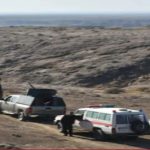
Today, satellite imagery of the IraIro facility shows a site that appears desolate and unmaintained – a physical testament to a complex that completed its sinister purpose: the quiet extermination of Eritrea’s veteran leadership in the harshest conditions imaginable. It is safe to deduce that the G-15 have all passed away. Therefore, Eritreans must move past passive appeals for clemency. We must instead advocate for a post-Isaias truth and reconciliation committee – one tasked with unearthing the truth behind their deaths, locating their remains for honorable burials, and identifying the precise causes and timelines of their passing, and delivering justice and restitution to the families of the disappeared.
The 11 Imprisoned Signatories
- Mahmoud Ahmed Sherifo – Former Vice President, Foreign Minister, and Minister of Local Government
- Haile “Derue” Woldetensae – Former Foreign Minister and Minister of Trade and Industry
- Petros Solomon – Former Minister of Defense and Minister of Marine Resources; former EPLF Chief of Intelligence
- General Ogbe Abraha – Former Chief of Staff of the Eritrean Defense Forces, Minister of Trade and Industry, and Minister of Labor
- Major General Berhane Gerezghier (Gebregziabher) – Former Commander of the National Reserve Force
- Aster Fissehatsion – Veteran EPLF leader and senior official in the National Union of Eritrean Women and PFDJ Central Council
- Germano Nati – Former Head of Social Affairs in the Gash-Barka Region
- Hamid Himid – Former Director at the Ministry of Foreign Affairs and PFDJ Executive Council Member
- Saleh Idris Kekya – Former Minister of Transport and Communications and Director of the Office of the President
- Brigadier General Estifanos Seyoum – Former Director-General of Inland Revenue
- Beraki Gebreselassie – Former Minister of Information, Minister of Education, and Ambassador to Germany
The 4 Non-Imprisoned Signatories
- Mesfin Hagos – EPLF co-founder and former Minister of Defense (Abroad during arrests; lives in exile as of 2026)
- Adhanom Gebremariam – Former Attorney General and Ambassador to Sweden and Nigeria (Abroad during arrests; died in exile)
- Haile Menkerios – Former Ambassador to Ethiopia and the UN/AU (Abroad during arrests; lives in exile as of 2026)
- Mohammed Berhan Blata – Former Mayor of Mendefera (Retracted involvement prior to the crackdown)