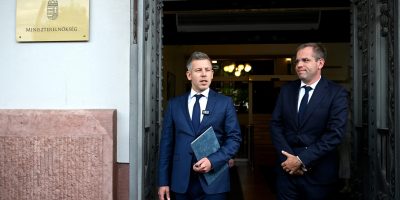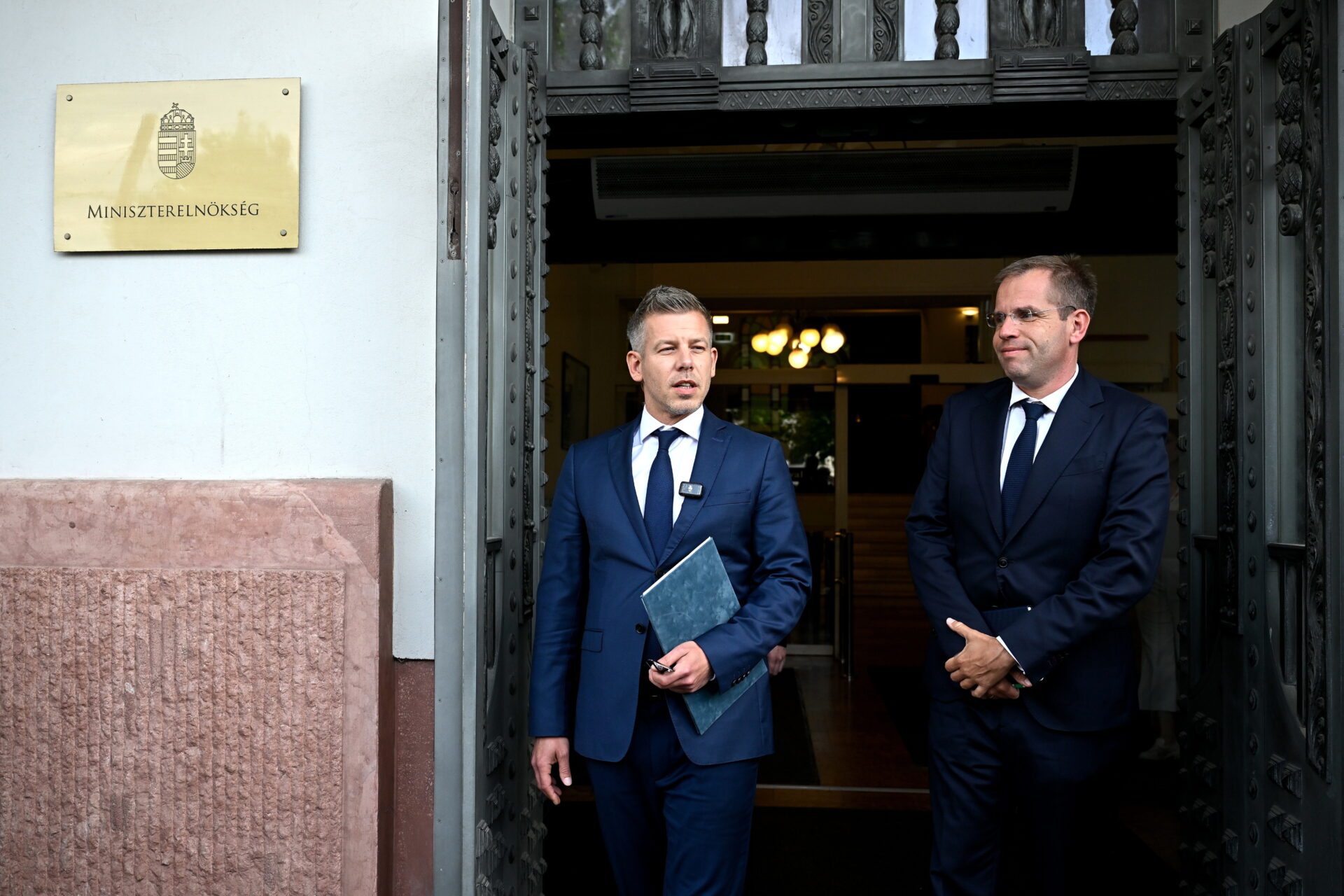
The ministries have been handed over to Hungary’s new government, Prime Minister Péter Magyar said on Thursday, adding that a comprehensive investigation would be launched in all areas.
Speaking at a press conference, the prime minister said the government would not pay HUF 1,300 billion under a blanket agreement signed by the defence minister of the previous government.
According to news wire MTI, Magyar said all ministers of the Orbán government were present for the handover ceremony, with the exception of the “chief of inventories”.
The remark was a sarcastic jab at former Prime Minister Viktor Orbán, referencing a recent social media video in which Orbán was seen “taking inventory” of his government’s achievements.
He also said that “the atmosphere was not too good” during the procedure.
“It was clear that one or two ministers did not like that their previous actions were read out. We did not come here to quibble, and the Hungarian people do not expect this from us either, but rather a precise, meticulous handover and the start of work as soon as possible,” Magyar said.
Magyar Slams Outgoing Ministers
He slammed the outgoing ministers that were not MPs in the new parliament and failed to listen to his inauguration speech by saying that they should “be ashamed of themselves” for handing over the country in such a poor state.
The prime minister said the new government received the handover material in different formats, some on paper, in boxes, on a USB drive, and the innovation ministry on a DVD.
He singled out Sándor Pintér, the former interior minister, who “was able to comply with the legal requirements” and handed over his tasks according to the new government structure, but the former head of the Prime Minister’s Office, Gergely Gulyás, “was not able to do this, but we will sort it out, and the current ministers will separate the files,” Magyar said.
Magyar said Pintér had requested an immediate and comprehensive investigation into his own activities “and this will take place”.
“Although the other ministers, for example Antal Rogan, did not have such a request, it will naturally take place in his case as well,” he added.
He also noted that János Lázár, the former minister of construction and transport had “quickly left the building or the sinking ship” while others had stayed to the end.
Former Cabinet Severance Payments to be Donated to Charity
Answering a question, the prime minister said that the government had accepted that departing members of the former cabinet may donate their severance pay to charity. The government will transfer the funds to the designated foundation, he added.
“We have accepted this, and I believe the Hungarian people will accept it as well,” Magyar said, adding that they are awaiting statements from the state secretaries regarding whether they, too, will waive their severance pay or have it transferred to charity.
Magyar indicated at a press conference held during a break in Wednesday’s cabinet meeting that severance pay due to outgoing government members would not be paid out.
Gergely Gulyás, the former minister heading the Prime Minister’s Office, subsequently announced that the ministers would donate the money to a charitable organisation in Transcarpathia. Magyar said that the ministers’ severance pay would be HUF 350 mln gross, but together with the state secretaries, the amount could reach HUF 1 bln.
He said that several ministries had made smaller commitments since his inauguration, but there were also cases in which billions had been committed; the new ministers will comment on this after reviewing the documentation.
Ministries to Move Headquarters
Regarding the future location of the ministries, the prime minister said the ministries now use both state and private buildings, including the overpriced rental properties built by the “Tiborcz mafia circle”.
Some ministries may have to move more than once, he added.
Magyar said that the economy ministry would move into the current building of the Prime Minister’s Office. He said the agriculture minister’s offices would be in the same building, but his entire staff would not have enough room there. The culture ministry will remain in its current location, as will the education ministry, while the science and technology ministry will work in the previous economy ministry building, the prime minister said.
The ministry of transport and investment will move to the former MOL headquarters, he said.
No Direct Contact Between Magyar and Orbán Since Election Night
In response to a question, Magyar said he had not spoken to former PM Viktor Orbán since the night of the election. He said that there were issues that they should discuss, but added that those could be resolved without his predecessor.
“But there is an authority where Orbán will have to appear, such as a future parliamentary investigation committee,” Magyar said.
Regarding the future of public interest asset management foundations, he said they would like to transform the system, as they promised in the campaign. “It is not as big a success story as the Orbán government tried to make it look,” he added.
Magyar Criticizes HUF 1.3 tln Defense Ministry Deal
The government has received the first invoice for HUF 30 bln (EUR 84 mln) under a blanket agreement worth HUF 1.3 tln that the defence ministry had signed “less than a month before the [April 12] election, without any social consultations, in secret”, Magyar said but added that his government would not foot that bill.
Magyar pledged a full review of the contested deal, and said that he had specifically addressed former Defence Minister Kristóf Szalay-Bobrovniczky about this framework agreement during the meeting.
He said the country needed functional health services, education, real public security, EU funds “brought back to Hungary”, a revitalized economy, and effective child protection “rather than spy satelites”.
“Hungary does not need the things outlined in that contract,” the PM added.
Magyar said the ministers will make recommendations regarding the appointment of state secretaries, and the president of the republic will appoint them. This could happen this week, they are working to have the team fully in place as soon as possible, he added.
In response to a question regarding Fidesz MP Alexandra Szentkirályi stating that she had been insulted on the street, Magyar said it was unacceptable not only for a politician but also for any civilian to be verbally or physically insulted by anyone.
However, he said he disagrees that the public mood has been like this since the Tisza Party emerged, because “everyone saw how Tisza Party members used to be threatened.
He constantly spoke about the need to preserve peace, he added.