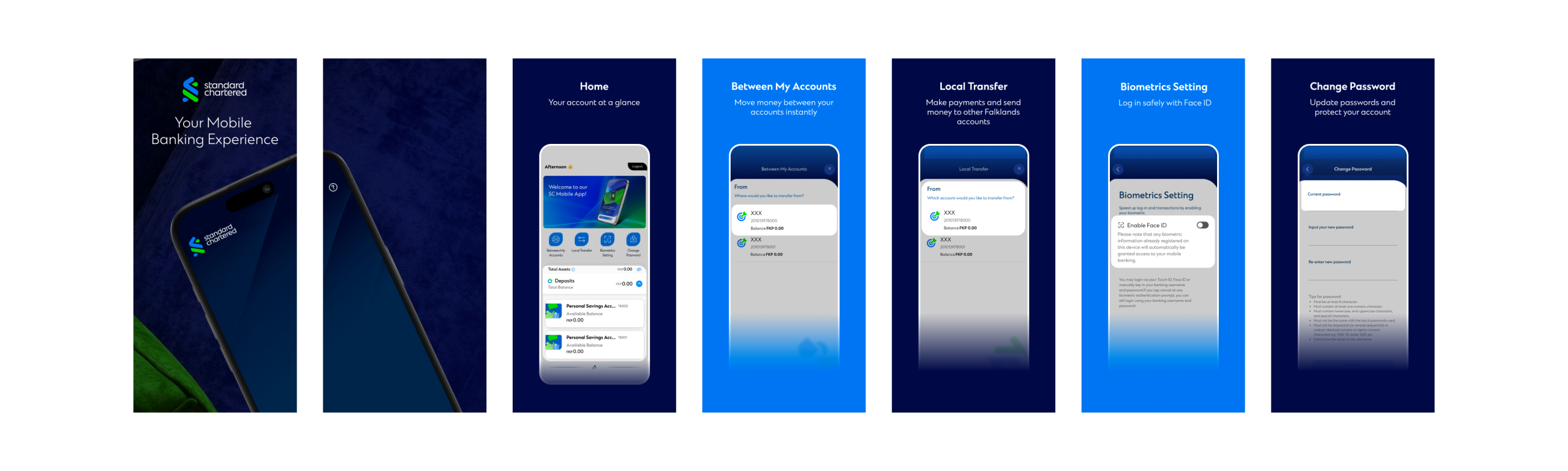

A NEW mobile banking app being launched by Standard Chartered (SC) will be a “game changer” for the Falkland Islands, SC Chief Executive Sarfraz Rao tells Penguin News.
The ability to undertake moblie banking in the Falklands has been long awaited, something Mr Rao acknowledged, “the Islands present unique banking and infrastructure considerations, so we wanted to ensure that the app… is fit for purpose meaning that it meets the highest standards possible in terms of security, resilience, as well as customer experience.
“From that standpoint it is not about how long it has taken, it is more about now that the app has been delivered what does it entail.
“It is modern and it is secure and that is what our Falklands banking customers have been wanting and they deserve it as well.”
The app, for now, will only be available to personal banking customers and will “essentially give a bank in their hands” to customers, Mr Rao explained.
The app should allow people to check their balance, move money between SC accounts, and complete local transactions from the convenience of their phone, and outside of banking hours. However remittence payments will not be possible through the app.
On July 20, SC will host an app demonstration event in the Chamber of Commerce to show customers how the app can be used ahead of its launch, which Mr Rao hopes will be in August.
“I think it’s a game changer” Mr Rao stated, when asked by PN what this development means for banking in the Falklands, before adding that a “lot of the work has been done in the background” which has not been visible to customers. He pointed to the uplifting of their core banking platform as a key piece of work, as well as the introduction of IBAN numbers and contactless debit cards.
Speaking of his own ambition to push for “digital first” banking, Mr Rao stated, “digital first has been our agenda from day one, from a group standpoint from the head office, but as well at a personal level when I came in 2021 the first thing that I said was that I want to get SC Falkland Islands digital ready.
“I am very happy and it really seems like a personal milestone as well to go live with the mobile banking application, and hopefully more good news to come.”
Following the demonstration event, which people can also attend remotely, a guidance document will be emailed to all personal banking customers. Mr Rao added that he has some ideas for other ways of engaging and demonstrating the app closer to the launch including potentially visiting Tussac House to help guide residents through using the app.
Security features will be present in the app including two factor authentication for transactions, and the option for using biometrics to log in, although a lot of security features won’t be visible as the cybersecurity works in the background. Mr Rao explained that SC have experience of rolling out banking apps in larger markets, “rest assured that the application we have will a very high level of security.”
“The more we use this app the better it is for the bank, for our customers. We will do whatever we need to do to enhance the outreach so we can maximise usage of the mobile banking app… now that it is here, let’s make it a success.”
Mr Rao concluded by stating that this was a “milestone” for the bank and the local community.