…from two employees to more than 200 jobs
Seithati Motsoeneng
WHAT started in 2019 as a modest apparel business with four machines and two employees, has grown into a fully-fledged factory employing about 90 people, with a second facility expected to push employment beyond 200.
Tranquil Apparel founder, Clement Molupe, attributes the transformation to targeted government support through the Competitive and Financial Inclusion Project (CAFI), following his initial incubation by the Basotho Enterprise Development Corporation (BEDCO), and later financial assistance from Lesotho PostBank.
The company, based in the Maputsoe Industrial Area, launched its second factory shell on Thursday in what Mr Molupe described as a major milestone in the growth of the business.
The new facility is expected to accommodate about 150 additional workers and 80 new machines, enabling the company to expand its production capacity and pursue larger local and international orders.
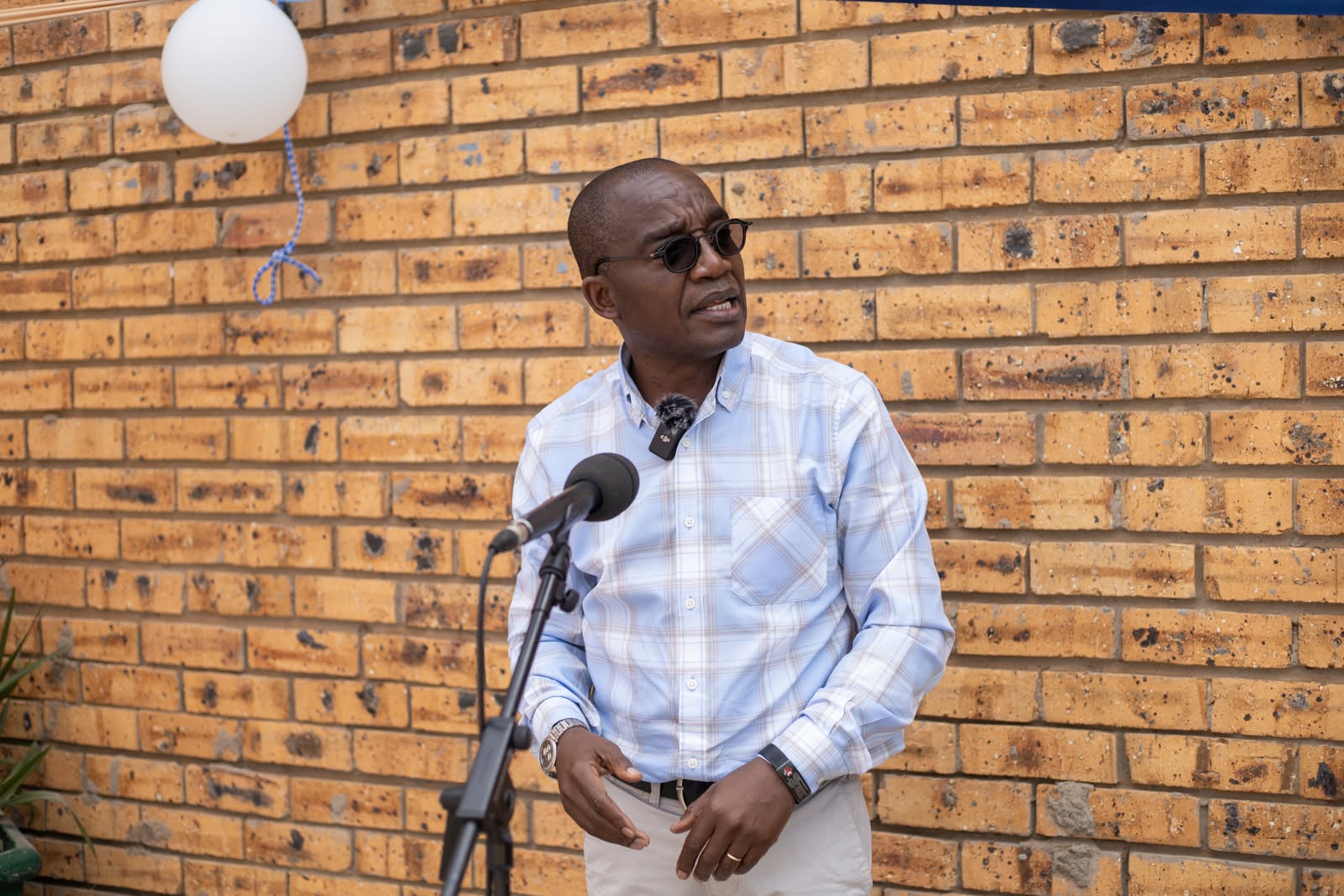
Speaking at the launch, Mr Molupe said government-backed programmes had provided the foundation for his business to grow from a small operation into an industrial enterprise.
“I am grateful for the help I got from the government of Lesotho and the guidance I got from government-backed initiatives like BEDCO and CAFI because they helped me grow from nothing into a sustainable business,” he said.
Mr Molupe recalled that when Tranquil Apparel entered the CAFI programme, it was still a micro-enterprise with fewer than four employees and limited machinery.
“When I was first incubated into the programme, I was just a businessman with less than four employees and a few machinery inputs,” he said.
He said CAFI helped the company increase its production capacity through training, capacity building and machinery purchases.
“CAFI helped us produce on a higher scale through capacity building and machinery purchases to grow the business, which now employs about 90 people working on local and international apparel orders,” he said.
According to Mr Molupe, the support went beyond providing machinery, as it also equipped the business with systems, market access and the confidence to pursue bigger contracts.
“I am very grateful for the opportunities granted to me through CAFI and the growth I acquired while in the programme and after it,” he said.
He said his journey began in 2019 with four machines and two employees before the business was introduced to BEDCO, which subsequently facilitated its progression into CAFI.
“I started my business back in 2019 with about four machines and two employees, which later grew to four people. To begin my journey of success, I was first incubated into BEDCO, which helped us to go through to CAFI, which helped me build my first factory of 90 employees,” he said.
The first Tranquil Apparel factory, also in Maputsoe, now operates full shifts producing garments for the domestic market as well as international buyers.
The company’s next stage of expansion has been supported by Lesotho PostBank, which is financing the construction of the second factory shell.
“Our journey did not end there as PostBank Lesotho later came through to build our dream into something bigger, giving us financial assistance to open our second factory site again in Maputsoe,” Mr Molupe said.
He said the expansion was guided by an ambitious employment target of 200 workers within a year.
“Our dream for this was to hire about 200 employees by the end of the year and through the second factory opening that dream will be attained and more,” he said.
For Mr Molupe, the expansion represents more than business growth, as he wants Tranquil Apparel to contribute to the national economy and improve the livelihoods of Basotho.
“My dream is to contribute to the economy of the country positively and to the livelihoods of many Basotho. Government is not only made up of officials but by the broader public,” he said.
Lesotho PostBank Managing Director, Mokhachane Mopeli, who attended the launch, said the bank’s involvement was aimed at turning entrepreneurial ambitions into employment opportunities.
“I am happy that our bank was able to make a dream come true for a Mosotho man whose dream was to create employment for Basotho,” Mr Mopeli said.
“The unemployment rate in the country is everybody’s pandemic and if one person has a dream of hiring people, it is only fulfilling for the bank to be able to help such a person.”
He said PostBank was established to help Basotho earn a living through its financial services, but was increasingly focusing on supporting businesses and enterprise development.
“The bank was made to help Basotho earn a living through our services. We as the bank are shifting to transforming the lives of Basotho and their businesses. Through Tranquil factory, Basotho will be able to earn some employment and make a living,” he said.
CAFI Director, Chaba Mokuku, said the project’s mandate extended beyond training and capacity building to creating sustainable employment through private businesses.
“Our mandate is to make sure that we create employment not only from government but from private companies like Tranquil, which has been able to build its employment from two people to now over 200 employees,” he said.
Mr Mokuku said sustainable job creation required an environment in which businesses could grow.
“Employment is not only supposed to be government. It should also come from independent businesses and the government creating an allowing space for businesses to grow through enterprises like CAFI,” he said.
BEDCO Director, Tšepang Tlali, said Tranquil Apparel’s growth demonstrated what could be achieved when business incubation, access to finance and market demand were brought together.
From two employees in 2019 to about 90 currently, with employment projected to exceed 200, the company’s growth illustrates how targeted support can help small enterprises move from survival to industrial-scale operations.
With 80 new machines planned for the second factory, Tranquil Apparel is positioning itself to increase production, pursue larger export orders and continue supplying the local market.
The company’s expansion, CAFI and PostBank officials said, demonstrates how the government programmes and financial institutions can work together to de-risk small businesses, finance their growth and ultimately translate entrepreneurial ambition into jobs.
Post Views: 9,675