By Stephen G. Fellajuah
Monrovia, Liberia, July 17, 2026 – President Joseph Nyuma Boakai has emphasized the need for responsible development, asserting that Liberia welcomes investment and economic growth only when it safeguards the nation’s environment, communities, and vital natural resources.
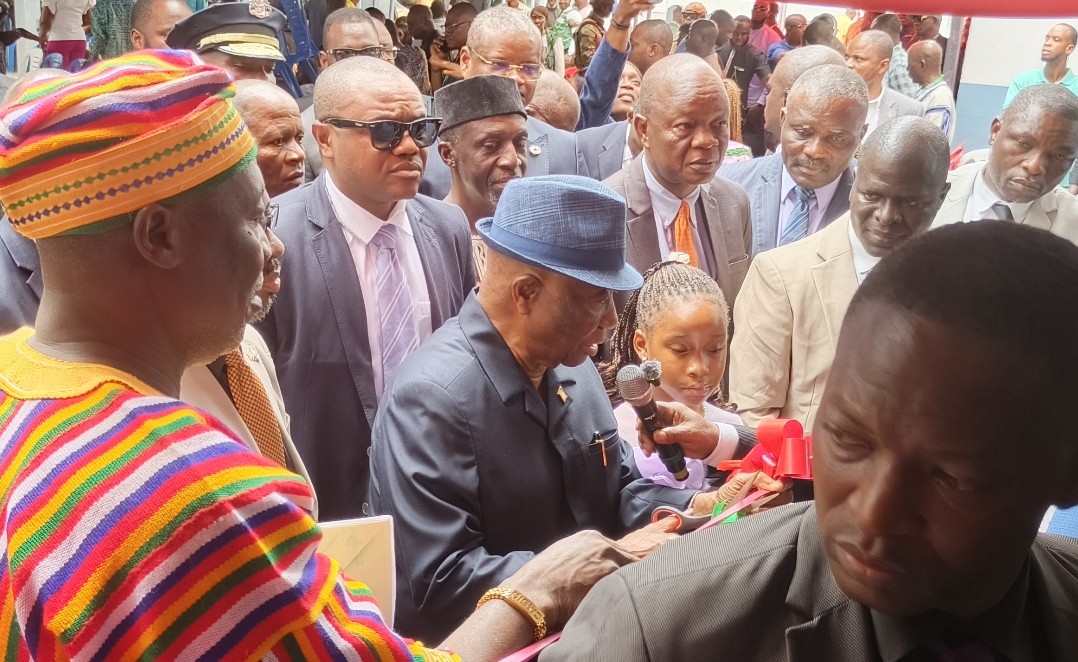
The President made these remarks at the official dedication ceremony of the Environmental Protection Agency’s (EPA) newly acquired headquarters, where he also commissioned an advanced Elemental Analyzer for the agency’s laboratory.
The event, themed “From Tenant to Ownership,” was held Thursday, July 16, 2026, at Mamba Point, Monrovia, drawing lawmakers, government officials, and civil society groups.
President Boakai underscored the EPA’s pivotal role in national development, stressing that economic advancement must not come at the expense of Liberia’s forests, wetlands, rivers, coastlines, and other resources vital to current and future generations.
He described the new EPA headquarters as a testament to Liberia’s commitment to good governance, responsible environmental stewardship, scientific progress, and the protection of public health.
In his overview, EPA Executive Director Dr. Emmanuel K. Urey Yarkpawolo recalled that upon assuming office, the agency had spent over 16 years in two run-down rented buildings at a cost of US$72,000 annually, without any ownership stake.
He noted that the previous facilities were insufficient for the EPA’s expanding mandate and fell short of the standards required for effective environmental regulation.
Dr. Yarkpawolo added that the agency later moved to a Mamba Point property at an annual rent of US$85,000, noting that a decade of such payments would have exceeded US$1 million, with no tangible asset to show for it.
He revealed the new 1.8-acre property was acquired for about US$800,000—including taxes and fees—well below its appraised value of US$1.3 million, turning a recurring expense into a government asset.
The compound features 80 offices, three conference rooms, four reception areas, 24 bathrooms, a GIS lab, library, staff workspaces, parking, a warehouse, generator house, and a secured perimeter. A 60-kilowatt solar system ensures clean, reliable power.
The environmental lab, he said, includes a smart conference room, technical offices, workstations, and specialized areas for radiation safety, water quality, and instrumental analysis, supporting research and regulatory functions.
He disclosed that the newly commissioned Elemental Analyzer, worth about €100,000, was the only unit allocated to West Africa under the International Atomic Energy Agency (IAEA) program—awarded to Liberia based on the strength of its proposal and national impact.
Dr. Yarkpawolo said the equipment will bolster research on soil fertility, agriculture, climate change, and environmental contamination, while supporting universities and young Liberian scientists.