The School for the Visually Impaired in collaboration with the Ministry of Education, Innovation, Youth, Sport, Arts and Culture commemorated White Cane Day on 15 October, highlighting the vital role of accessibility and inclusive education for learners with poor or zero eyesight.
Held under the theme “White Cane: Key to Mobility and Independence,” the event featured the official handover of educational equipment by the United Nations Educational, Scientific and Cultural Organisation (UNESCO), Bank BIC, and the First National Bank through its FirstRand Foundation.
UNESCO handed over braille paper, tactile graphics paper and transparent braille sheets, audiovisual production and multimedua equipment, and software and learning resources valued at N$340,000.
UNESCO country representative, Eunice Smith, noted that the support will address barriers by providing necessary resources to approximately 85,000 learners who are differently abled, while helping teachers create structured, interactive learning experiences that promote understanding, participation and learner engagement.
“This intervention is designed not only to support current learners but also to strengthen long-term national capacity. The audiovisual equipment provided today will continue to serve the ministry well beyond this engagement. It will support the future development of accessible learning material across a range of subjects and programmes. Similarly, the braille production and multi-sensory learning resources will strengthen the education system’s ability to respond to diverse learners’ needs in the immediate future,” she stated.
Additionally, Bank Bic Namibia donated white canes to support learners to navigate with greater confidence, dignity and safety, while the FirstRand Foundation gifted sun hats, sunscreen and other essential items valued at N$100,000 for persons with albinism.
Delivering the keynote address, the minister, Dr Sanet Steenkamp encouraged the learners to claim their spaces in the community by being upright, just, respectful, confident and knowing what it is that they want.
“So nothing should prevent us from embracing that which the world has to offer. But if we need help we should also reach out to others. People with visual impairment are entitled to the same dignity, the respect that they were asking for today, to the same level of opportunities as any other citizen,” she noted.
She acknowledged that a white cane cannot remove every physical obstacle, pointing out that uneven pavements, inaccessible buildings, unsafe road crossings and inadequate public transport can still restrict their mobility.
“Responsibility therefore extends beyond the individual carrying the cane. It rests with all of us in our communities, our institutions and those entrusted with planning and managing our public spaces,” she stated.
The minister encouraged parents to actively engage schools and teachers to better support learners. “They must remember that these learners, their children continue to have needs and that our teachers already go out of their way to accommodate and embrace and provide the needs of the children that they have come to love as their own. So I am calling upon parents to please reach out and see how best you can also support the schools and foster stronger links and relationships with our teachers.”
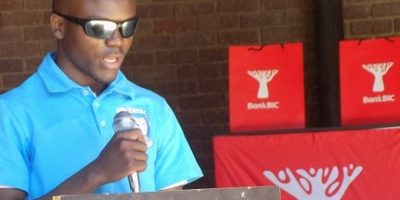
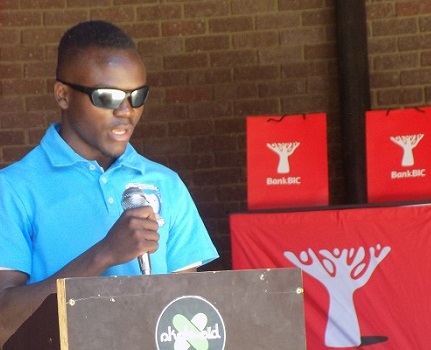
Speaking on behalf of the learners, Manfred, a Grade 9 leaner at the School for the Visually Impaired, stated: “As a blind boy, I experience the world differently. I may not see the faces around me but I can hear louder, feel love and dream of a brighter future. The white cane is more than just a stick, it represents independence, confidence and freedom. It helps blind people move around, identify obstacles and explore their surroundings. Being blind does not mean being unable. We have dreams, talents and goals, just like everyone else. Sometimes we don’t need pity, we need understanding, respect and equal opportunities. Ladies and gentlemen, if you meet a blind person, remember that a kind word, an inclusive attitude and a little understanding can make a difference.”


All photographs by Michel Haoses.