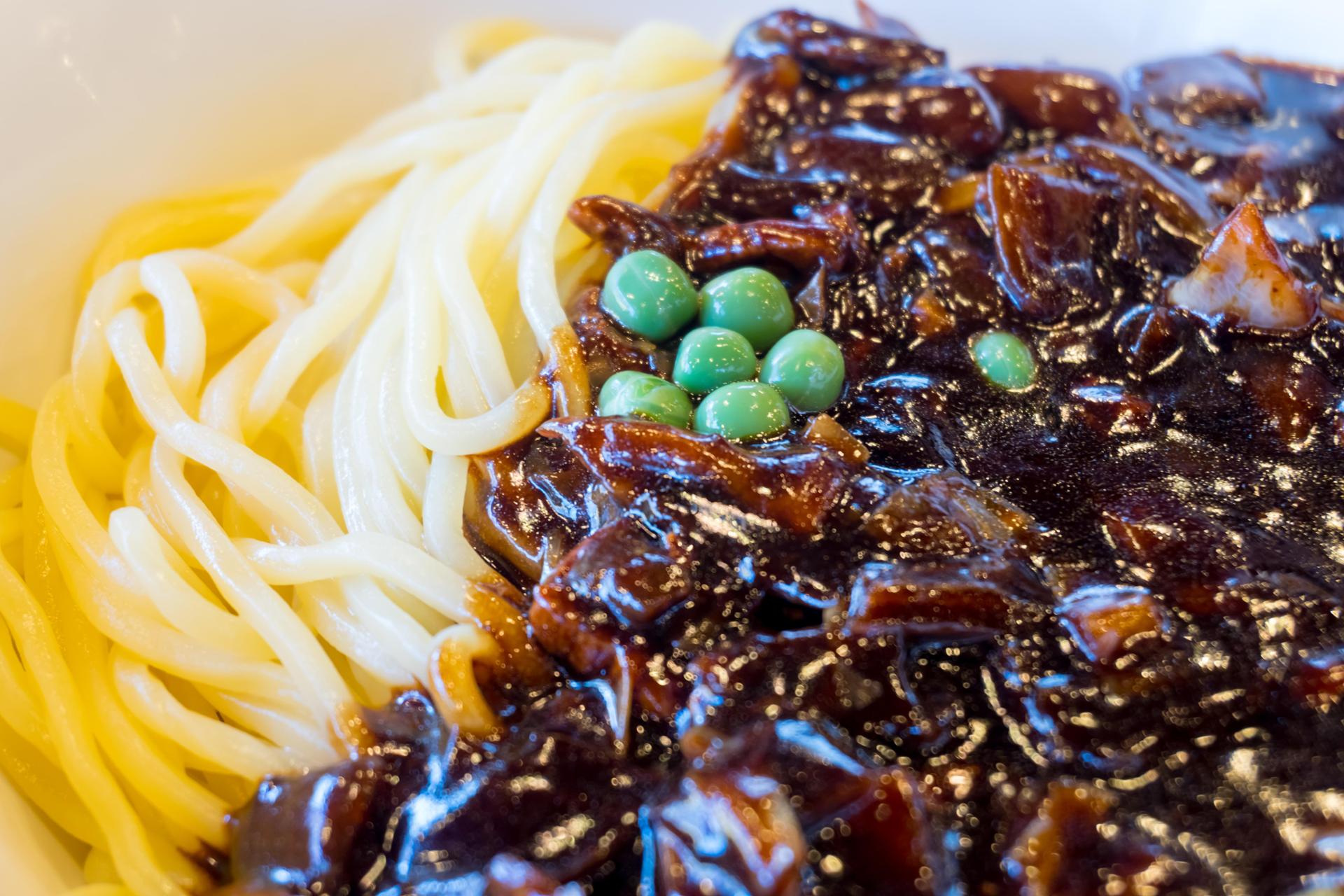
Jjajangmyeon / gettyimagesbank
Click here for more articles by Kormedi.com.
Koreans often debate which noodle dish reigns supreme — jjajang or jjamppong? Jjajang, a black bean sauce served over rice or noodles, is one of the most common Korean-Chinese dishes, and often matched with jjamppong, a spicy broth with noodles. Even as adults, many still crave the jjajangmyeon and jjamppong they loved as children.
Interest in blood sugar management has been rising, so jjamppong might seem like a better choice than jjajangmyeon. Of course, cutting down on noodles altogether would be better for managing blood sugar levels, but giving them up entirely is hard.
Among Korea’s most popular foods, the ones that cause the largest post-meal blood sugar spikes are jjajangbap, rice served in stone pots, curry rice and jjajangmyeon. The findings came from an analysis released in February by Kakao Healthcare through its blood sugar management app.
Most foods that sharply raised blood sugar were rice- or noodle-based dishes. Foods made with white rice or refined wheat flour are high on the glycemic index, meaning they can easily trigger rapid blood sugar spikes. Repeated spikes can lead to fat accumulation and weight gain. Jjajang sauce also contains simple carbohydrates such as sugar, which may explain why jjajangbap ranked highest.
Jjamppong noodles generally contain a wider range of vegetables than jjajangmyeon. gettyimagesbank
Jjamppong is also made with refined flour noodles, so it has a high glycemic index as well, but it appears to raise blood sugar less than jjajangmyeon in most cases. One reason is the abundance of toppings such as onions, cabbage, pork, seafood and green onions, which may help suppress blood sugar increases.
Onions are considered especially important in terms of toppings. Onions contain chromium, a mineral that helps glucose produced from carbohydrate digestion distribute more efficiently to cells throughout the body. Chromium may also help insulin function more effectively, contributing to blood sugar control.
Eating raw onions as a side dish may further enhance the effect. Onions also contain quercetin, which may help prevent fat and cholesterol from building up in blood vessels, potentially benefiting blood pressure and cardiovascular health.
How to make flour-based meals healthier
Even foods made with white flour or white rice can affect blood sugar differently depending on cooking methods and side dishes. The worst habit is eating the noodles first when having jjamppong or jjajangmyeon.
Leaving vegetable side dishes untouched — including onions — may increase the risk of blood sugar spikes. Dietary fiber from vegetables slows the rise in blood sugar and may also help reduce triglycerides and cholesterol associated with noodle- and rice-heavy meals.
These strategies can make flour-based dishes somewhat healthier. As for jjamppong, consuming less of the salty broth can also help with blood pressure management.
This article from Kormedi.com, Korea’s top health care and medical portal, is translated by a generative AI system and edited by The Korea Times.