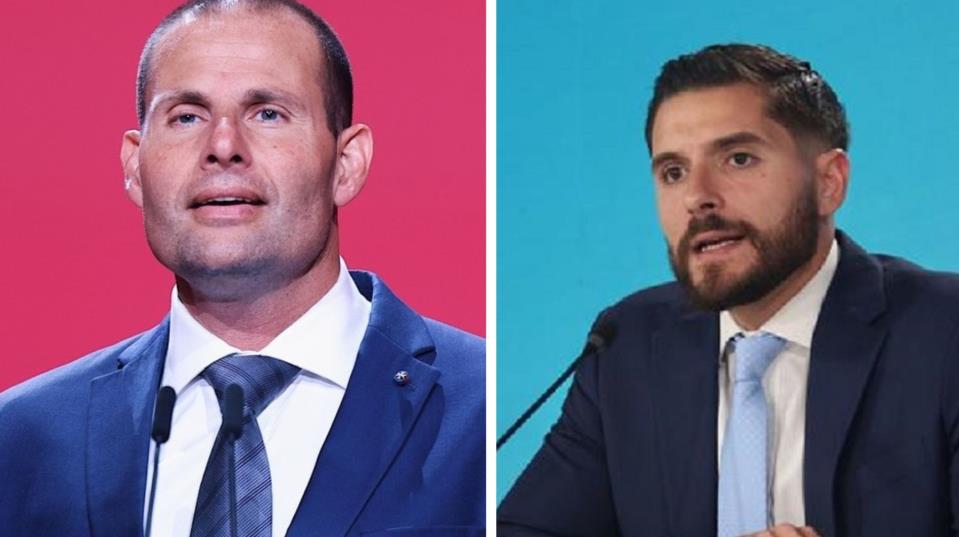
The 18th day of Malta’s electoral campaign was dominated by the Labour Party’s manifesto launch, an event that not only showcased Prime Minister Robert Abela’s political vision, but also symbolically overshadowed the Opposition after the Nationalist Party was forced to cancel its Swieqi event because of heavy rain.
Labour used the day to present itself as a government planning decades ahead, armed with a detailed and expansive programme touching nearly every sector of national life. Meanwhile, the PN focused heavily on cost-of-living relief, youth measures and criticism of Labour’s unfulfilled promises until the evening’s unfortunate cancellation.
At the centre of Labour’s manifesto launch was the narrative about “quality of life.” Every major proposal announced by Abela, from transport and planning reform to pensions, environment and healthcare, was listed. The most politically sensitive proposal – a referendum on voluntary assisted euthanasia – was presented within this wider argument that Malta must continue evolving socially while giving citizens greater autonomy over deeply personal decisions.
By promising a referendum rather than immediate legislation, Labour attempted to strike a balancing act. The party signalled openness to liberal reform while simultaneously avoiding direct ownership of a divisive issue. The party’s approach reflected political caution, shifting the final decision onto the electorate itself. It allowed Labour to position itself as progressive without alienating more conservative voters ahead of polling day.
This fitted neatly into Labour’s broader attempt to portray itself as a mature governing force capable of gradual but ambitious change. The manifesto’s repeated references to 2050 targets, human development rankings, carbon reductions and economic growth rates were intended to elevate the discussion beyond short-term electoral promises. Labour is increasingly campaigning not simply as a party seeking another mandate, but as the natural steward of Malta’s long-term national project.
Yet this same strategy also exposed Labour’s vulnerabilities. Many of the proposals announced – especially on planning reform, transport and public infrastructure – are ideas that previous Labour administrations had already promised but failed to implement, in part or in full. The pledge to halt development works while permits remain under appeal is perhaps the clearest example, having been promised before without materialising. Likewise, the revival of underground transport discussions inevitably reopened questions about Labour’s abandoned metro proposals from previous campaigns.
The Opposition seized precisely on this weakness. Throughout the day, PN speakers attempted to describe Labour’s plans not as a fresh vision but as a recycled catalogue of broken promises. The party focused heavily on unfinished projects: the ITS campus, Gozo hospital plans, Marsalforn breakwater, traffic solutions and environmental initiatives that were repeatedly announced but never delivered.
This line of attack reflects the PN’s wider campaign strategy under Alex Borg. Borg has consistently tried to turn the election into a judgment on Labour’s record aside from a contest over ideological direction. The Opposition understands that Labour remains electorally strong whenever debate centres on economic growth and macro-level performance indicators. Therefore, the PN’s most effective terrain is credibility and trust – asking voters whether Labour can still be believed after 13 years in office.
Some of the PN’s proposals were undeniably substantial. The five-year income tax exemption for youths during their first decade of employment is one of the Opposition’s boldest fiscal pledges so far. Coupled with mortgage interest support, stamp duty exemptions and pension incentives, the PN is clearly targeting younger middle-class voters struggling with housing affordability and long-term financial security.
The difference between the parties here was philosophical as much as political. Labour believes quality of life must be sustained through state-led investment, national targets and collective progress. The PN sees it through disposable income and personal financial relief. Labour spoke about macroeconomic positioning – top ten human development rankings, growth rates, carbon targets – while the PN focused on what individual families and young workers would directly save or receive.
This distinction also reflects each party’s political position. Labour campaigns from government and therefore emphasises national management, infrastructure and long-term planning. The PN, lacking the ability to point to executive achievements, instead concentrates on immediate household concerns and critiques of state inefficiency.
Both parties continue to compete heavily over younger voters and first-time buyers. Labour’s “My First Home” proposal and tax-free first years of employment overlap conceptually with the PN’s mortgage and tax relief schemes. Both parties also increasingly speak the language of wellbeing, work-life balance and quality of life rather than purely traditional economic metrics.
But there remains a critical difference in tone. Labour’s message is fundamentally optimistic and managerial: Malta is succeeding, and the task is to refine and improve that success. The PN’s message is corrective: Malta has lost balance, and urgent intervention is needed to restore affordability, planning discipline and public trust.
The launch of Labour’s manifesto represented an attempt to define the entire remaining campaign on Labour’s terms – future-oriented, ambitious and centred on continuity under Abela’s leadership. The PN, meanwhile, continues trying to puncture that narrative by reminding voters of promises that never left the drawing board.