Stakeholders and citizens raise constitutional and democratic concerns over a provision that could bar underperforming parties from future elections.
The growing controversy follows renewed attention to Section 5. A (1) of the Elections Law, which sets a two percent threshold for political parties.
By Lincoln G. Peters
MONROVIA, June 2, 2026 — Prominent stakeholders and ordinary Liberians are raising constitutional, democratic, historical, and policy concerns over Section 5. A (1) of Liberia’s Elections Law, a provision that could bar registered political parties from future elections if they fail to meet a minimum electoral threshold.
The law, enacted on September 17, 2014, provides that a registered political party that fails to obtain at least 2% of the votes cast in a presidential election or fails to win at least 1 seat in the Legislature may be prevented from participating in subsequent elections.
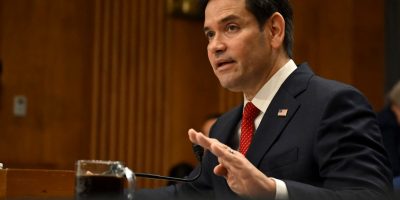
Public debate over the provision has intensified following the Senate confirmation hearing of Mr. Emmanuel Weedor, Chairperson-designate of the National Elections Commission, who vowed to fully enforce the Elections Law and related regulations, with particular emphasis on the two percent rule.
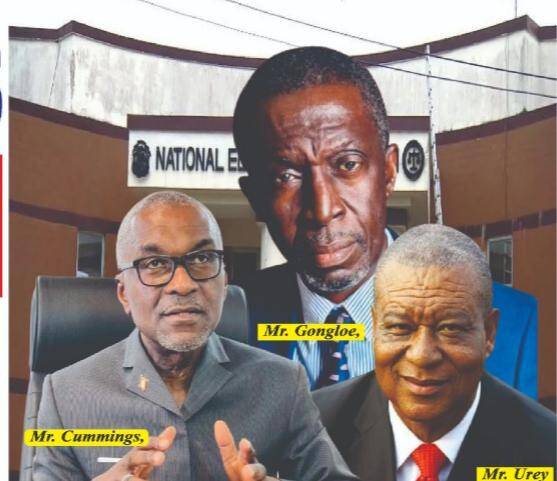
Results from the 2023 presidential and legislative elections show that several political parties received votes but failed to reach the two percent threshold. Among them were the All Liberia Coalition Party with 35,988 votes, or 1.96%; the Collaborating Political Parties associated with Mr. Alexander B. Cummings with 29,613 votes, or 1.61%; and the Liberian People’s Party with 26,394 votes, or 1.44%.
Others included the Liberia Restoration Party with 15,607 votes, or 0.85%; the Movement for Progressive Change with 13,205 votes, or 0.72%; the Democratic National Allegiance with 11,184 votes, or 0.61%; the New Liberia Party with 9,813 votes, or 0.53%; and the Vision for Liberia Transformation Party with 9,149 votes, or 0.50%.
Speaking against the provision, former Liberian People’s Party presidential candidate Cllr. Tiawan Saye Gongloe argued that democracy is strongest when the people, not the government, decide which political parties survive and which disappear.
He said the parties that failed to meet the threshold nonetheless represented hundreds of thousands of Liberian citizens who exercised their constitutional right to support alternatives outside the country’s dominant political groupings.
According to Gongloe, House of Representatives results reveal another important reality: several parties that posted weak presidential numbers still managed to gain meaningful support in legislative races.
“Some won legislative seats despite low presidential percentages. The Liberia Restoration Party won a legislative seat with only 0.75% of the nationwide House vote. The Movement for Progressive Change won a legislative seat with only 1.04%. Vision for Liberia Transformation won a legislative seat with only 0.81%,” Gongloe said.
“The National Democratic Coalition also won a legislative seat with only 1.03%,” he added.
He said the results demonstrate that support for political parties is often regional, constituency-based, issue-driven, or shaped by candidate-specific factors.
In that context, he argued, the difference between survival and exclusion under Section 5. A (1) could come down to only a few hundred votes, elevating what he described as an arbitrary numerical threshold above constitutional rights.
Gongloe maintained that any law that allows the government to eliminate political parties for poor performance in a previous election raises serious constitutional, democratic, historical, and policy concerns.
The prominent human rights lawyer said the provision warrants careful national scrutiny because, in his view, it strikes at the heart of political freedom, democratic choice, and the constitutional principle that political power belongs to the people.