Mohloai Mpesi
THE African Union (AU) Follow-Up Election Observation Mission has commended the Independent Electoral Commission (IEC) for the progress it has made in implementing recommendations issued after the 2022 National Assembly elections.
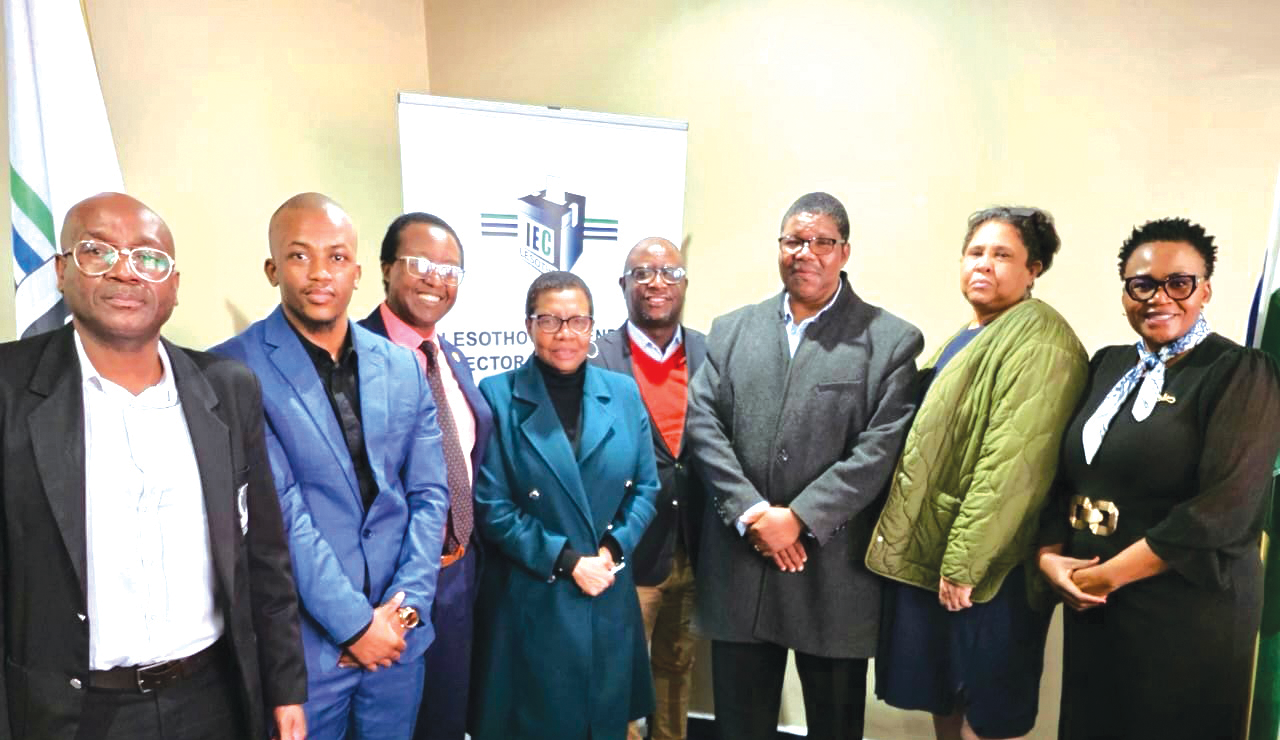
The five-member delegation visited Lesotho from 30 June to 2 July 2026, meeting government officials, political parties, civil society organisations and the media to assess the extent to which the IEC has acted on recommendations made by the AU Election Observation Mission (AUEOM) following the 7 October 2022 polls.
The delegation comprised AU democracy and elections expert Tawanda Chimhini; AU principal officer for the East and Southern Africa Regional Desk Dr Salvator Nkeshimana; and elections experts Karen Ogle, Mmapitsi Raphala and Vera Muring.
According to an IEC statement issued on Friday, the AU team commended the commission for the “substantial progress achieved since 2022” and urged it to continue implementing outstanding recommendations through sustained collaboration with government, Parliament, political parties, civil society, development partners and other stakeholders.
“The AU Follow-up Mission commended the IEC for substantial progress achieved since 2022 and encouraged continued implementation of outstanding recommendations through sustained collaboration with Government, Parliament, political parties, civil society, development partners and other stakeholders,” the statement reads.
Commitment to reform
During the engagements, the IEC reiterated that electoral reform remained an ongoing and collaborative process requiring continuous engagement among all stakeholders. The commission also reaffirmed its commitment to strengthening the credibility, transparency, inclusivity and public confidence of the country’s electoral processes.
Modernised voter registration
The commission presented a progress report detailing key achievements, chief among them a modernised voter registration system integrated with the National Identity and Civil Registry (NICR) through the use of Unique Identification Numbers (UINs).
The reform includes online registration services and a fresh nationwide voter registration exercise conducted in 2024 to improve the accuracy, inclusivity and integrity of the voters’ roll.
To date, more than 579,520 citizens have been registered, with about 88 percent of eligible Basotho now holding National Identity Cards — a foundation the commission said was critical for a credible and inclusive voters’ roll ahead of the next general election, expected in 2028.
The IEC said it would continue implementing its strategic plan, which incorporates both national and international election observation recommendations, while also continuing to train commissioners and staff in electoral administration, ICT, cybersecurity, governance and leadership.
Regional benchmarking
The commission also disclosed that it undertook a regional benchmarking tour in March this year, exchanging knowledge with electoral bodies in Kenya, Zimbabwe, Malawi, Rwanda and South Africa. Areas of focus included the modernisation of results transmission systems and improvements to the seat allocation process.
Voter education drive
On voter education, the IEC said it had adopted a comprehensive Civic and Voter Education Strategy to strengthen public awareness and participation in elections, targeting at least 60 percent of eligible voters ahead of the next general election.
The commission said it had expanded outreach through the media and digital platforms, alongside inclusivity measures targeting women, youth and persons with disabilities.
It added that Parliament had adopted a new Electoral Bill that strengthens the legal framework for voter registration by enabling the use of National Identity Cards.
The reforms also provide for improved inclusion of diaspora voters, the systematic removal of deceased persons from the voters’ register through timely reporting to the Ministry of Home Affairs, and enhanced data-sharing between the IEC and the NICR to ensure the continuous updating and integrity of electoral records.
“These measures improve accessibility for citizens in remote communities and persons with disabilities and strengthen the overall credibility and accuracy of the voters’ register,” the statement reads.
Capacity building
The IEC also highlighted its ongoing capacity-building initiatives, including the BRIDGE (Building Resources in Democracy, Governance and Elections) programme, aimed at strengthening the knowledge and professional competencies of political parties, civil society organisations, media practitioners, persons with disabilities and IEC officials.
Through structured workshops, practical simulations and peer-to-peer learning, the commission said participants have gained enhanced skills in electoral processes, democratic governance, voter education and election observation.
The IEC has also introduced mentorship and Training of Trainers (ToT) programmes, which it said have expanded the pool of nationally accredited BRIDGE facilitators, reducing reliance on external experts and strengthening national ownership of electoral capacity-building.
Background
The AUEOM to the 2022 National Assembly elections — preceded by a pre-election special political mission from 23 June to 1 July 2022 — assessed Lesotho’s electoral process against the African Charter on Democracy, Elections and Governance (ACDEG), the AU Declaration on Democratic Elections, the African Charter on Human and Peoples’ Rights and national legal frameworks.
Its recommendations included calls for the IEC to periodically clean up the voters’ register, make the final certified voters’ roll available to stakeholders ahead of elections, consider objective mechanisms for penalising violations of the Electoral Act and extend voting rights to Basotho living outside the country.
The AU’s follow-up visit came as Lesotho intensifies preparations for its next general election. The European Union has also conducted a similar follow-up mission this year to assess progress on its own 2022 election observation recommendations.
In May, the IEC, together with International IDEA and the United Nations Development Programme (UNDP), formally launched its Civic and Voter Education Strategy and Voter Registration Strategy in Maseru, aimed at boosting citizen participation ahead of the next polls.
Post Views: 262