…after “verbally” suspending procurement manager
…and assuming the procurement functions himself
Mohloai Mpesi
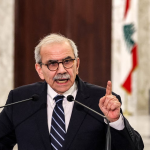
DEFENCE and National Security Permanent Secretary, Mpopo Tšoele, has suspended the ministry’s Procurement Manager, Senate Makhaola, and arrogated its procurement functions to himself.
Mr Tšoele now stand accused of directing the purchasing of supplies to the Lesotho Defence Force (LDF) himself, allegedly bypassing established procurement procedures in the process.
Sources close to the ministry have accused Mr Tšoele of interfering in procurement processes by abruptly discontinuing existing supplier contracts and sourcing alternative suppliers. This he is doing based on claims that he is cutting costly middlemen. He is now allegedly sourcing things like meat and gas for the LDF from alternative suppliers, leaving those with existing contracts in limbo. The sources argue that is illegal as these alternative suppliers did not go through competitive bidding.
Mr Tšoele is alleged to have verbally suspended Ms Makhaola on 31 May 2026 – barely a month after he (Tšoele) was transferred to the defence portfolio from the then Ministry of Local Government, Chieftainship, Home Affairs and Police.
Mr Tšoele was moved from that ministry after his fallout with its then Minister Lebona Lephema after defying Mr Lephema’s order to suspend fraud accused Director of Passports, Mpiko Rafono.
And now the sources allege that the PS’s actions at the Defence Ministry have effectively sidelined procurement officials and allowed him to personally drive the acquisition of goods for the LDF.
Mr Tšoele, however, denies wrongdoing and insists that his responsibility as PS is to ensure that the ministry obtains value for money.
“Those people (suppliers) do not produce any of those things they supply, but are simply middlemen. No one (supplier) has even come to me complaining. I have not cancelled anyone’s contract, but what I can tell you is that the primary responsibility of a PS is to buy value,” Mr Tšoele said.
He said it would be irresponsible for the ministry to continue purchasing through middlemen where better value could be obtained by dealing directly with manufacturers.
His comments come amid allegations that the ministry has been procuring, among others meat and gas directly from alternative suppliers who did not participate in original tender processes, sidelining existing supply contracts between the ministry and several local traders.
A source familiar with the procurement arrangements said the ministry could not simply abandon contracted suppliers and engage other companies to provide the same goods without following the appropriate procedures.
“A tender was floated and suppliers were engaged to provide the army with meat. If the army now felt it wanted live cattle and not carcass as per their contracts, the procedure is that the Ministry of Defence has to re-engage these contractors and negotiate the amendment of their contracts, telling them that they want the cow alive, not slaughtered, so that they can get the intestines, head and feet,” the source said.
“You can’t contract another person to supply the same thing when there is an existing contract, and then stop paying the original supplier in order to pay the new one. This especially when there is no emergency warranting such. The government can only deviate from standard procurement regulations when a clear emergency warranting single sourcing or procuring goods without a tender exists.”
However, Mr Tšoele maintained that his decisions were guided by the need to obtain value for money and ensure adequate supplies for soldiers.
He said, for example, that if a gas supplier was merely buying gas from another company and adding a mark-up, the ministry could consider purchasing directly from the source.
“If you sell me gas but you don’t bottle it yourself — you buy it from someone else, add your own mark-up, and I end up receiving very little quantity of gas, which is not value for my money.
“This is just an example; I am not responding directly to whoever gave you this information. There has never been a letter to my office complaining about any contract. To my knowledge, there is no problem. I am simply telling you what would inform my decision.”
He said the ministry needed to maintain sufficient reserves to prevent shortages that could affect the LDF.
The PS also used the supply of meat as an example, arguing that dealing directly with a source could result in better value.
“If, as a supplier, you don’t own cattle, you buy a cow for M10 000 and then sell it to the ministry for M30 000 or M40 000. After supplying the meat, it turns out it does not cover all the soldiers.
“That means the PS should explore other means of buying meat. First and foremost, the work of a PS is to buy value.”
Procurement Manager suspended
The allegations have also raised questions about the suspension of the ministry’s Procurement Manager, which sources claim has enabled Mr Tšoele to exercise greater control over procurement decisions.
According to sources, Ms Makhaola was suspended after submitting minutes of a procurement committee meeting to former Defence PS ’Mabataung Khalane without first informing Mr Tšoele.
The source said the Mr Tšoele, who had just assumed the Defence portfolio, was also unhappy about the procurement of soldiers’ berets, which allegedly progressed without his knowledge.
“The berets were for soldiers who were passing out in June 2026 and the procurement process was already at the advanced stage. The only outstanding step was for the procurement committee to sign off the order when he (Tšoele) arrived. The committee had already made significant progress, and the berets were already overdue,” the source said.
The source further alleged that the Procurement Manager was initially suspended for three weeks before the suspension was extended.
“She did not even receive a suspension letter — it was a verbal suspension. It was initially a three-week suspension,” the source alleged.
The source said she was later informed that the suspension had been extended until 27 July 2026.
She subsequently wrote to Mr Tšoele on 29 July seeking an update, and was reportedly informed that investigations were still ongoing.
Contacted for comment, Ms Makhaola referred this publication to Mr Tšoele.
“I am out of office just like you are saying but I am not allowed to talk to you regarding those issues. Please talk to the PS who will then authorise the PRO to talk to you,” Ms Makhaola said.
Nonetheless, Mr Tšoele confirmed that he had suspended the Ms Makhaola but disputed the claim that the suspension was verbal.
“Yes, I am still investigating her. I wrote to her; it was not verbal. She will be called for a disciplinary hearing once everything has been investigated. The initial reasons were sufficient to suspend her,” he said.
He denied that the suspension was intended to allow him to take over procurement functions.
Mr Tšoele also denied allegations that he had appointed officers from the Planning and Human Resources departments to the Procurement Committee.
“That is not true. When someone is appointed to the Procurement Committee, they must be given a letter confirming it,” he said.
“Those people you are asking me about are not part of procurement — it is the PS who appoints the Procurement Committee.”
Uniform procurement questioned
The controversy has also extended to the procurement of LDF uniforms.
A source alleged that Mr Tšoele had moved to bypass China Xinxing Jinhua International Trading, which had previously assisted the LDF in sourcing uniforms from China at what the source described as competitive prices.
According to the source, an order worth about M5 million had successfully been placed for military clothing last year, including 1000 tropical uniforms and 1000 jackets, among other items.
The source said the ministry was happy because the company manufactured from the cloth up to the final product and that had saved the government a lot of money. The source said Ms Makhaola was suspended when the process of ordering more uniform for the army was already at an advanced stage.
“The plan was to exploit those cheap prices and procure more uniform so that each soldier would not be short of any part of the uniform. But that process was deviated when Mr Tšoele came into the picture,” the source said.
Mr Tšoele, however, said Xinxing was an import and export company rather than the actual manufacturer and that he was seeking to negotiate directly with the manufacturing company.
“There is something called an import and export company — it is not a manufacturing firm. These people have been buying from an import and export company,” he said.
“Right now, I am going straight to the manufacturing firm to negotiate directly, not with someone standing outside the firm.”
He said the move was intended to ensure that all soldiers received adequate uniforms while securing better value for money.
“My primary approach is to ensure that soldiers have sufficient supplies of whatever they need, whether food or anything else,” he said.
Xinxing’s website, however, describes the company as a Chinese state-owned export enterprise, a subsidiary of Xinxing Cathay International Group, involved in the manufacture and export of military supplies and textile products.
It says the group has manufacturing facilities producing military uniforms, military footwear, protective equipment and other military and police supplies.
Procurement rules at centre of dispute
The allegations have therefore placed the ministry’s procurement practices under scrutiny, particularly over whether the PS’s efforts to secure better prices can be implemented without undermining existing contracts and established procurement procedures.
The sources argue that even where the government can obtain cheaper supplies directly from manufacturers, it must still comply with the applicable procurement framework and properly document any decision to depart from existing contractual arrangements.
Mr Tšoele, meanwhile, maintains that the Public Financial Management framework requires public officials to ensure that the government obtains the products it needs at the best possible value.
“I have not amended the contracts, but if I need to amend them, or challenge them in court for not offering value, I will do that,” he said.