Speed
Cambodia has evolved from a country with limited capacity to monitor infectious diseases into an important contributor to the WHO’s global virus surveillance system, following two decades of investment and extensive strengthening of influenza and respiratory virus surveillance.
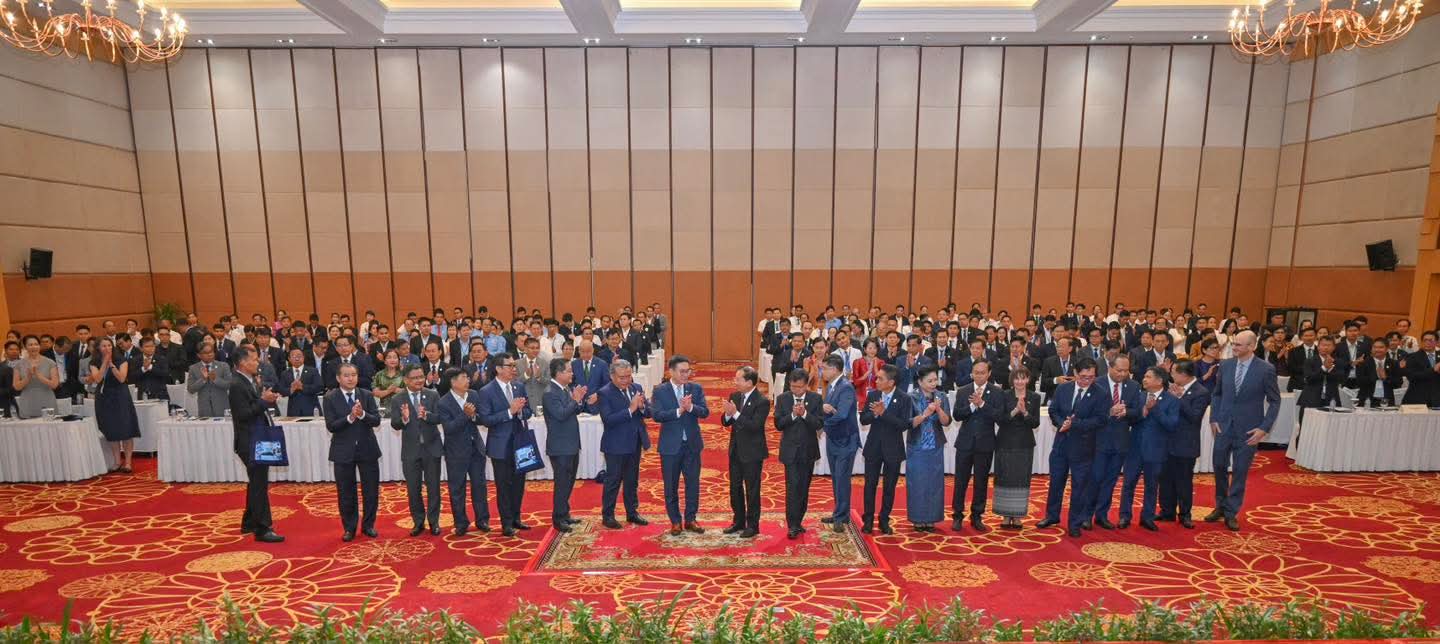
The Kingdom’s progress was highlighted during a June 8 conference marking the advancement of influenza and respiratory virus surveillance and response in Cambodia from 2006 to 2026, held under the co-chairmanship of Minister of Health Chheang Ra and Benjamin Chiang, chargé d’affaires at the US Embassy.
The minister explained that Cambodia’s influenza and respiratory disease surveillance system not only helps protect public health within the country but also contributes to regional and global health security.
He noted that Cambodia regularly shares data with the WHO to support efforts to prevent and contain infectious diseases that can spread across borders.
“In the context of global health security, no country can escape an outbreak if infectious diseases are spreading elsewhere,” the minister said in a statement. “The Covid-19 pandemic is the clearest example that we have all experienced.”
The conference highlighted two decades of cooperation between the National Institute of Public Health (NIPH), the health ministry’s Communicable Disease Control Department, and the US Center for Disease Control and Prevention (US-CDC) in building a more modern and effective disease surveillance system.
According to the ministry, what began as a basic influenza monitoring programme has gradually expanded to address emerging pathogens and the re-emergence of infectious diseases.
Today, Cambodia has developed molecular diagnostic capabilities, genomic sequencing capacity and more advanced data management systems, enabling health authorities to identify new pathogens and track viral mutations more rapidly.
Health officials said these capabilities played a critical role during the Covid-19 pandemic, allowing authorities to monitor the evolution of the virus while contributing scientific data to the international community.
Ra stressed that experience has shown a strong disease surveillance system can save lives, protect communities, strengthen health security and support the country’s socio-economic development.
He warned that among infectious diseases, respiratory illnesses remain among the fastest-spreading threats.
“There are many serious diseases, but the most aggressive and rapidly spreading are respiratory diseases, which move as swiftly as the wind,” he said.
Drawing lessons from global outbreaks and the continuing threat posed by emerging pathogens, the minister outlined several priorities for the next phase of Cambodia’s surveillance efforts.
He called on the NIPH to continue modernising laboratory infrastructure and expanding its ability to detect new pathogens. He also urged the communicable disease epartment to make greater use of digital technologies and improve data quality to ensure faster and more effective responses to outbreaks.
The minister emphasised the importance of developing human resources, providing ongoing technical training and strengthening cooperation under the One Health approach, which recognises the interconnectedness of human, animal and environmental health.
In addition, Cambodia aims to deepen collaboration with international scientific networks and regional partners to exchange information, technology and expertise in preventing and responding to public health threats.
Health experts say that in an era of increasing cross-border travel and population movement, the ability to monitor pathogens and detect outbreaks early has become one of the most important lines of defence for every country.
For Cambodia, the 20th anniversary conference served not only as a reflection on past achievements but also as a signal of the country’s ambition to play a more active role in the global health security architecture, as the risk of future infectious disease outbreaks continues to persist.