An alarming Jan. 30 report by the Commerce and Industry Ministry (MCI) revealed that 92% of the water consumed by over three million Haitians in greater Port-au-Prince does not meet public health standards established by the World Health Organization and that “bacteria were present in 86% of the samples, five of which are harmful to health, including those originating from fecal matter.”
Michel Jean Gilles, president of l’Observatoire du droit du consommateur haïtien (ODCOH), wrote a Mar. 10 article commenting on the MCI report for Rezò Nodwès, and the MCI’s James Monazard revealed these shocking statistics on an episode of Radio Magik 9 on Feb. 4, 2026.
The bacterial contamination affects 100% of water sold in five-gallon containers and at treatment kiosks, 96.7% of water sold from resale kiosks (tanker trucks), 92.6% of water in sachets (small plastic bags), and 6.7% of bottled water, the report explains.

Photo: MCI
Jean Gilles also notes that other recent studies have revealed that Haiti’s drinking water contains numerous chemical pollutants, including heavy metals, which were present in 45% to 50% of the studies. The researchers identified lead, cadmium, and copper, which are usually associated with industrial waste or pipe corrosion.
The MCI report describes a profound crisis that risks further undermining the health of Port-au-Prince’s residents and lead to a spike in the number of cholera cases.
The Risk of More Cholera Outbreaks in Port-au-Prince
MCI’s report is even more alarming considering a recent Human Rights Watch (HRW) report from November 2025, which stated that between Jan. 1 and Oct. 30, 2025, Haitian health authorities recorded 2,852 suspected cholera cases, 186 confirmed cases, and 48 deaths.
Cholera was brought to Haiti by UN forces in 2010 during their military occupation of Haiti following the coup d’etatagainst Haiti’s democratically elected leader Jean-Bertrand Aristide. The outbreak killed up to 30,000 Haitians, while hundreds of thousands more were sickened. The UN eventually apologized, but claimed legal immunity when advocates sought compensation for the victims.HRW concluded that these cases of cholera were “part of a seasonal surge during the rainy period.”
The cholera outbreak prompted Doctors Without Borders (DWB) to set up a treatment center in Pétion-Ville’s Bristout neighborhood.

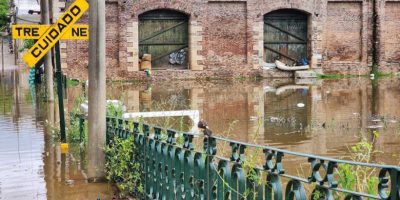
Photo: World Bank
DWB treated several residents, chlorinated local water sources, and treated 221,356 liters of water. Despite the organization’s efforts, this only represents enough to supply an average of 200 people per day in a city neighborhood populated by thousands.
Providing clean drinking water to 200 residents of a comparatively prosperous suburb of Haiti’s capital underlines how precarious the situation is for the average Haitian.
In their report, DWB reiterated HRW’s call for Haiti’s Public Health Ministry to “give priority to its community prevention activities” including the “chlorination of water sources, public awareness campaigns, and epidemiological surveillance.”
Monazard’s statement that Port-au-Prince’s water supply is contaminated is an admission of failure by de facto Prime Minister Alix Didier Fils-Aimé’s government.
Several weeks after the report was released, Fils-Aimé’s government has not initiated any administrative measures to address the crisis.
Jean Gilles concludes that the “state has completely abandoned the water sector in the metropolitan area to the whims of private businesses, whose primary motivation is financial gain.”
Dr. Deus Deronneth, a university professor, lamented that no “corrective measures targeting the companies involved have been made public by the relevant authorities.”
Dr. Josué Renaud, from the New England Human Rights Organization (NEHRO), said in an interview with Rezò Nodwès that “Fils-Aimé, exclusively serving the business sector, reinstated the Commerce Minister in his position, when he should have been relieved of his responsibilities”.
Fils-Aimé, installed in power on Feb. 7 by the United States and their CARICOM proxies, is a classic representative of Haiti’s private sector, specifically the oligarchs comprising a bourgeois faction known as the Macaya Group.
That may explain why the de facto government does not crackdown on the failings of water sanitation, which is controlled by and profitable to Haiti’s bourgeoisie.
Haiti’s Privatized Water Supply
Haitians cannot rely on a public water sanitation system. The country has no wastewater treatment plants.
Jean Gilles emphasized that Haitians have no choice but to buy the contaminated water, which is very costly. He notes a 2018 World Bank report that showed annual household expenditures for water in the Port-au-Prince metropolitan area amount to 15% of their income, an enormous cost for Haitians.
The report also explains that in 2012, 57.1% of the Port-au-Prince metropolitan area relied on the private sector for drinking water, which the MCI has confirmed is contaminated with bacteria and fecal matter.

Haitians living in Port-au-Prince are a captured market. The private interests which provide the contaminated drinking water have no pressure to provide clean, potable water because the de facto government is not elected and does not serve the Haitian people’s interests.
A 2024 World Bank report stated that “the private is a critical source of safe drinking water in the face of insufficient public infrastructure,” but January’s MCI report indicates that it is not.
In 2019, World Bank’s International Finance Corporation made a US$5 million investment in the Caribbean Bottling Company (CBC), which sells the Culligan brand of bottled water.
This investment aimed to increase CBC’s bottling capacity by nearly 80% in an effort to expand access to clean drinking water. In this case, the investment remained within the World Bank’s neoliberal framework of lending to private enterprise to the detriment of public services.
It is not stated in the MCI report whether it included CBC’s bottled water, sold in small bottles and large five-gallon jugs, that the World Bank report says are “ubiquitous in schools, hospitals, and office buildings throughout Port-au-Prince.” But it stands to reason that CBC’s water was in the testing sample.
The World Bank has, however, successfully improved access to drinking water for 500,000 Haitians living in rural areas through its Sustainable Rural and Small Towns Water and Sanitation Project. This US$50 million investment has not improved access to drinking water in Haiti’s capital, however, where the last outbreak of cholera occurred.
Spiking Gas Prices and Angry Public Employees Won’t Help
The Fils-Aimé government’s decision to raise gas prices will only make the situation worse. The cost of water will inevitably rise as it becomes more expensive to transport. This, as Haitians face rising food costs. According to the World Food Program, 5.8 million Haitians, about half of the population, are currently living in a food crisis or at a more serious level of food insecurity.
The government’s negligence and disregard for the well-being of Haitians has provoked a strong response from civil society.
On Apr. 6, several demonstrations against the hike in gas prices appeared in Port-au-Prince, while other protestors blocked roads with burning tires or vehicles.
On the same day, Duclos Bénissoit, the leader of Mouvement Unifié des Travailleurs Haïtiens (MUTH), criticized the government for the decision and encouraged citizens to mobilize and demand the de facto government change course.
The Ministry of Public Health and Population (MSPP) has also faced scrutiny lately, not for failing to address the public health crisis caused by contaminated water, but from its own employees.
Haiti Liberté reported that MSPP employees recently demonstrated in front of its offices. Employees who have physical disabilities said that the government has not paid their salaries in over one year.

Photo: Vant Bèf Info
Two weeks after this demonstration, teachers in Aux Cayes announced their campaign to pressure the Fils-Aimé government, which has failed to follow through on an agreement signed in January 2025, they say.
Meanwhile, the president of the National Federation of Mayors of Haiti (FENAMH), Denoil Anténor, denounced the Fils-Aimé government recently for failing to transfer money to cover operating expenses in municipalities. They have not received these funds for two years, jeopardizing local governments across Haiti.
These events paint a grim picture of a de facto government completely unconcerned about its people’s basic needs and beholden, instead, to the interests of Haiti’s bourgeoisie and their benefactors in Washington.
Indeed, these indicators of corruption and dereliction of duty are a backdrop to the murderous, Gaza-like war the de facto government is conducting against the residents of Port-au-Prince’s popular neighborhoods under control of armed groups.
Just as these residents suffer the brunt of the de facto government’s criminal neglect of the water supply, they are also forced to endure repeated massacres committed by the Haitian National Police, their paramilitary allies, and private mercenaries working for Erik Prince’s Vectus Global.
Travis Ross is based in Montreal, Québec. He is also the co-editor of the Canada–Haiti Information Project. Travis has written for Haiti Liberté, Black Agenda Report, The Canada Files, and TruthOut. All his articles are collected on Substack. He can be reached on X.