Speed
Cambodia has launched a major five-year initiative to strengthen disaster early warning systems nationwide as government officials and development partners warn that climate change could reduce the country’s gross domestic product (GDP) by up to 10 per cent by 2050 if resilience measures are not strengthened.
The “Advancing Early Warning for All” project, launched in Siem Reap on June 2-3, aims to improve Cambodia’s ability to predict, communicate and respond to floods, droughts, storms and other climate-related hazards, particularly in some of the country’s most vulnerable communities, according to UNDP Cambodia.
The initiative is being led by the National Committee for Disaster Management (NCDM), the Ministry of Environment and the Ministry of Water Resources and Meteorology, in partnership with the United Nations Development Programme (UNDP) and funded by the Green Climate Fund (GCF).
The launch comes amid growing concern over Cambodia’s vulnerability to climate change. According to the 2020 Global Climate Risk Index, Cambodia ranked 12th globally among the countries most at risk from climate-related impacts.
Officials say rising temperatures, erratic rainfall patterns, floods, droughts and increasingly severe weather events are posing mounting threats to livelihoods, food security, infrastructure and economic growth.
The new project seeks to address a critical weakness often identified in disaster management systems: ensuring that accurate and timely warnings reach communities before disasters strike and that people know how to respond.
Kun Kim, NCDM first vice-president, described early warning systems as a vital investment in protecting both people and development gains.
“The Royal Government of Cambodia acknowledges that strengthening the EW4ALL system is vital to protecting people’s lives, livelihoods and national development achievements from increasing climate risks and disasters,” he said.
As the lead institution responsible for implementing Cambodia’s Early Warnings for All roadmap, Kim said the NCDM would strengthen cooperation among ministries, local authorities and development partners to establish a more effective multi-hazard warning system.
He said improved preparedness and anticipatory action would help ensure vulnerable groups receive timely information before disasters occur, contributing to a safer and more resilient Cambodia.
The project forms part of a broader global campaign launched by the UN secretary-general to ensure every person on Earth is protected by effective early warning systems by 2027.
Cambodia is one of only seven countries selected to participate in the initiative alongside Antigua and Barbuda, Chad, Ecuador, Ethiopia, Fiji and Somalia.
The five-year programme, running from 2026 to 2030, will focus on strengthening what experts describe as an “end-to-end” multi-hazard early warning system. This includes hazard monitoring, weather forecasting, warning dissemination, risk communication and community preparedness.
Implementation will initially target four provinces considered highly vulnerable to climate-related hazards: Ratanakiri, Kratie, Stung Treng and Banteay Meanchey.
These areas frequently experience flooding, droughts and other extreme weather events that can affect agriculture, livelihoods and local infrastructure.
Climate experts have repeatedly warned that while forecasting technologies have improved globally, many developing countries continue to struggle with ensuring warnings reach remote communities in forms that are understandable and actionable.
In Cambodia, rural communities, women, children, Indigenous peoples, persons with disabilities and other marginalised groups are often among those most exposed to climate risks while having the least capacity to recover from disasters.
Hemant Mandal, GCF regional director for Asia Pacific, explained how stronger early warning systems would help communities anticipate risks before disasters occur.
“Across Cambodia, communities are facing growing risks from floods, droughts and shifting rainfall patterns that affect livelihoods and food security,” he said.
“Early warning systems are therefore essential for protecting lives, livelihoods and development gains,” he noted.
He added that the initiative would help strengthen institutions and information systems, enabling people to prepare for climate-related threats before they escalate into disasters.
The project also supports Cambodia’s broader climate commitments under several national frameworks, including the Cambodia Climate Change Strategic Plan 2024-2033, the updated Nationally Determined Contribution submitted in 2025 and the country’s Long-Term Strategy for Carbon Neutrality 2050.
Environment minister Eang Sophalleth noted that climate change was intensifying the frequency and severity of floods, droughts, storms, heatwaves and other extreme weather events across the country.
“Timely and reliable early warning systems are essential to ensure that vulnerable communities can anticipate, prepare for and respond effectively to these hazards,” he said.
The government launched its national Early Warnings for All roadmap in November 2025, setting out a strategy to strengthen disaster warning systems across Cambodia.
The newly launched project is expected to serve as a key mechanism for translating that roadmap into practical action on the ground.
UNDP resident representative in Cambodia Enrico Gaveglia said the initiative would bring together a wide range of government agencies, communities and international partners to create a more integrated and effective warning system.
He noted that development assistance globally was becoming increasingly fragmented, making coordination more important than ever.
“Through the EW4ALL initiative, UNDP will focus on maximising investments of national institutions and partners to ensure that timely, accurate and actionable early warnings reach every person in Cambodia,” he said.
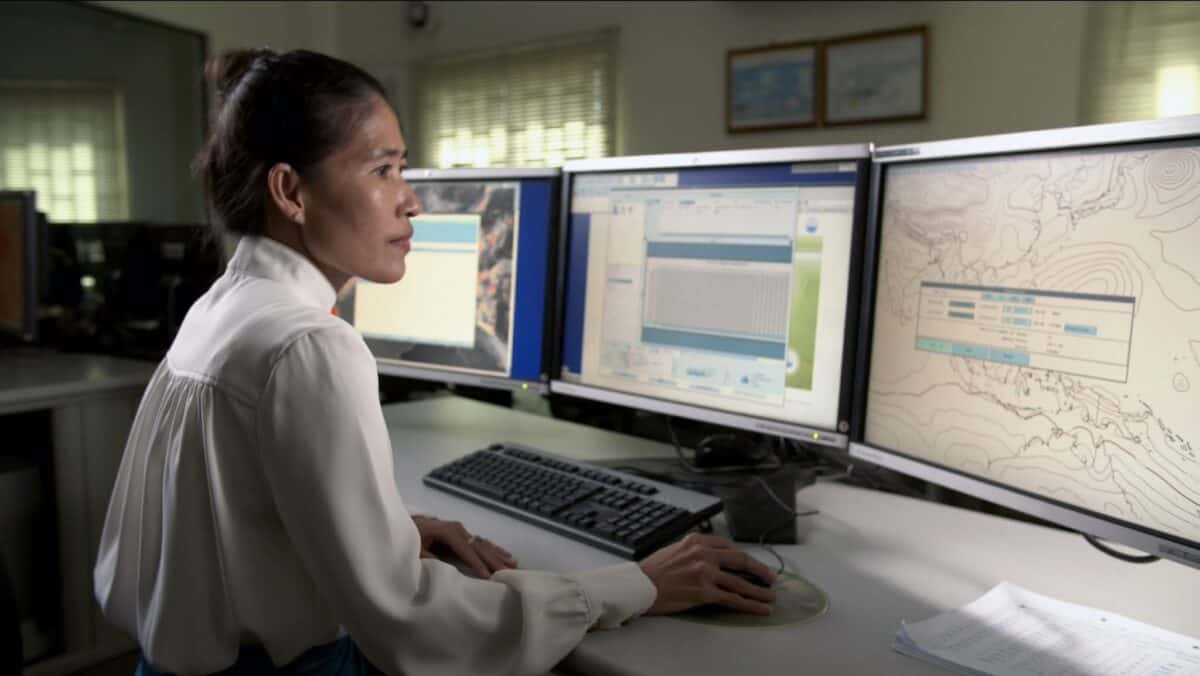
Professor Oeurng Chantha, water resources ministry undersecretary of state, noted that strengthening hydrometeorological services would be central to the project’s success.
He said the ministry would work to modernise weather observation networks, improve forecasting capabilities and enhance dissemination of weather and climate information.
“Reliable early warnings reaching communities across the four target provinces will enable better preparedness, reduce risks and support climate-resilient development for Cambodia,” he added.
As climate pressures continue to intensify across Southeast Asia, officials say investing in early warning systems offers one of the most cost-effective ways to reduce disaster losses.
For Cambodia, where agriculture remains a major source of livelihoods and many communities remain highly exposed to climate shocks, the success of the initiative may prove critical not only for protecting lives but also for safeguarding future economic growth.