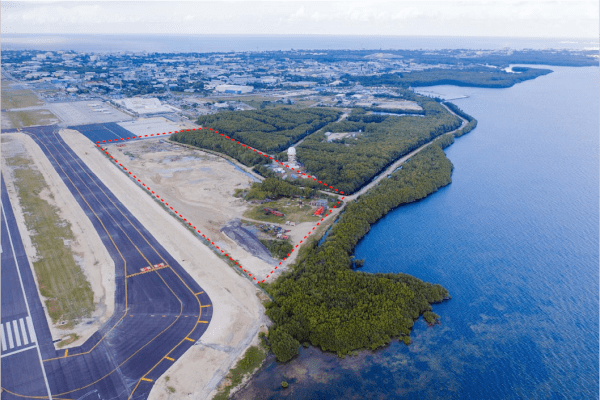
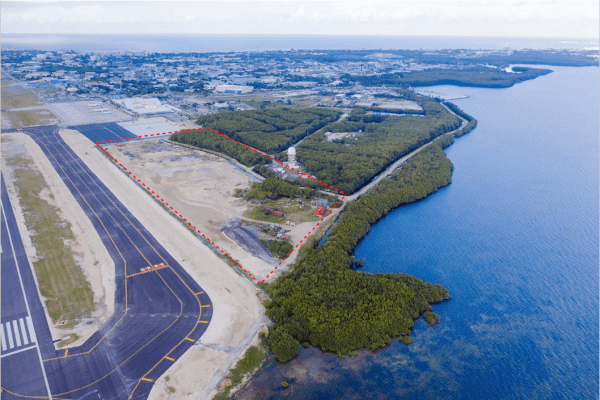
(CNS): The Cayman Islands Airport Authority has begun looking for an interested partner for the proposed redevelopment of the General Aviation Terminal at Owen Roberts International Airport. The government has recently implied that the controversial project, with an estimated price tag of CI$42 million, could be funded through a public-private partnership (PPP).
The CIAA has therefore issued a formal Request for Expressions of Interest (REOI) from potential aviation developers. This is the second procurement process; the first in 2024 was cancelled.
The government recently redid the Outline Business Case and is now using this request to gather information from qualified and interested parties with relevant experience in the design, development, financing, and operation of aviation facilities.
“Through this process, the CIAA seeks to better understand market interest, technical capabilities, innovative approaches, and potential partnership structures, including public–private partnerships,” officials stated in the documents.
The private jet terminal caters largely to the wealthy elites who come to Cayman to enjoy their second homes or for business. Consequently, the idea put forward by the previous administration to use fees collected from all passengers travelling through ORIA was seen as a controversial move.
The NCFC government appears to be exploring alternative options. However, while PPPs involve funding from private sources, they are notorious for failing to deliver value for money for governments and, as the Office of the Auditor General has warned, they are also extremely vulnerable to corruption.
The need for a complete rebuild of the terminal, given the myriad other infrastructure projects the government needs to address, from the dump to public housing, has been hotly debated. Nevertheless, the NCFC is continuing on with this element of the overall airport redevelopment.
According to the REOI documents, the procurement exercise provides an opportunity to identify “emerging trends, best practices, and commercially viable solutions that could be tailored to the specific needs of the Cayman Islands”. However, the CIAA stressed that this is not a procurement process and does not constitute a commitment to proceed with any specific project or to award any contract.
“It is an exploratory and informational exercise designed to inform decision-making, refine project scope, and determine the most effective and sustainable delivery approach,” the documents state. “All information submitted in response to the REOI will be treated with appropriate confidentiality and used solely for evaluation and planning purposes.
“The CIAA will analyze the data to assess the level of private sector interest, evaluate the range of technical and financial solutions available, and identify potential risks and opportunities associated with the development of a general aviation facility.”
This will help in the development of a “well-informed business case” and then possibly the preparation of the next stage, which would be a formal procurement process. “Through this process, CIAA aims to ensure transparency, encourage broad market participation, and lay the groundwork for a project that delivers long-term value to the Cayman Islands and its aviation sector.”
The REOI documents state that “stakeholders maintain that the inferior quality of the general aviation facilities at ORIA inhibits tourism growth” and that the facility has poor security, customer service and efficiency. “These factors make it difficult for the Cayman Islands to attract high-net-worth individuals, along with their positive spin-off effects, therefore, it is considered by many key stakeholders that the development of a new and improved facility to process VIPs and high-value guests is well founded.”
However, opponents maintain that the project is of little benefit to the local population and would not be value for money. Many of the current GAT’s shortcomings, such as poor Wi-Fi, insufficient immigration and customs staff during peak periods, inadequate signage, and a lack of food vendors and customer parking, can all be addressed without a full redevelopment.
Since the project is in its early stages, it will be some time before a decision is made on how to move forward. However, the environmental impact assessment for this project and for the redevelopment of ORIA as a whole will likely be the only opportunity left for the public to weigh in on this issue and express their concerns, opposition or alternative ideas.
Work on the GAT is only one element of the ongoing, costly redevelopment of ORIA and the Sister Islands airports. Plans include a proposed runway extension to accommodate long-haul flights, which is also highly controversial, as it would be very costly and have a significant negative impact on the North Sound.
However, the original business case failed to offer any justification for the project, and not one European airline has expressed a genuine interest in a direct flight here.