Govt unveils bold blueprint to reshape Tourism industry
Against the scenic backdrop of Maun’s Thamalakane River, the 41 st Hospitality and Tourism Association of Botswana (HATAB) annual Conference opened with a call for a radical shift in the nation’s tourism strategy.
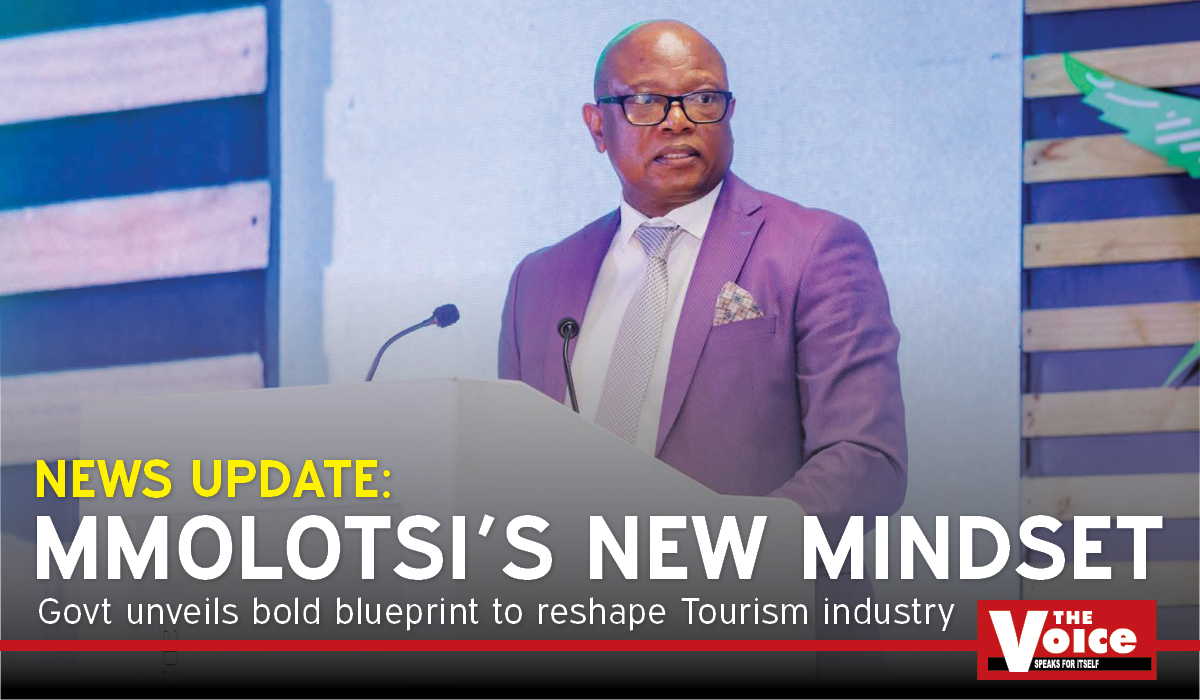
Addressing industry leaders and stakeholders, Minister of Environment and Tourism, Wynter Mmolotsi acknowledged that while Botswana’s ‘high-value, low-volume’ model has historically protected its ecosystems, the sector must now adapt or risk becoming irrelevant in a rapidly changing global market.
A key take-away from Thursday’s conference was the unveiling of ‘sobering’ findings from a World Bank diagnostic study.
The report highlighted a dangerous over-reliance on high-end wildlife tourism and a decline in the average length of stay for international tourists, dropping from 6.3 nights in 2019 to just 4.9 nights in 2025.
To counter this, Mmolotsi’s Minsitry is pushing the Botswana Economic Transformation Programme (BETP), which aims to increase tourist arrivals to 2.7 million by 2033, extend the average length of stay to 7.9 nights and position tourism as the number one contributor to GDP by 2030.
“Attracting visitors is not enough. We must give them stronger reasons to stay longer, travel wider and spend across a broader value chain,” maintained Mmolotsi, adding the Tourism Act of 2009 will finally undergo a comprehensive review, an announcement that drew a standing ovation from delegates.
Countrywide consultations are set to begin in May, with an amendment bill expected to reach Parliament by November.
The sector is also entering a ‘digital-first’ era.
Following the launch of the Tourism Dashboard on 14 April, the Ministry announced the reintroduction of the T-Stats Mobile App for real-time data, the upcoming launch of the Tourism Satellite Account in July to accurately measure tourism’s economic impact and a new online booking and payment system for Protected Areas (currently in prototype) to reduce revenue leakage and modernize the visitor experience.
While 223 new tourism licenses were issued in the 2025/26 financial year, Mmolotsi admitted the majority of Batswana remain underrepresented in high-value segments like concession-area lodges.
According to the Minister, the new National Tourism Strategy and Master Plan aims to bridge this gap, with a target of creating 5, 000 additional jobs by 2030.
This expansion will be fueled by ‘City Tourism’ initiatives, which are said to be proving successful in Gaborone and Francistown, with plans to expand to Maun, Kasane and Lobatse.
Addressing the issue of budget shortfalls for infrastructure like park roads and campsites, Mmolotsi called on the private sector to move beyond traditional vendor-client relationships into one of co-responsibility.
“The future of Botswana tourism cannot be carried by government alone. It must be built through partnership, shared purpose and collective courage,” he concluded, his words once again prompting mass applause.
As the old saying goes, however, words are cheap; it’s time for action!