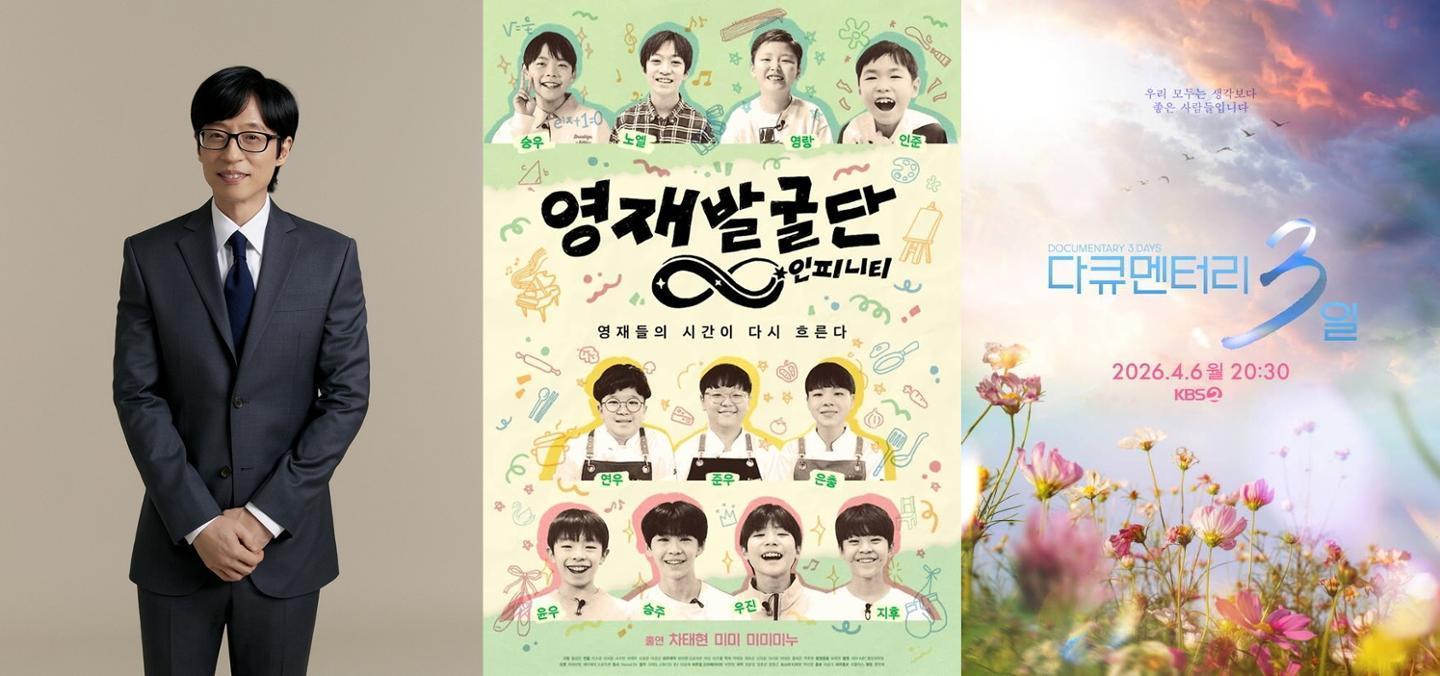

Korean broadcasters are bringing back once-popular programs, including “Happy Together,” “Genius Discovery Team” and “Documentary 3 Days.” Courtesy of broadcasters
Seeing the latest lineup of television releases, it seems like Korean broadcasters have found a time machine. Names of once-popular shows that drew strong ratings and devoted followings like “Happy Together,” “Documentary 3 Days” and “Genius Discovery Team (Finding Genius)” reappearing on TV schedules, stirring both nostalgia and anticipation for programs that have already proved their appeal.
TV viewers remember “Happy Together” as a feel-good talk show that showcased the wit of its hosts. “Documentary 3 Days,” followed people for 72 hours to capture their lives and surroundings, gained wide recognition for serving the public interest with a high level of craftsmanship. “Genius Discovery Team” was a variety show about gifted children that also managed to deliver a moving social message.
One thing is certain: each of these programs left a lasting impression on viewers with its distinctive identity and proven success. The reason they are returning is just as clear.
Broadcasters are finding it increasingly difficult to create new formats that work in an entertainment industry already oversaturated with content. Reusing proven intellectual properties and familiar formats is beginning to look like a more stable path to success, which is why SBS and KBS are putting tradition at the forefront, rather than relying on bold new experiments to capture viewers’ attention.
Audiences have met the decision with welcome and gratitude. Shows tied to fond memories of the past can bring back the emotions of that period, fueling nostalgia, something that new shows are unable to do.
Inside the studios, producers said a similar mood could be felt as well.
“Although the show ended in the past because of cost-related issues, the company was the first to suggest reviving the program,” said Jo Na-eun, a producer of KBS’ “Documentary 3 Days.”
Lee So-jeong, a producer on SBS’ “Genius Discovery Team,” also said there had been calls from inside the studio to bring the program back.
“People are starting to feel tired of chasing dopamine hits,” Lee said. “I personally felt that people were beginning to long for older, warmer emotions.”
That is not to say broadcasters are headed down a rosy path in the coming season, however. Reviving old shows is a different dilemma: How do they recreate the feeling that made them popular in the first place? Years have passed since their peak, and producers now face the complex task of adapting those programs to a changed environment, new viewing habits, faster content consumption and shifting audience tastes.
Simply recreating old formats is more likely to end in failure as there is no guarantee that past formulas for success will still win over today’s viewers, a failure some revived shows have already shown.
In the end, viewers are not waiting for a simple replay of old content, but for a fresh kind of fun built on proven strengths. A careless attempt that relies on old formats or a poorly organized revival that fails to reflect changing trends could leave a show looking as if it is merely nostalgia. Worse, it could damage the remembered glory of the original program.
This article from the Hankook Ilbo, the sister publication of The Korea Times, is translated by a generative AI system and edited by The Korea Times.