Somália

Internatiol-partners-Somalia.jpg
Somália, Wardheer News, Inglês
2026-04-22 04:34:56
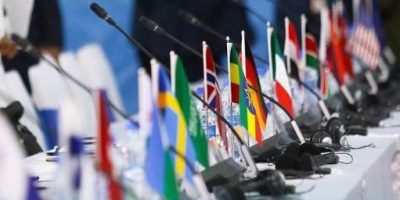
Mogadishu (WDN) — President Hassan Sheikh Mohamud is now facing a convergence of pressures that is becoming increasingly difficult to contain, both from within Somalia and from the international community—as the clock ticks toward the end of his mandate. In a rare and pointed move, diplomats representing the international community in Mogadishu have reportedly delivered a formal message to the president: reach a political agreement on elections before time runs out. The warning is clear—delay is no longer an option. But the pressure does not stop at Somalia’s borders. At home, opposition leaders, traditional elders, and religious figures are intensifying their demands for a negotiated electoral framework, accusing the administration of stalling while the constitutional deadline approaches. What was once political disagreement is now hardening into open mistrust. Instead of easing tensions, the government has added fuel to an already volatile situation. Prime Minister Hamza Abdi Barre declared that the...
Bosaso.jpg
Somália, Wardheer News, Inglês
2026-04-21 22:00:25
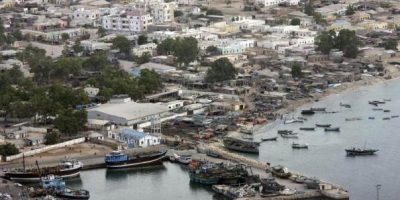
Bossaso (WDN) Bosaso, the third-largest city in Somalia and the economic hub of the Puntland region, is experiencing critical repair and maintenance issues at its port, disrupting the flow of commercial cargo. The main access channel to Port is rapidly becoming unnavigable, clogged by encroaching sand that is now actively disrupting maritime traffic and threatening one of Puntland’s most critical economic lifelines. The consequences are no longer theoretical—they are happening in real time. A cargo vessel identified as Barakalah, arriving from Oman, ran aground while attempting to enter the port. The vessel, loaded with commercial goods destined for Somali traders, was unable to pass through the silted channel. Operations were forced into an improvised and costly workaround: a second vessel had to be deployed to offload cargo offshore. This is not an isolated incident. It is a warning. For years, maritime operators, local authorities, and business communities have raised alarms...
somaliflag.gif
Somália, Wardheer News, Inglês
2026-04-21 15:41:49
By Abdisaid M. Ali The Civilian Republic, 1960 to 1969: National Unity of Purpose, Constitutional Rule, and the Incomplete State Formation Part II is divided in two because Somalia faced the same state formation challenge under two different political orders. The first sought to build the republic through constitutional rule, parliamentary politics, and gradual institutional development. The second attempted to solve the same problems through military command, centralization, and coercion. This essay has examined the civilian republic from 1960 to 1969. The next turns to the military period and asks why the attempt to complete Somali state formation through force ultimately deepened the crisis it set out to resolve. Somalia entered independence with a nation already awake and a state still incomplete. The new republic inherited legal sovereignty, diplomatic recognition, a constitution, parliament, ministries, and courts. It also inherited a government with limited reach, modest revenue, few trained officials, and...
Hassan-Sheikh-Illusion-in-a-throne.jpg
Somália, Wardheer News, Inglês
2026-04-21 08:04:03
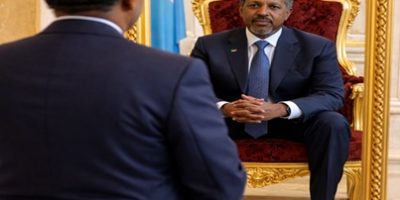
By Abdullahi A. Nor As Somalia’s leadership grows increasingly insulated, the gap between perception and reality is widening, raising fears of institutional breakdown at a critical national moment.   When power stops listening, history suggests the fall is not gradual, it is sudden. There is an old story from the era of the Buyid dynasty. A prince fell into a delusion, convinced he was a cow. He refused food, demanded to be slaughtered, and rejected anyone who tried to bring him back to reality. The more people insisted on the truth, the further he drifted from it. It was only when the great physician Ibn Sina changed strategy—entering the prince’s reality rather than confronting it—that recovery began. By working within the illusion, he gradually guided the prince back to reason. It is a story about the fragility of perception. Today, it feels less like history and more like a warning. Somalia...
Islam-symbol1.jpg
Somália, Wardheer News, Inglês
2026-04-21 01:42:10
By Sheikh Abdunasir Jamac Warsame, PhD Concept of Revenge Revenge is an unjustified killing and counter-killing.What constitutes revenge? It refers to the act of inflicting harm or pain on another individual without engaging in any criminal activity. It is impossible to locate a society devoid of all types of crime or an ideal society that is free from criminal activities. Revenge fosters hatred, animosity, and discord within society, clans, and tribes. Consequently, Islamic law prohibits acts of revenge and assigns the responsibility of administering retribution to the courts, the head of state, and their guardians. Under Islamic law, individuals are not permitted to seek revenge against others unless authorized by the authorities or their representatives. Somali society has historically been entrenched in a cycle of revenge, with no guidance or explanation provided regarding the associated dangers and adverse effects of this behaviour. It is undeniable that there are Muslims and...
Jubaland-State-map.jpg
Somália, Wardheer News, Inglês
2026-04-20 16:52:39
Kismayo (WDN)- As Somalia approaches a critical constitutional deadline, concerns are mounting over a possible military intervention in Jubaland—an escalation that could deepen political instability and fracture an already fragile federal system. At the center of these fears is the reported redeployment of the elite Gorgor commandos, Turkish-trained forces previously used in South West State during a highly controversial political operation in Baidoa. That intervention, widely criticized as illegitimate, set a troubling precedent: the use of military power to influence political outcomes within federal member states. Now, similar tactics appear to be resurfacing. Under President Hassan Sheikh Mohamud, these forces are increasingly being positioned not for counterterrorism, but for political enforcement—potentially targeting Hirshabelle and, more alarmingly, Jubaland. The objective, they suggest, is to reshape regional leadership ahead of proposed “one person, one vote” elections. However, the conditions for such elections remain absent. Somalia continues to face deep security challenges, weak...
Gorgor-Somali-army.jpg
Somália, Wardheer News, Inglês
2026-04-20 08:20:09
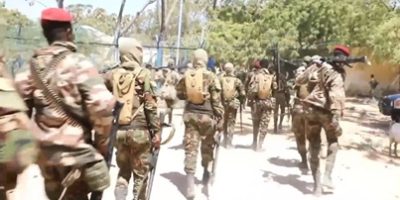
Mogadishu (WDN) — The federal government has launched a new military operation between Jowhar and Balcad, one that closely mirrors the earlier Baydhaba campaign, raising as many political questions as security expectations. At the center of the operation are the Gorgor Commandos, the same elite forces that previously led operations in Baidhabo, that illegitimately replaced the President of South West State. Their redeployment has fueled skepticism among political observers, who see a familiar pattern: military action unfolding alongside unresolved political tensions. The Gorgor battalions are seen as President Hassan’s army not national army. Officials frame the current operation as a security effort aimed at reopening the Balcad–Jowhar road—a vital corridor that has remained under significant Al-Shabaab influence for years. Yet, given the precedent of Baydhaba, where military pressure coincided with political upheaval, some question whether this is purely about security or something more. The geography alone highlights the contradiction. Balcad...
Turkey-Somalia-partnership-economic-and-political.jpg
Somália, Wardheer News, Inglês
2026-04-20 01:46:10
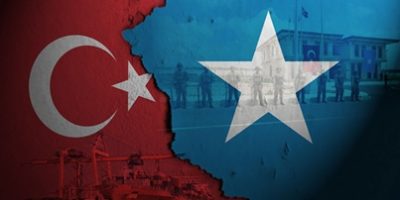
By Omar Abdi Shire Abstract This article, the first in a series of multi-perspective writings on Somalia–Turkey relations, examines the distinction between rhetorical diplomacy and substantive engagement in Somalia’s external relations. It argues that one bilateral relationship stands out as incomparable when evaluated through policy behavior. Moving beyond symbolic narratives of friendship, the article adopts a policy-analysis approach that combines secondary sources, including international reports, academic literature, and official documents, with analytical interpretation. The article evaluates the relationship across key indicators, such as continuity of engagement, security cooperation, institutional capacity building, economics, infrastructure, education development, and diplomatic positioning during the crisis period. By situating this partnership within Somalia’s broader history of external interventions, the article demonstrates that its distinctiveness lies not in the volume of aid alone or the level of rhetoric, but in the consistent multi-dimensionalism of strategic commitment while acknowledging inherent power asymmetries and the risk of dependency....
Hirshabeele-Kulan-Golaha-Wasiirada.jpg
Somália, Wardheer News, Inglês
2026-04-19 18:03:55
Jowhar (WDN) — In a country where reality is often harsher than rhetoric, the gap between political messaging and conditions on the ground in Hirshabelle State is becoming increasingly difficult to ignore. President Ali Abdullahi Hussein Guudlaawe this week chaired a cabinet meeting in Jowhar, officially focused on preparations for elections. On paper, the agenda was routine. In reality, it exposed a deeper contradiction at the heart of governance in the region. The president’s administration, like much of Hirshabelle’s leadership, operates largely from Mogadishu. Traveling to Jowhar, the designated capital of the state requires a flight, not a road journey. The reason is simple and widely understood: the route is not secure. Hirshabelle cabinet meeting The 90-kilometer stretch between Mogadishu and Jowhar, via Balcad, remains heavily contested. Large portions of it are effectively under the control of Al-Shabaab. Along this corridor, the group does more than operate, it governs. It...
Puntland-Abgaalow-DG-Finance.jpg
Somália, Wardheer News, Inglês
2026-04-19 10:51:07
By Mohamed A Yasin In stable governance systems, the line between politics and administration is not blurred, it is protected. Civil servants mandate is to operate as a professional, nonpartisan engine of government, serving the state with continuity and integrity regardless of who holds power. That line is now under strain in Puntland, and the implications are far more serious than a single public statement. What began as a routine rebuttal to an opposition figure has now escalated into a test of institutional discipline—one that Puntland’s leadership cannot afford to ignore. At the center of the controversy is not the Calmiskaad campaign itself, nor even the criticism leveled against it by former Finance Minister Hassan Shire Abgaal. Governments are challenged; opposition figures contest official narratives. That is the nature of politics. The real issue is who chose to respond—and what that response represents. In this case, it was not a...
Translate »