By Sheikh Abdunasir Jamac Warsame, PhD
Concept of Revenge
Revenge is an unjustified killing and counter-killing.What constitutes revenge? It refers to the act of inflicting harm or pain on another individual without engaging in any criminal activity. It is impossible to locate a society devoid of all types of crime or an ideal society that is free from criminal activities.
Revenge fosters hatred, animosity, and discord within society, clans, and tribes. Consequently, Islamic law prohibits acts of revenge and assigns the responsibility of administering retribution to the courts, the head of state, and their guardians. Under Islamic law, individuals are not permitted to seek revenge against others unless authorized by the authorities or their representatives.
Somali society has historically been entrenched in a cycle of revenge, with no guidance or explanation provided regarding the associated dangers and adverse effects of this behaviour. It is undeniable that there are Muslims and intellectuals within Somalia who are actively promoting awareness about the perils of revenge. Addressing this issue necessitates a comprehensive examination of the revenge phenomenon, its profound societal roots, and the development of tangible and lawful solutions to this challenge.
Undoubtedly, the phenomenon of revenge existed before Islam, and then became a custom passed down through generations. The crime of revenge can lead to the destruction of a society, its scholars, and its leaders in the future.
Regions plagued by revenge killings exist in a perpetual state of fear, lacking both security and stability. This situation arises from their deviation from the principles of the authentic Islamic faith, the frailty of the governing state, the absence of a functional judiciary, and the proliferation of weapons within these communities, exacerbating the issues at hand.
The notion of revenge distinguishes civilized individuals from those of a barbaric disposition:
The first one group: When an offense is perpetrated against him, he resorts to legal avenues and the judicial system to secure his complete rights while ensuring that others are not harmed.
The second group: This organization ranks as one of the most perilous; they disseminate corruption across the territory, appropriating what they believe to be their entitlements through violence, supported by their deluded and aberrant kin. They have forfeited all notions of ethics and rational discernment, which ought to inhibit them from pursuing vengeance and engaging in unjust killings.
This final form of violence is widespread within Somali society. How many individuals have lost their lives in acts of vengeance, without having done anything wrong, merely due to their family affiliation? This represents an unparalleled brutality. One of the repercussions is that numerous individuals who do not desire to leave the country are compelled to do so.
The cycle of revenge killings was known in pre-Islamic societies, as well as in Western societies, both ancient and modern. Wasn’t what happened in Gaza an act of revenge? Similarly, revenge was commonplace among the Arabs in pre-Islamic times until Islam, when this abhorrent custom faded away or at least diminished. Faith in Allaah Almighty alone is sufficient to eradicate this crime that consumes everything in its path.
How to seek revenge? Allah grants you complete authority to obtain your rights.
We should trust with Allaah
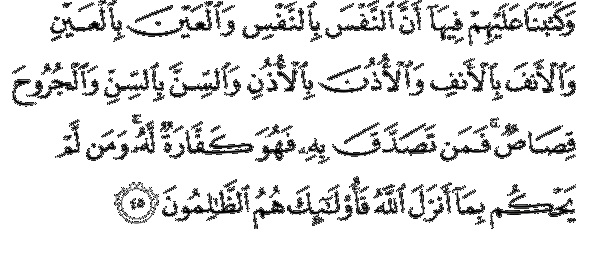
Allaah said: (And We ordained therein for them: “Life for life,(2) an eye for an eye, a nose for a nose, an ear for an ear, a tooth for a tooth, and wounds equal for equal.” But if anyone remits the retaliation by way of charity, it shall be for him an expiation. And whosoever does not judge by that which Allāh has revealed, such are the Ẓālimūn (polytheists and wrong-doers — of a lesser degree) Sūrat Al-Mā’idah Verse (45).
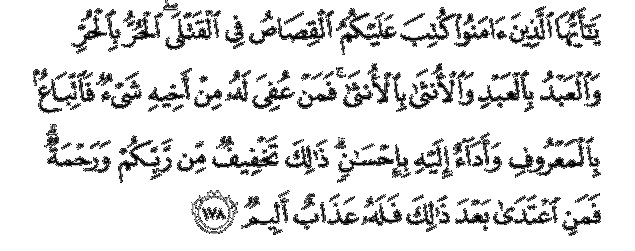
(O you who believe! Al-Qiṣāṣ (the Law of Equality in punishment) is prescribed for you in cases of murder: the free for the free, the slave for the slave, and the female for the female. But, if the killer is forgiven by the brother (or the relatives, etc.) of [the killed] against blood-money, then adhering to it with fairness and payment of the blood‑money to the heir should be made in fairness. This is an alleviation and a mercy from your Lord. So, after this, whoever transgresses the limits (i.e. kills the killer after taking the blood-money), he shall have a painful torment (Sūrat Al-Baqarah Verse (178)
(And there is (a saving of) life for you in Al-Qiṣāṣ (the Law of Equality in punishment), O men of understanding, that you may become Al-Muttaqūn)) Sūrat Al-Baqarah Verse (179).
(And do not kill anyone whose killing Allāh has forbidden, except for a just cause. And whoever is killed wrongfully (intentionally with hostility and oppression and not by mistake), We have given his heir the authority [to demand Qiṣāṣ, — Law of Equality in punishment — or to forgive, or to take Diyah (blood-money)]. But let him not exceed limits in the matter of taking life (i.e he should not kill except the killer). Verily, he is helped (by the Islāmic Law)), Chapter Sūrat Al-Isrā’ verse (33).
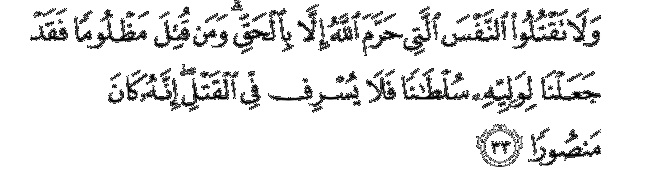
In the previously mentioned verse, Allaah prohibits excessive killing and going beyond the legal boundaries in acts of revenge. Consequently, one should refrain from killing anyone except the murderer, nor should one mutilate the body, nor take the life of more than one individual.
Islam is a faith characterized by mercy and justice for all of humanity, encompassing both Muslims and non-Muslims. It actively opposes corruption and murder in every manifestation and advocates for the welfare of individuals. Malicious acts such as revenge killings can only be eliminated by adhering to the regulations set forth by the Creator of mankind, Allahthe Almighty, the Forgiving, as outlined in His Book and the Sunnah of His Prophet, peace and blessings be upon him.
The jurist al-`Izz ibn `Abd al-Salam stated: “The entirety of Sharia revolves around benefits, either by averting harms or by promoting advantages.” Shaykh Ibn Taymiyyah remarked: “Islamic Sharia was established to realize and enhance benefits while preventing and reducing harms.” Ibn al-Qayyim al-Jawziyyah expressed: “The core principle of Sharia is rooted in wisdom and the welfare of individuals in both this life and the afterlife. It embodies complete justice, compassion, benefits, and wisdom.” (Quoted from: Punishment in Islamic Sharia, by Dr. `Abd al-Karim Zaydan, p. [page 11, Al-Risalah Foundation, Second Edition, 1408h = 1988]).
The ban on taking the lives of four individuals
There are four categories of lives that are considered inviolable: the life of a believer, a dhimmi (a non-Muslim residing under Islamic governance), a treaty-holder, and an individual who has been granted safe passage (Similar to a visa at present).
Islam is not, contrary to the beliefs of many non-Muslims, a religion that promotes violence. As previously stated, Islam safeguards all individuals impartially. Western nations implement what is known as the death penalty. Islam allows for this—the execution of individuals deemed deserving after appropriate legal processes and procedures have been adhered to.
To seek revenge for a deliberate killing, two elements must be present: Firstly, there must be the intention to carry out the act, and secondly, there must be the intention to cause the death of the individual in a manner that is either certain or likely to result in death. Our religion provides us with methods to address the issue of revenge. There is no harm that lacks a remedy.
Islam bans the killing:
Allaah said: ((And whoever kills a believer intentionally, his recom pense is Hell to abide therein; and the Wrath and the Curse of Allāh are upon him, and a great punishment is prepared for him)), Sūrat An-Nisā’, verse (93).
In this verse, Allah has mentioned five punishments for a person who has taken the life of an innocent individual.
1. He will be cast into the depths of hellfire.
2. We will remain in it eternally.
3. Allah will be angry with him.
4. Allah will curse him.
5. Allah has prepared for him a punishment.
6. And that punishment is severe.
The Messenger of Allaah, may God bestow His blessings and peace upon him, stated: Taking a life as an act of vengeance will result in severe consequences.
Among the most significant transgressions are “associating partners with Allaah, disobeying one’s parents, taking a life, and giving false testimony.” [This is narrated by Al-Bukhari and Muslim].
The Messenger of Allaah, may Allaah bless him and grant him peace, stated: “A believer will find comfort in his faith as long as he refrains from spilling prohibited blood.” This was narrated by Al-Bukhari.
How to tackle the issue of revenge?
The following steps should be taken:
1) Everyone must stand united against this heinous act that has misled many people in Somali society.
2) Media campaigns should be launched to raise awar eness about this phenomenon among both urban and rural communities, utilizing audio, visual, and print media.
3) Educated individuals and scholars should be urged to fulfill their partially neglected role.
4) Students at all levels should be educated and given intensive lessons on the dangers of murder.
5) State institutions should be urged to play their role in establishing security and stability.
6) Facilitating reconciliation among conflicting parties before it becomes too late.
7) To Focus on religious and faith-oriented education and its distribution across all sectors of society via lectures and sermons in mosques, universities, and schools, and ultimately, through the application of contemporary communication techniques.
Summary
Parents bear the complete responsibility of educating their children regarding all prohibitions within their faith, especially concerning revenge in its various manifestations.
The esteemed scholar Ibn al-Qayyim, may Allaah bestow His mercy upon him, stated: “Whoever fails to instruct his child in beneficial knowledge and neglects to provide guidance has committed a grave injustice against him. The majority of a child’s moral decline stems from their fathers, who neglect them and do not impart the duties and practices of their faith. They lost their children during their formative years, resulting in a lack of benefit for themselves and their fathers in their later years.
There is no greater transgression than the act of taking the life of an innocent individual. The act of killing is prohibited in the following circumstances: the wrongful killing of a Muslim, the killing of a dhimmi (a non-Muslim residing under Muslim governance), the killing of a treaty-holder (including ambassadors, employees of companies, and others), and the killing of an individual who has been granted safe passage.
Revenge, in its most comprehensive form, includes political, economic, intellectual, and tribal aspects; all of this suggests, if anything, a deficiency in the comprehension of human values and rights.
Abdunasir Jamac Warsame, PhD
President of Frontier University,
Garowe, Puntland Somalia