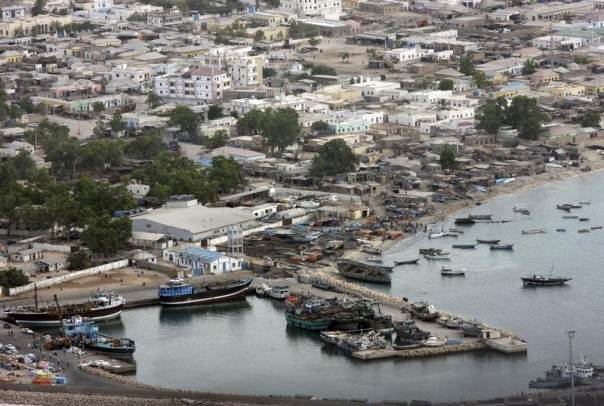
Bossaso (WDN) Bosaso, the third-largest city in Somalia and the economic hub of the Puntland region, is experiencing critical repair and maintenance issues at its port, disrupting the flow of commercial cargo.
The main access channel to Port is rapidly becoming unnavigable, clogged by encroaching sand that is now actively disrupting maritime traffic and threatening one of Puntland’s most critical economic lifelines. The consequences are no longer theoretical—they are happening in real time.
A cargo vessel identified as Barakalah, arriving from Oman, ran aground while attempting to enter the port. The vessel, loaded with commercial goods destined for Somali traders, was unable to pass through the silted channel. Operations were forced into an improvised and costly workaround: a second vessel had to be deployed to offload cargo offshore.
This is not an isolated incident. It is a warning. For years, maritime operators, local authorities, and business communities have raised alarms about the gradual silting of Bosaso’s port channel. Reports of sand accumulation, inadequate dredging, and declining maintenance standards have circulated repeatedly. Yet little—if anything—has been done to reverse the trend. The result is a slow-moving crisis now reaching a tipping point.
Bosaso is not just another port. It is a strategic gateway for imports, trade, and economic activity across Puntland and beyond. Any disruption to its operations carry’s immediate consequences: delays in goods, rising costs for traders, and potential shortages for consumers.
At the center of the controversy is the port’s management. For the past decade, operations at Bosaso have been overseen by DP World, an Emirati firm tasked with modernizing and maintaining port infrastructure. However, critics argue that the current state of the channel raises serious questions about performance, oversight, and accountability.
Essential services—particularly dredging, a basic requirement for any functioning port—appear to have been neglected. Even more concerning is the reported absence of dedicated marine firefighting boats—critical emergency response assets in any modern port. In the event of a vessel fire, fuel spill, or onboard explosion, the lack of such capability could turn an already fragile situation into a full-scale disaster.
The grounding of the Barakalah may be just the first visible sign of a much larger problem. If the channel continues to deteriorate, the risks escalate quickly: larger vessels may avoid the port altogether, insurance costs could rise, and Bosaso’s competitiveness as a regional trade hub could erode.
For local traders, the impact is immediate and tangible. Every delay translates into higher costs. Every disruption weakens confidence. And every unanswered warning deepens frustration. What is unfolding is not simply a technical failure—it is a governance failure.
A critical national asset is being compromised in plain sight, despite years of warnings. The question now is no longer whether the problem exists. It is why it has been allowed to reach this point—and how much worse it must get before decisive action is finally taken.
WardheerNews