By Lincoln G. Peters
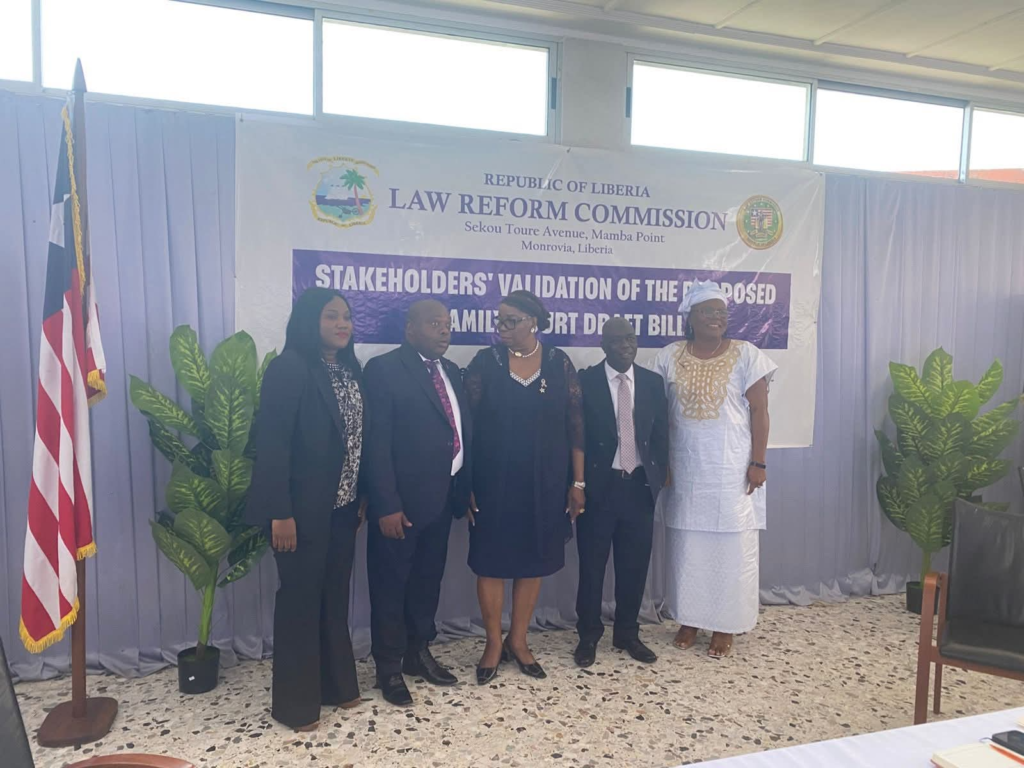
Temple of Justice, Monrovia, April 16, 2026: Liberia has moved closer to establishing its first specialized Family Court, following the official validation of a draft legal framework and bill to transform the handling of family-related cases within the justice system.
The validation exercise took place on Thursday, April 16, 2026, at the Temple of Justice in Monrovia, bringing together key stakeholders from the Judiciary, government institutions, the legal profession, and civil society.
Speaking at the program, Chief Justice Yammie Quiqui Gbeisay Sr. described the development as a landmark moment in the evolution of the country’s justice system.
“The establishment of a Family Court will ensure greater access to justice for families across Liberia, especially women and children,” the Chief Justice stated, adding that the reform represents a shift toward a more efficient and compassionate justice system.
He explained that a multi-institutional committee, including representatives from the Ministry of Gender, Children and Social Protection, the Liberian National Bar Association, the Association of Female Lawyers of Liberia, and civil society, developed the initial framework. Judge Lucrezia Anderson chaired the committee.
The draft was later submitted to the Law Reform Commission of Liberia for refinement and legislative processing.
Chairperson of the Law Reform Commission, Cllr. Bornor M. Varmah, said the reform would significantly improve the delivery of justice in sensitive family matters such as custody, maintenance, divorce, and protection cases.
He noted that the current system often places such cases before general courts that are not specialized to handle their complexity, leading to delays and inefficiencies.
“This reform ensures a more responsive, specialized, and people-centered justice system,” Varmah said.
The validation follows a stakeholder consultation held on April 9, during which key recommendations were incorporated into the draft bill. Thursday’s session focused on final review and consensus-building ahead of legislative submission.
Participants included representatives of the Judiciary of Liberia, the Ministry of Gender, the Louis Arthur Grimes School of Law, the LNBA, AFELL, civil society organizations, and development partners.