Visitors enjoy the scenery at Haneul Park in western Seoul’s Mapo District, April 14. Korea Times photo by Shim Hyun-chul
On a sunny afternoon last week, Park Ju-young, 28, brought her lunch up to Haneul Park in Mapo District, one of Seoul’s most beloved green spaces, unaware she was sitting atop a mountain of buried garbage.
“Both my home and office are nearby, so I come here often for a run after work,” Park told The Korea Times. “But I had no idea this place used to be a landfill.”
Oh, a 90-year-old daily visitor who moved to the neighborhood four years ago, remembers the site differently. Before it became Haneul Park, it was Nanjido, Seoul’s main landfill. “Back then, everyone knew it as a dirty, smelly garbage dump,” she said.
The park is now one of the city’s most dramatic environmental turnarounds — and a fitting symbol for Earth Day, which falls on Wednesday.
Starting in 1978, Nanjido served as Seoul’s landfill for 15 years, absorbing more than 92 million tons of waste, enough to form two garbage mountains rising 98 meters high. The area was thick with foul odors and dust, while methane gas and leachate from decomposing waste triggered serious environmental damage.
The Seoul Metropolitan Government shut down the landfill in 1993 and began stabilizing the site, treating the hazardous materials. In time for 2002, when Seoul co-hosted the FIFA World Cup, the two mountains of garbage were transformed into Haneul Park and Noeul Park, both now thriving ecological parks.
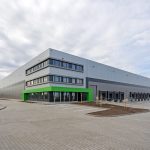
Mapo Resource Recovery Plant in Mapo District, Seoul / Korea Times file
From landfill to incineration
Situated between the two parks is Mapo Resource Recovery Plant, which embodies how Seoul’s waste management has shifted from landfilling to eco-friendly incineration. Established in 2005, the plant processes about 18 percent of the household waste from five adjacent districts — Mapo, Jung, Jongno, Yongsan and Seodaemun — burning an average of around 600 tons daily. It also attracts some 10,000 visitors a year for educational tours.
That transformation is all the more striking for Seo Jeong-ho, executive director of the plant, who has worked in the industry for more than 30 years.
“When I think back to the Nanjido landfill days, I never imagined it could be transformed into parks like this,” Seo said. “When I take a walk through the park after lunch, I feel like I’ve ended up in a truly good place.”
The emissions from the plant’s smokestacks, generated by burning waste including dioxins, are cleaner than the air around us.
“The legal dioxin limit is 0.1 nanograms per cubic meter of air and our measured result is nearly zero, roughly 10,000 times below the legal limit.”
A crane lifts waste from a pit at Mapo Resource Recovery Plant in Mapo District, Seoul, April 15. Korea Times photo by Shim Hyun-chul
How it works
To maintain the heat needed for incineration, the plant operates around the clock. Waste arrives between midnight and 8 a.m., Monday through Saturday, when trucks unload into a waste pit with a maximum capacity of 750 tons.
Instead of being fed directly into an incinerator, the waste bags are lifted and dropped repeatedly by a crane over two to three days to tear open the bags and mix the waste, while allowing moisture to evaporate.
Heat generated from burning waste in the incinerator passes through a waste heat boiler, where it turns water into steam to drive a turbine and generate electricity — 5,000 kilowatts a day, enough to power 20 households for a month.
The output is modest, Seo noted, but the point is not the electricity itself. “It is the added bonus of generating energy while incinerating waste in an eco-friendly way,” he explained.
After combustion, pollutants move into a semi-dry reactor, where alkaline chemicals neutralize acidic compounds such as hydrochloric acid and sulfur oxides. The residue crystallizes and drops to the bottom, with anything that doesn’t settle caught by a bag filter.
A selective catalytic reduction tower then tackles nitrogen oxides, where ammonia injected into the catalytic layer reacts with the pollutants, converting them into nitrogen and water. Before exiting through the smokestack, the air passes through a police filter, a device identical to a bag filter that catches any remaining pollutants for one final round of filtration. The Mapo plant is the only facility in Korea to use one.
For Seo, every one of those steps matters and so does the low dioxin reading he checks every single day.
“When I see that, it gives me a sense of pride and a drive to keep pushing this work forward for society.”
Operators monitor the waste treatment process from the central control room at Mapo Resource Recovery Plant in Mapo District, Seoul, April 15. Korea Times photo by Shim Hyun-chul