
– Advertisement –
By Staff Writer
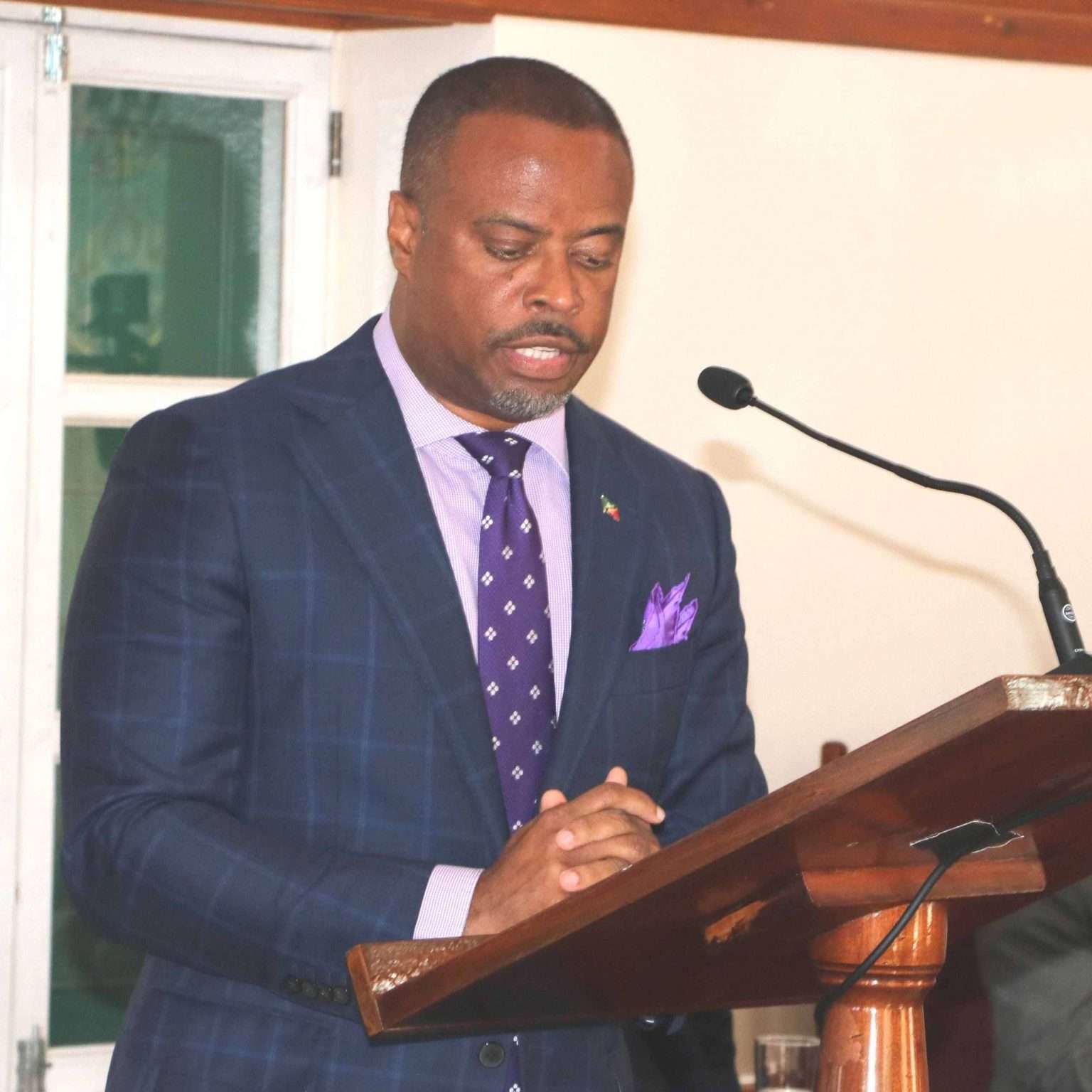
Premier of Nevis Mark Brantley has dismissed the ongoing regional dispute over the reappointment of Dr. Carla Barnett as a “tempest in a teacup,” urging Caribbean leaders to refocus on pressing economic and geopolitical challenges facing the region.
In a strongly worded commentary, Brantley criticised the escalating public exchanges between regional leaders, noting that “a molehill has been allowed to become a mountain” at a time when Caribbean economies are under increasing strain.
“There has been a torrent of back and forth… public statement and counter public statement has been the order of the day,” he said, adding that the issue has overshadowed more urgent concerns such as rising living costs and global instability.
Brantley argued that ordinary Caribbean citizens are far more concerned about everyday challenges than procedural disputes at the regional level.
“The single mother… is unconcerned with whether the Secretary-General has been properly reappointed. She is concerned with the rising cost of electricity, food, transportation and cooking gas,” he stated.
He warned that global conflicts, particularly in the Middle East, pose serious risks to Caribbean economies and require coordinated, strategic leadership rather than public disagreements.
“More than ever our Caribbean needs sober, mature, thoughtful leadership—not distraction and picong,” Brantley added.
The controversy intensified after the Government of Trinidad and Tobago announced it would not recognise Barnett’s reappointment beyond the end of her current term in August 2026.
In a letter dated April 9, Minister of Foreign and CARICOM Affairs Sean Sobers, writing on behalf of Prime Minister Kamla Persad-Bissessar, described the process as “surreptitious, corrupted and flawed.”
Port of Spain also declined to attend a 25th Special Emergency Meeting of CARICOM held virtually on April 10 to address the issue, despite previously calling for such discussions.
The government has insisted it will not participate in further talks until it receives full documentation relating to the reappointment process.
Chairman of CARICOM and Prime Minister of St. Kitts and Nevis, Dr. Terrance Drew, has defended the process, stating that the matter was discussed during the February 24–27 CARICOM summit in Basseterre, including at a leaders’ retreat.
He maintained that the decision was taken in accordance with Article 24 of the Revised Treaty of Chaguaramas, which allows for the appointment and reappointment of the Secretary-General by the Conference of Heads of Government.
Dr. Drew also expressed regret that the issue had entered the public domain, noting that efforts had been made to engage Trinidad and Tobago following the meeting.
CARICOM, in its official statement, said all member states were properly informed of the summit’s agenda and that the retreat formed part of scheduled activities.
However, Prime Minister Persad-Bissessar has challenged that account, citing what she described as documentary evidence indicating that no prior communication explicitly referenced the reappointment as an agenda item.
She further argued that attendance at the retreat was restricted to Heads of Government, disputing suggestions that Trinidad and Tobago could have been represented.
The dispute has also raised broader questions about transparency, governance, and decision-making within the 15-member regional bloc.
Amid the growing division, Brantley has proposed a straightforward solution: reconvene a meeting of Heads of Government, place the reappointment as the sole agenda item, and conduct a formal vote in accordance with the treaty.
“Count the ayes and the nays. Make an announcement. Then allow us to move on to real issues that have real impact on real people,” he said.
He cautioned that continued focus on the dispute risks diverting attention from critical regional priorities, including relations with major global powers and longstanding issues involving countries such as Cuba, Haiti and Venezuela.
“In a world of big issues, we of the Caribbean must stop working so hard to major in minors,” Brantley stated.
The controversy has brought renewed attention to the Revised Treaty of Chaguaramas, which governs CARICOM operations.
Under Article 24, the Secretary-General is appointed by the Conference of Heads of Government on the recommendation of the Community Council and may be reappointed for a term not exceeding five years. The role serves as the chief executive of the Community.
Despite calls from CARICOM for internal resolution, the dispute has now unfolded publicly, exposing deep divisions within the regional body at a time of heightened global uncertainty.
– Advertisement –