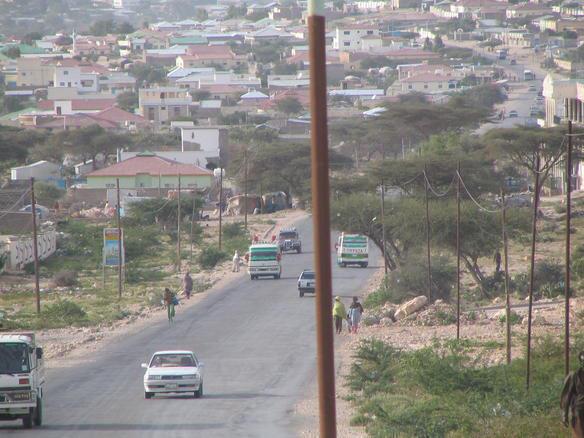
Galkayo (WDN) — The abduction of Dr. Farah Abdi Mohamed, a medical professional working with Médecins Sans Frontières (MSF) at Galkayo General Hospital, has once again laid bare the entrenched insecurity and clan-driven violence that continue to define the city.
According to initial reports, the doctor was seized by armed clan militia who had recently issued a video demanding the release of a detainee held in Garowe. The man in question was captured in Ethiopia and is reportedly linked to the 2020 assassination of Colonel Osman Omar Mohamed, widely known as Osman Itoobiyaan, a former commander of Puntland’s presidential guard.
Sources indicate that Dr. Farah was targeted not for any personal involvement, but for his perceived clan affiliation tied to Puntland President Said Abdullahi Deni, a stark illustration of how collective punishment continues to override justice in parts of Somalia.
The reaction has been swift. Residents of Galkayo and across the Mudug region have condemned the abduction, calling for the doctor’s immediate and unconditional release. But condemnation alone has done little to break a pattern that has persisted for decades.
Galkayo remains a city trapped in a cycle of retaliatory violence that defies both Islamic principles and the basic tenets of governance. The logic is as brutal as it is predictable: one killing is answered not with justice, but with revenge often against an unrelated individual. The result is a steady erosion of the very people a society depends on: doctors, teachers, business leaders, and elders—those who build, heal, and stabilize communities.
The consequences are visible. Investment stalls. Employment shrinks. The idea of normal civic life becomes increasingly distant. In such an environment, the question is no longer rhetorical: who would risk building a future here?
Yet even within this fractured landscape, there are examples of an alternative path. The Reer Adan sub-clan has adopted a strict customary code under which the perpetrator of a killing is held directly accountable—no substitution, no deflection. The community itself apprehends the offender and hands him over to face justice. The outcome has been decisive: deterrence.
Where accountability is certain, violence declines. That lesson, however, remains largely unheeded across the wider city. Instead, Galkayo continues to operate under a system where guilt is collective, punishment is arbitrary, and justice is absent.
The abduction of a doctor someone whose sole role is to save lives should mark a line that cannot be crossed. But in the divided city of Galkayo, even that line appears negotiable. Until that changes, incidents like this will not be exceptions. They will remain the rule.
WardheerNews