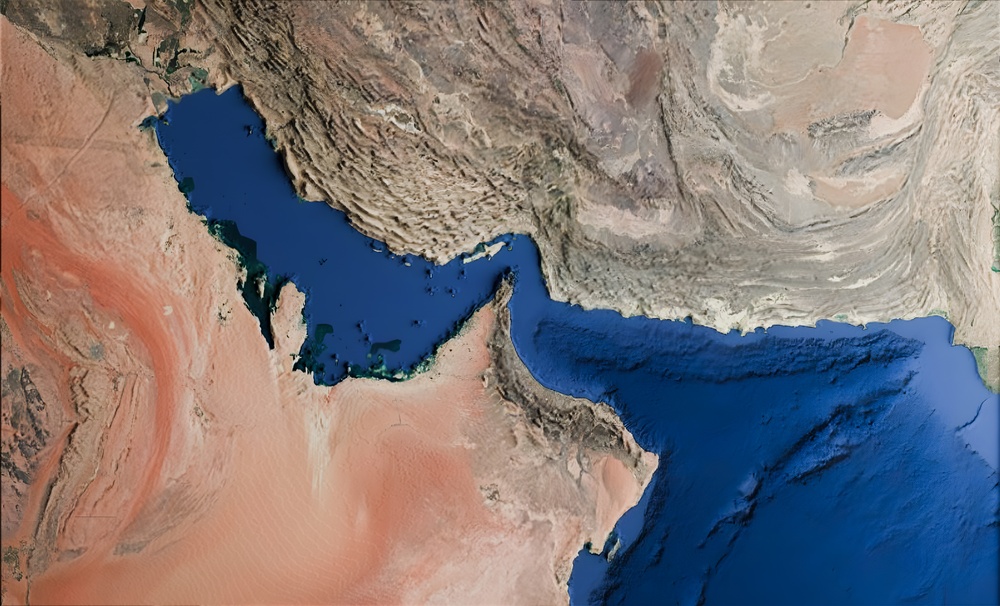
The closure of the Strait of Hormuz is sending shockwaves through global energy markets, with analysts warning of a structural supply crisis rather than a temporary disruption.
In the latest episode of MOL Talks, MOL Group’s chief economist Ágnes Horváth said the situation marks a turning point. Unlike previous geopolitical tensions, the near-total halt in maritime traffic is not only pushing up prices but also creating physical shortages and forcing a reprioritization of supply chains.
The Middle East accounts for roughly 25–30% of global oil supply, much of which flows through the strait. Around 14.5 million barrels of crude oil and an additional 4 million barrels of refined products pass through the corridor daily. Alternative routes offer limited relief. Pipelines in Saudi Arabia and the UAE can only partially compensate, leaving a significant gap that cannot realistically be filled.
Compounding the issue, rerouted shipments face security risks in the Red Sea due to ongoing attacks, forcing many vessels to take longer routes around Africa. According to Horváth, disruptions of this magnitude and duration are unprecedented, even compared to past oil crises.
Europe faces particular vulnerability not just in crude oil but in refined products. “About 15% of global seaborne refined product exports pass through the Strait of Hormuz, but the shares vary widely. For petrochemical feedstocks, it is 35%, for diesel 10–12%, and for jet fuel 25%. Nearly all of the latter goes to Europe. Last year, 50–60% of Europe’s jet imports already arrived via the Strait of Hormuz,” Horváth said.
In the short term, Asia is under the greatest pressure. The region relies heavily on Middle Eastern crude and, unlike Europe, lacks extensive strategic reserves. While European countries typically maintain around three months of запас reserves as members of the International Energy Agency, some Asian nations could deplete stocks within 10–20 days, raising the risk of outright shortages.
The crisis is also reshaping global power dynamics. The United States has already seen fuel prices climb above USD 4 per gallon from around USD 3, indicating the shock has reached even relatively insulated markets. China, which sources about 45% of its oil imports through the strait, faces significant exposure but has mitigated risks by building large strategic reserves. Russia, meanwhile, could increase its market influence if it restores damaged export infrastructure.
“Market participants likely expected a short conflict in which the United States could demonstrate strength, support Israel, and exert pressure on China. But reality unfolded differently: Iran effectively closed the strait. A few ships still pass through, typically Iranian vessels, but most traffic has effectively stopped. As this shortage became more embedded in markets, it eventually reached the U.S. economy as well,” Horváth said.
Macroeconomic impacts are already visible. Oil prices have moved to a structurally higher level, and inflation in advanced economies could return to 3–4%, potentially halting interest rate cuts. Europe’s fragile growth outlook is particularly at risk due to rising energy costs and declining competitiveness.
Even a rapid diplomatic resolution would not bring immediate normalization. Restarting flows would create logistical bottlenecks, while damaged infrastructure—refineries, pipelines, and ports—could take weeks or months to repair. Analysts have shifted expectations from a projected surplus of 3–4 million barrels per day earlier this year to a potential deficit of 6–8 million barrels per day.
The current crisis underscores a broader lesson: energy security is not just about production but also logistics, geopolitics, and industrial strategy. For Europe, this reinforces the need to reduce fossil fuel dependency—while ensuring the transition remains pragmatic and resilient.