Tanzania’s government on Thursday released a long-awaited report into deadly violence following the October 2025 elections — a move officials described as a step toward truth, reconciliation and national healing.
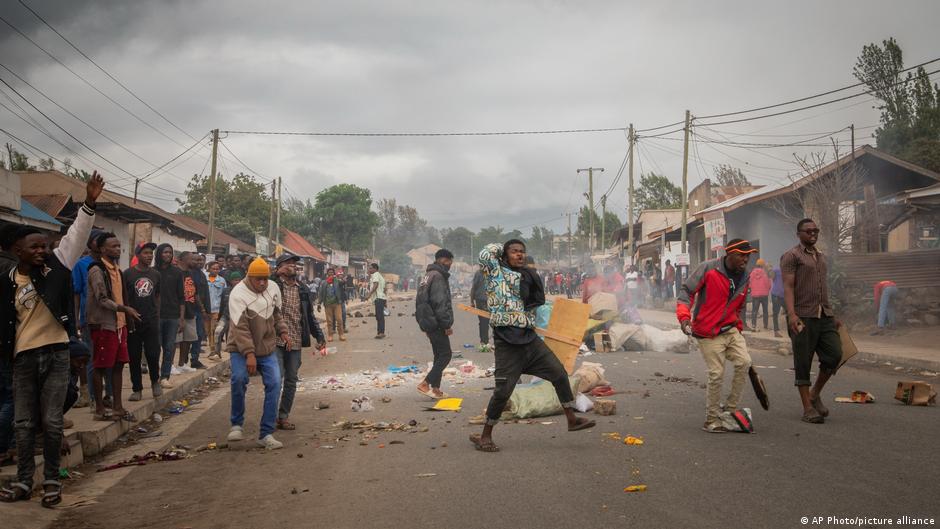
The findings came nearly six months after protests and clashes with security forces left hundreds feared dead and thousands detained.
Opposition and religious groups estimate that thousands of people were killed by security forces.
While presenting the report, retired Chief Justice Mohamed Chande Othman, who chaired the government-appointed commission formed to probe the post-election violence, said the figure of 518 might not be final and conclusive.
Othman said that the number of deaths was likely to be higher, because some families buried their loved ones without taking their bodies to morgues.
How did the post-election violence unfold in Tanzania?
After Tanzania’s October 29, 2025, election, unrest followed after President Samia Suluhu Hassan was declared the winner with 98% of the vote. The main opposition parties had boycotted the poll, citing an uneven process and the exclusion of key candidates.
As results emerged, youth-led protests erupted in Tanzania’s biggest city and commercial capital, Dar es Salaam, as well as other cities. Demonstrators accused authorities of electoral manipulation and repression.
Tanzanian security forces “used unnecessary or disproportionate and sometimes lethal force against peaceful protesters and bystanders,” said Sikula Oniala, a researcher with Amnesty International. He told DW last year that security authorities had “fired live rounds of ammunition” on unarmed people.
The government imposed an internet shutdown amid the runrest, citing security concerns.
Human rights groups, the United Nations, and international media reported hundreds dead, mass arrests and allegations of enforced disappearances. The casualty figures remain disputed.
The scale of the crackdown marked a break from Tanzania’s history of political stability and led to sustained domestic and international pressure for an independent investigation.
What did the report examine?
The commission says it collected evidence from more than 63,000 people in 11 regions. They spoke with eyewitnesses, victims’ families, security officials and experts.
Othman said the commission had “indisputable evidence” the violence was planned and funded by “trained people,” but did not name them.
Othman recommended that a further investigation be conducted on the use of firearms, as some of the witnesses told the commission that their loved ones were shot while sitting inside their houses.
He rejected independent reports of mass graves and bodies being seized from hospital mortuaries, saying they “could not be substantiated.”
President Suluhu welcomes report, castigates media
President Hassan welcomed the probe, saying it would help “close a painful chapter” in Tanzania’s history and guide reforms to prevent future violence. She characterized the protests as pre-planned and suggested foreign involvement.
“The commission has told us that all the violence was planned, coordinated, financed and executed by people with training and equipment for committing crimes and destruction,” she said after the report was presented, according to AFP news agency.
Foreign journalists were barred from entering Tanzania to cover the election, and an internet shutdown during and after the vote complicated efforts to gauge the scale of the violence.
But Suluhu claimed reports on the unrest were false.
“There was also significant misinformation spread by the media, especially foreign and international outlets,” Suluhu said.
Tanzania’s opposition slams report
The opposition said the report whitewashed the actual events. They had rejected the commission from the beginning and had called for an international inquiry instead.
“It’s all a cover-up, actually. Like many other statements that the president has made, the report is designed to whitewash the regime’s crimes,” John Kitoka, head of foreign affairs for the Chadema opposition party, told AFP.
Opposition figures argue that without independent prosecutions, the report risks becoming a political gesture rather than a path to justice.
Maduhu William, a human rights activist, told DW that the real test lies not in the findings themselves — but in whether there is accountability.
“The report has no political significance. It’s not helping us move past October 29,” Maduhu said. “It fragments society and reminds grieving individuals that the government has not addressed their suffering.”
Edited by: Keith Walker