
A prolonged heat wave overwhelmed North Hwanghae province’s aging power infrastructure this month, triggering a province-wide blackout in North Korea that even cut electricity to statues and monuments honoring the country’s leadership. The unprecedented outage, which struck in August 2026, forced authorities to mobilize security officers and soldiers for emergency repairs, according to a source inside the country.
A Daily NK source in North Hwanghae province said Wednesday that the entire province lost power completely last week, cutting electricity even to symbols and facilities tied to North Korea’s leadership. The provincial party committee urgently mobilized the provincial public security department and Korean People’s Army units stationed in the region to respond, the source said.
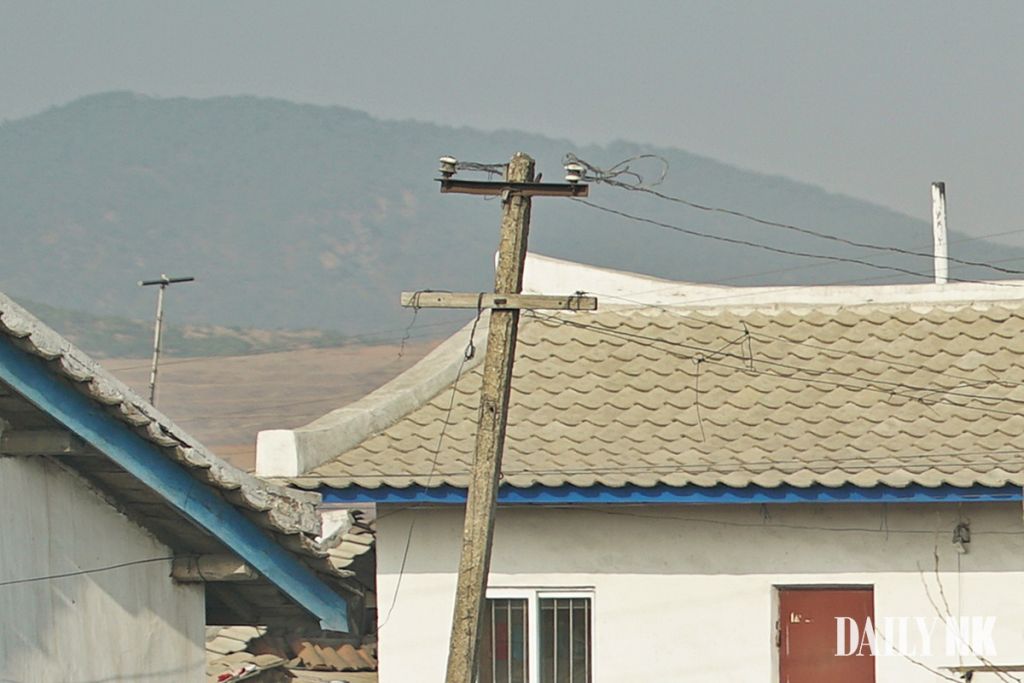
According to the source, the outage stemmed directly from a chain of accidents at power facilities managed by the province’s transmission and distribution department. As extreme heat drove up electricity demand, the region’s aging infrastructure could not withstand the overload, and the resulting damage paralyzed the power grid, the source said.
Aging infrastructure buckled under extreme heat
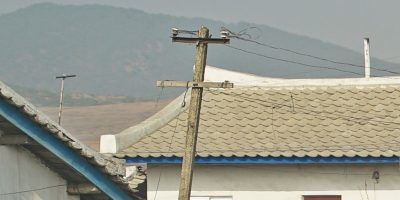
North Korea’s high voltage transmission lines and substation equipment suffer from poor insulation and inadequate safety devices, a structural weakness that allows a single accident to disrupt power over a wide area.
Sustained high temperatures cause rapid thermal expansion in metal transmission lines and overheating inside transformers. Despite those risks, the provincial transmission and distribution department kept the equipment running without prior safety maintenance or measures to distribute the load. That led to a series of failures at major substations, the source said.
The blackout caused hardship for North Korean people already enduring the heat wave. It also, for the first time, cut power to the so-called “No. 1 facilities,” a category that includes statues, Towers of Eternal Life, monuments and revolutionary history museums that North Korean authorities prioritize with round the clock electricity.
Even some local residents were struck by the scale of the incident, the source said. “I’ve never seen anything like this in my life. Whatever else loses power, the statue or the history museum going dark for days is something new,” the source said, describing local reaction.
Unlike ordinary housing and industrial facilities, North Korea connects statues, Towers of Eternal Life and history museums to dedicated power lines that receive top priority. North Korean authorities treat any loss of power to such facilities as a serious lapse in managing the political system, and officials found responsible are often punished, the source said.
The provincial party aparatus, alarmed by the outage, made restoring power to the No. 1 facilities its top priority and ordered immediate repairs. It mobilized the entire provincial public security department along with Korean People’s Army units stationed in the province, according to the source.
“Security officers and soldiers have all been mobilized for the restoration work, but the damage is so extensive, and there is a shortage of tools and materials, that a quick fix is difficult,” the source said. “It’s expected to take considerable time before the repairs are complete.”
“The security officers and soldiers sent to do the repair work are going through a living hell without electricity or water,” the source said. “Meanwhile, provincial party officials, worried their own jobs could be on the line over this, are showing up at the site and just yelling.”
Reporting from inside North Korea
Daily NK operates networks of sources inside North Korea who document events in real-time and transmit information through secure channels. Unlike reporting based on state media, satellite imagery, or defector accounts from years past, our journalism comes directly from people currently living under the regime. We verify reports through multiple independent sources and cross-reference details before publication.
Our sources remain anonymous because contact with foreign media is treated as a capital offense in North Korea — discovery means imprisonment or execution. This network-based approach allows Daily NK to report on developments other outlets cannot access: market trends, policy implementation, public sentiment, and daily realities that never appear in official narratives.
Maintaining these secure communication channels and protecting source identities requires specialized protocols and constant vigilance. Daily NK serves as a bridge between North Koreans and the outside world, documenting what’s happening inside one of the world’s most closed societies.